France announces nightly curfews in Paris and other big cities
 13 oC

Güneşli

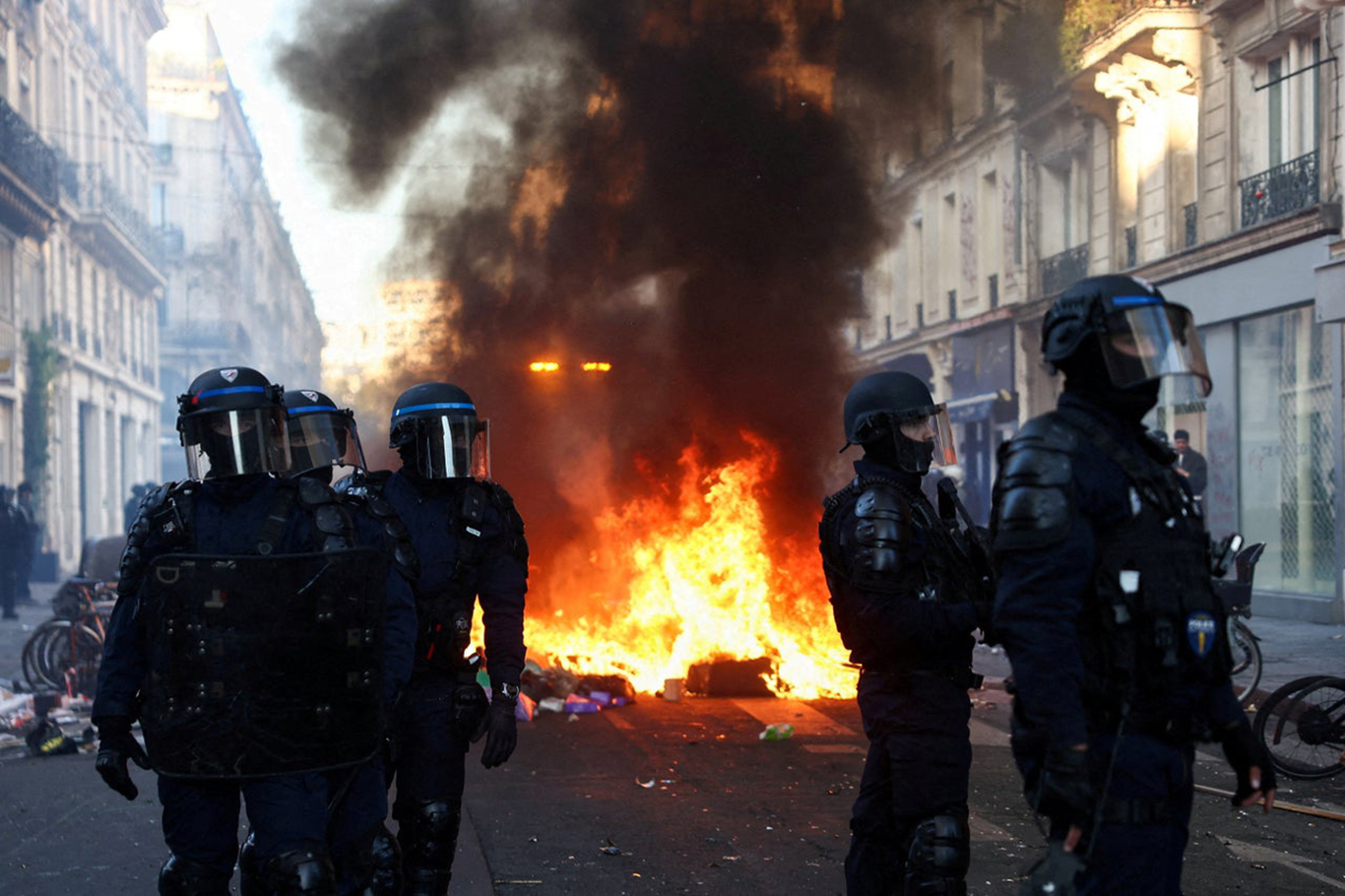
France will deploy military personnel to support police and launch a large-scale security operation ahead of further demonstrations planned for Saturday, as the government faces mounting criticism over its handling of violent unrest that swept several major cities last weekend.
Prime Minister Sébastien Lecornu announced the measures on Tuesday, acknowledging intelligence and policing failures after rioting and looting affected Paris, Marseille, Lyon and other cities on Oct. 17.
“The deployment next Saturday will be massive,” Lecornu told parliament, saying the government's immediate priority was to restore public order.
Interior Minister Laurent Nuñez confirmed that troops from Operation Sentinelle, France's military security operation, would be deployed to support police and gendarmes, allowing them to focus on maintaining public order.
Nuñez said the government's response to any further unrest would be firm.
The announcement came after authorities imposed targeted night-time curfews in affected areas, reporting a relatively calm night following the weekend's violence. Police in Paris said restrictions in designated areas around Place de la République and the Les Halles shopping district had helped restore public peace and would remain in force as long as necessary. Lyon also renewed a night-time curfew in its city centre.
The measures followed attacks on businesses and public buildings, including fires and looting that exposed shortcomings in the authorities' preparations.
Government Acknowledges Security Failures
Lecornu admitted that intelligence gathering had failed to anticipate the scale of the unrest, police deployments had been too static and authorities had made a mistake by not cancelling planned police leave.
Nuñez apologised for the failures and accepted responsibility for his role in the response.
“I deeply regret what happened. I accept my share of responsibility,” he said.
The government has blamed far-left groups for organizing or fueling the violence, while left-wing groups and other critics argue that the authorities are underestimating public anger over rising living costs, deteriorating public services and an underfunded education system.
The competing explanations have intensified political tensions ahead of France's 2027 presidential election.
Parliament is establishing a commission of inquiry to examine the causes of the unrest and the authorities' response. Meanwhile, around 200 investigators have been assigned to identify those suspected of participating in the violence.
Police arrested a man on Tuesday suspected of setting fire to the historic town hall in Limoges, central France. Officials said the suspect had been on a security watch list and belonged to an ultra-left group.
The scale of the damage has also raised concerns about the financial consequences of further disorder. Carrefour, one of France's largest supermarket chains, said it had suffered losses worth tens of millions of euros through theft and damage.
Curfews and Security Measures Extended
Authorities have continued to rely on localized curfews to prevent further looting and destruction. Restrictions have been introduced in affected areas of Paris, Lyon, Lille, Bordeaux and Nice, with some measures specifically targeting people under 18.
The government has defended the curfews as necessary to restore order, but critics argue that restrictions alone cannot resolve the underlying social tensions.
According to reporting published by Le Monde on Tuesday, the unrest has also put pressure on the government to provide financial assistance to businesses affected by looting and property damage. Lecornu has promised a dedicated support fund for affected businesses.
The prime minister is also due to meet political leaders later this week to discuss public order and the security situation. However, the planned talks face political obstacles, with some opposition figures indicating they will not attend.
Students and Yellow Vests Call for More Protests
Further demonstrations are expected on Saturday, with France's main student union, UNEF, vowing to continue its campaign over what it describes as a deteriorating and underfunded education system.
“We carry on,” the union said in a social media post, pledging to maintain pressure on President Emmanuel Macron's government.
Separately, groups identifying themselves as “Yellow Vests” have called for protest actions against rising fuel costs.
The Yellow Vest movement emerged in 2018 in response to planned fuel-tax increases under Macron's first presidency. Its demonstrations, road blockades and clashes continued for months before the government introduced costly concessions.
The latest unrest comes as France faces mounting budget pressures and rising borrowing costs. Investors have grown increasingly concerned about the economic impact of continued instability, while businesses have warned that further looting could deepen their losses.
Unrest Raises Concerns Across Europe
Violent disturbances have also affected parts of Italy, including Milan, while protests have continued in Albania, raising concerns about wider discontent over living standards and government policies.
Italian Defence Minister Guido Crosetto described the unrest in his country as a form of “hybrid warfare” involving social media platforms such as TikTok and YouTube. His remarks reflected growing debate among European officials about the role of online mobilization in rapidly escalating street violence.
In Milan, shops targeted during the unrest had reopened by Tuesday, although some remained boarded up.
In Albania, protesters were expected to take to the streets of Tirana for a seventh consecutive day against Prime Minister Edi Rama's government.
For France, Saturday's planned demonstrations will provide an immediate test of the government's revised security strategy. But the continuing calls for protests also underline a broader challenge for Macron's administration: restoring public order while addressing grievances over the cost of living, education and public services. (ILKHA)
LEGAL WARNING: All rights of the published news, photos and videos are reserved by İlke Haber Ajansı Basın Yayın San. Trade A.Ş. Under no circumstances can all or part of the news, photos and videos be used without a written contract or subscription.
U.S. special envoy Steve Witkoff is scheduled to meet Russian officials in St. Petersburg on Wednesday to discuss European and U.S. proposals for ending Russia’s war against Ukraine, Norwegian Prime Minister Jonas Gahr Støre said.
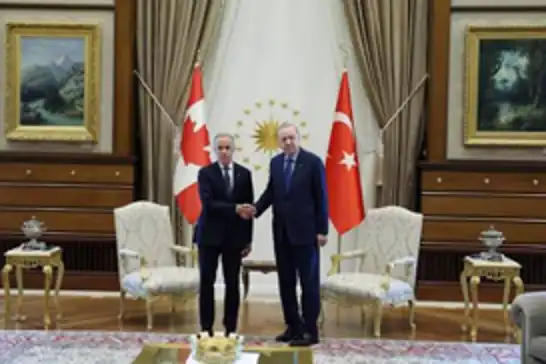
Canadian Prime Minister Mark Carney is set to begin the first official bilateral visit to Türkiye by a Canadian prime minister on Wednesday, with talks expected to focus on expanding trade, strengthening defence ties and advancing cooperation in energy and critical minerals.
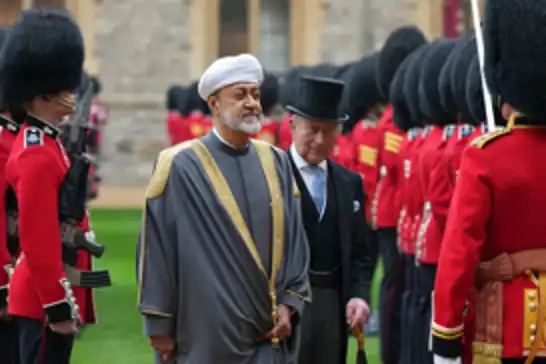
Sultan Haitham bin Tarik Al Said has begun a landmark state visit to the United Kingdom, becoming the first Omani ruler to make an official state visit to Britain in 44 years.