Gazprom says facility supplying gas to Türkiye targeted in drone attack

 13 oC
13 oC 
Güneşli

Russia's state-owned energy company Gazprom said a compressor station linked to natural gas exports to Türkiye was targeted in a drone attack, adding that gas supplies through the Blue Stream pipeline were not disrupted.
Gazprom said the attack took place at 7:51 p.m. local time on July 7 and targeted the Krasnodarskaya compressor station, a key facility in the supply chain for Russian gas transported to Türkiye via the Blue Stream pipeline.
Supplies continue despite damage
The company said the attack was intended to disrupt Russian gas exports to Türkiye but that emergency measures prevented any interruption in deliveries.
Repair work is underway to restore damaged equipment at the facility, Gazprom added.
Russian media reported that Ukraine was behind the attack, although no official confirmation has been provided by Ukrainian authorities.
Key link in gas exports
The Krasnodarskaya compressor station is part of Gazprom's gas transmission network in southern Russia and plays an important role in supplying natural gas to the Blue Stream pipeline.
Operational since 2003, Blue Stream runs beneath the Black Sea directly to Türkiye, bypassing transit countries, and has an annual capacity of 16 billion cubic meters.
Energy infrastructure has remained vulnerable since the start of the Russia-Ukraine war, with both sides accusing each other of targeting critical facilities. Despite repeated security incidents, Russian gas exports to Türkiye via Blue Stream have continued without major interruptions. (ILKHA)
LEGAL WARNING: All rights of the published news, photos and videos are reserved by İlke Haber Ajansı Basın Yayın San. Trade A.Ş. Under no circumstances can all or part of the news, photos and videos be used without a written contract or subscription.
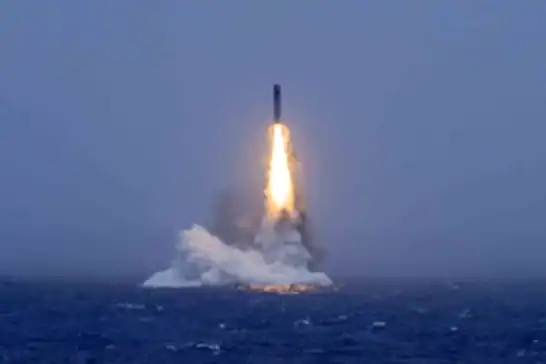
Pacific Islands Forum (PIF) member states are preparing a strong joint statement condemning China's recent intercontinental ballistic missile (ICBM) test, a move that has reignited security concerns and geopolitical tensions across the Pacific region.

The European Union Aviation Safety Agency (EASA) has advised airlines not to operate flights through the airspace of Iran, Iraq and Lebanon, citing the fragile ceasefire between the United States and Iran and the continued risk of military escalation in the region.

A leading human rights organization has accused the Israeli regime of failing to answer critical questions about the condition of a prominent Palestinian physician detained from the Gaza Strip, warning that his life may be at serious risk.

The death toll from Israel's military campaign in the Gaza Strip has climbed to 73,110, the majority of them women and children, despite a ceasefire that took effect on October 11, according to Palestinian medical sources.