India and Russia sign 16 agreements to strengthen bilateral partnership during Putin’s visit
 13 oC
13 oC 
Güneşli

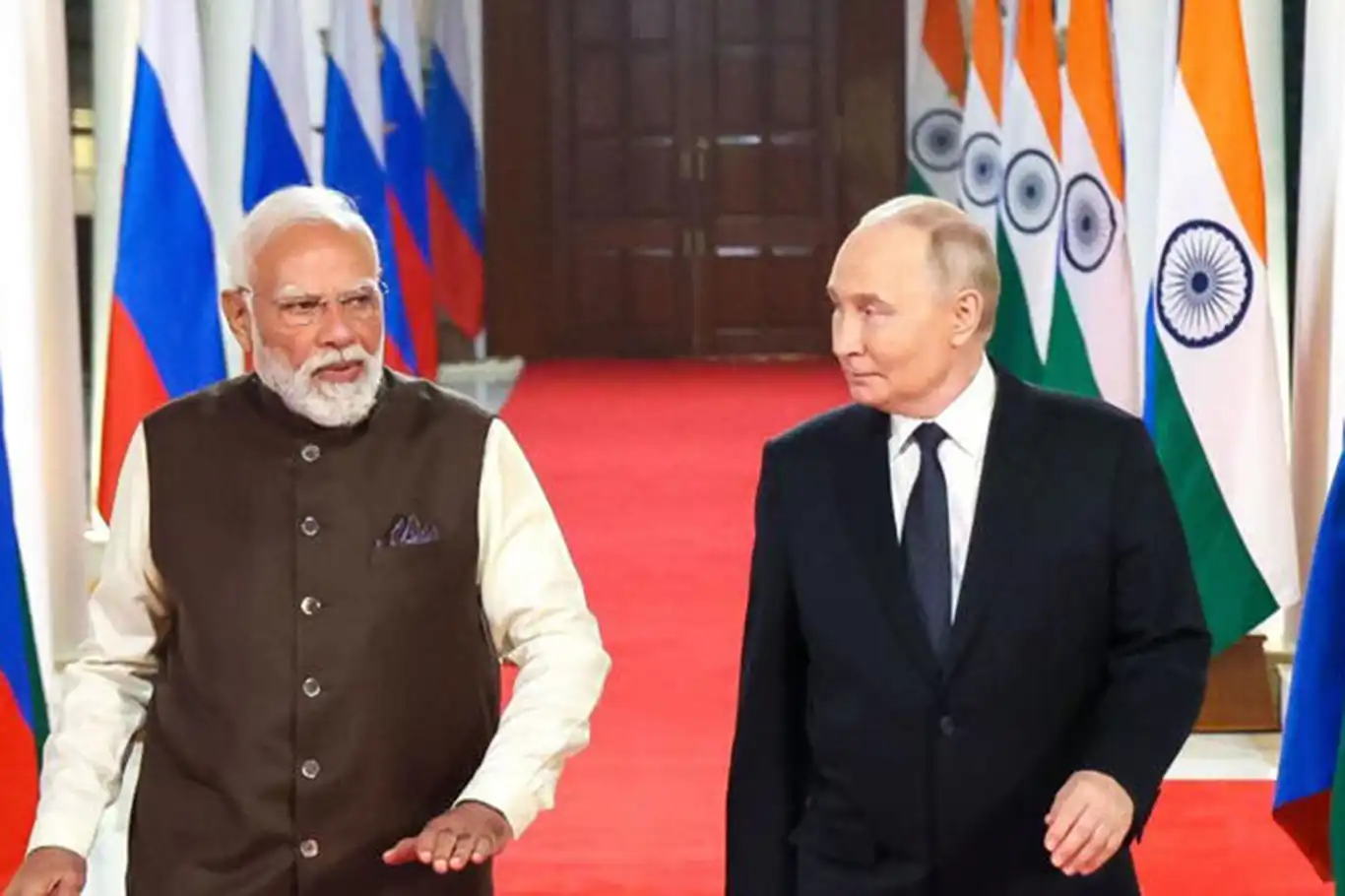
Russian President Vladimir Putin and Indian Prime Minister Narendra Modi held high-level talks in New Delhi on Friday during the 23rd Russia-India Annual Summit.
Two leaders agreed to significantly deepen economic, energy, and defense cooperation at a time of heightened geopolitical pressures from the United States and Europe.
The summit comes as Washington urges New Delhi to revise its long-standing ties with Moscow and reduce imports of Russian crude, while simultaneously pushing for progress on a Ukraine peace deal. The meeting is seen as a major test of India’s diplomatic balancing act between its historic partnership with Russia and its strategic outreach to the United States.
Putin arrived in New Delhi on Thursday, where Modi greeted him warmly with a bear hug, signaling the durability of the decades-old relationship despite global tensions.
Following the talks, the two leaders announced the completion of a comprehensive Russian-Indian economic cooperation program that extends to 2030. The roadmap aims to diversify bilateral trade and raise annual trade volumes to $100 billion by the end of the decade.
Bilateral trade reached $68.7 billion last fiscal year, heavily favoring Russia due to India’s large imports of discounted crude oil. India is now seeking to rebalance trade by boosting exports.
Putin said discussions were advancing on a free trade agreement between India and the Russia-led Eurasian Economic Union (EAEU). Modi confirmed that New Delhi is working toward an early conclusion of the deal.
Putin described Russia as “a reliable supplier of energy resources,” reiterating readiness to provide uninterrupted fuel supplies to support India’s fast-growing economy. Energy security remains a cornerstone of the relationship, with civil nuclear cooperation continuing to expand.
Modi announced that India will soon introduce free electronic visas for Russian tourists and tour groups, marking a new effort to boost people-to-people ties.
Ahead of the summit, Indian officials said Modi would press for accelerated delivery of two remaining S-400 air defense systems, part of a $5.4 billion deal signed in 2018. Deliveries have faced delays linked to supply chain disruptions caused by the Ukraine war.
In their joint statement, both sides agreed to increase joint manufacturing in India of spare parts, components, and equipment for Russian-origin defense systems. This includes technology transfers and new joint ventures aimed at strengthening India’s defense industrial base.
The two countries also reaffirmed commitments under a military cooperation pact signed earlier this year covering exercises, logistics support, port calls, disaster relief, and training.
India is also preparing to upgrade its Su-30MKI fighter fleet and accelerate procurement of critical Russian-made hardware, while seeking long-term fertilizer supplies and reduced non-tariff barriers for Indian pharmaceuticals, textiles, and agricultural goods.
The summit comes amid rising pressure from Washington. In August, U.S. President Donald Trump increased tariffs on Indian goods to 50%, citing India’s large purchases of discounted Russian oil. The U.S. argues that these purchases indirectly support Moscow’s war effort.
In October, Washington sanctioned two major Russian oil producers, aiming to force countries—including India—to reduce imports. Indian officials maintain that New Delhi adheres to all international sanctions and must prioritize the energy needs of its 1.4 billion citizens.
India’s ongoing high-volume purchases of Russian crude have also stalled negotiations on trade deals with both the U.S. and the EU.
Analysts say Putin’s visit highlights India’s complex strategic position. Praveen Donthi of the International Crisis Group said, “New Delhi’s tilt toward Russia dates back to the Cold War. The significant change now is its ambition to simultaneously be a strategic partner of the U.S., which will be a diplomatic challenge.”
Another key area of negotiation involves the regulation and protection of skilled Indian workers in Russia, with the two countries looking to finalize a comprehensive framework.
Putin last visited India in 2021, while Modi was in Moscow earlier this year. The leaders also met briefly in September during the Shanghai Cooperation Organization summit in China.
As the Ukraine conflict nears its fourth year, the Russia-India partnership continues to evolve, influenced by global power shifts, energy dependencies, and strategic calculations that both nations are determined to navigate. (ILKHA)
LEGAL WARNING: All rights of the published news, photos and videos are reserved by İlke Haber Ajansı Basın Yayın San. Trade A.Ş. Under no circumstances can all or part of the news, photos and videos be used without a written contract or subscription.
Qassam Barghouti, the son of imprisoned Palestinian political leader Marwan Barghouti, said on Friday that a recently released detainee informed him his father had been subjected to severe physical abuse inside Israeli prisons.
Germany's parliament has passed the "Modernization of Military Service" law, marking a significant step in the country's efforts to strengthen its defense capabilities.
U.S. Rep. Ilhan Omar (D–Minn.) issued a stark warning on Thursday, accusing former President Donald Trump of endangering Somali Americans and other immigrant communities through a pattern of inflammatory, anti-immigrant statements that she says has led to a surge in violent threats.