Iran firmly rejects US pressure, advances own terms in draft memorandum
 13 oC
13 oC 
Güneşli

Iran has firmly resisted American attempts to impose new conditions through military pressure and diplomatic maneuvering, reaffirming that any understanding with Washington must respect the Islamic Republic's red lines and national interests.
According to informed sources cited by Iran's Tasnim News Agency, Tehran rejected recent amendments proposed by the United States to Iran's 14-article proposal, despite what Iranian officials characterized as direct military pressure and efforts by U.S. President Donald Trump to use Qatari mediation to secure concessions.
The sources said Washington ultimately informed the Qatari mediator that it was withdrawing its latest amendments, acknowledging that the proposed changes were no longer necessary.
However, Iranian officials stressed that no agreement has yet been finalized. They emphasized that the draft text remains subject to review and approval by the Islamic Republic's relevant constitutional institutions.
"Until the legal review process is completed and final approval is granted by the competent authorities, all media reports claiming that a final agreement has been reached are entirely inaccurate," the sources said.
Missile Program Remains Non-Negotiable
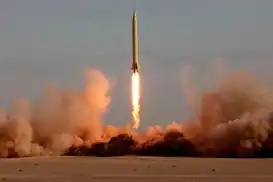
In a separate report, Mehr News Agency revealed details of the proposed memorandum of understanding, underscoring that Iran's defensive capabilities remain outside the scope of negotiations.
According to the report, final-stage talks with Washington would focus exclusively on nuclear and economic issues, while Iran's ballistic missile program would remain strictly off the negotiating table.
The draft reportedly outlines reciprocal commitments under which the United States would be required to lift secondary sanctions, withdraw military forces from areas surrounding Iran, end the naval blockade affecting Iranian ports, and facilitate conditions for the reopening of the Strait of Hormuz to safeguard international trade.
The memorandum also reportedly provides for the complete removal of oil sanctions and the release of approximately $24 billion in frozen Iranian assets held abroad. Iranian sources indicated that half of this amount—around $12 billion—would have to be made available before formal negotiations begin.
IRNA: Agreement Designed to Prevent U.S. Evasion
Iran's official news agency, IRNA, published further details of the potential understanding, emphasizing that the text had been drafted with exceptional precision to eliminate ambiguity and prevent either party from circumventing its obligations.
According to IRNA, Iran has not accepted any new commitments regarding its nuclear activities under the current memorandum. Instead, comprehensive nuclear negotiations would begin within 60 days of signing any preliminary agreement.
The agency also dismissed reports suggesting that Iran had agreed to concessions concerning the Strait of Hormuz.
Rather, IRNA stated that issues relating to maritime security in the strategic waterway would be addressed through a regional framework involving dialogue and joint decision-making between Tehran and Oman.
Ending Regional Conflict
Iranian media further asserted that the principal objective of the memorandum extends beyond bilateral issues and seeks to contribute to ending conflicts across the region.
According to IRNA, the United States would be obligated to pressure Israel to halt its military operations in Lebanon, while formulations that merely extend temporary ceasefires without resolving underlying conflicts have been excluded from the text.
The report added that a portion of Iran's frozen assets would be released immediately upon signing, with the remainder transferred gradually throughout the negotiation period.
Iranian officials also stated that they had secured the guarantees required by Tehran to ensure the implementation of commitments and prevent a repeat of previous experiences in which agreements were undermined by unilateral American actions.
Sanctions Relief and Compensation
Under the proposed framework, negotiations during the subsequent 60-day period would focus exclusively on three core issues: preserving Iran's peaceful nuclear program, lifting unilateral U.S. sanctions, and establishing mechanisms for compensation.
The implementation process for compensation would be finalized during those talks, while the removal of all American sanctions and relevant international restrictions would also be reviewed.
Iranian media stressed that no additional subjects—including the country's missile capabilities and regional defense policies—would be discussed under any circumstances.
The latest reports suggest that while diplomatic contacts between Tehran and Washington have intensified, Iran remains determined to negotiate from a position of sovereignty and strength, insisting that any future agreement must uphold national dignity, safeguard strategic interests, and guarantee tangible economic benefits for the Iranian people.
For now, Tehran maintains that no final deal exists until it receives the approval of the Islamic Republic's decision-making institutions, and that speculation about an imminent agreement remains premature. (ILKHA)
LEGAL WARNING: All rights of the published news, photos and videos are reserved by İlke Haber Ajansı Basın Yayın San. Trade A.Ş. Under no circumstances can all or part of the news, photos and videos be used without a written contract or subscription.
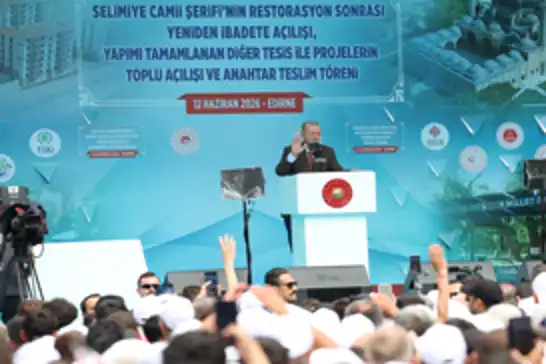
President Recep Tayyip Erdoğan delivered a speech at a ceremony marking the re-opening of the historic Selimiye Mosque for worship following extensive restoration works, as well as the inauguration of several newly completed projects and facilities in the city.
Slovenia's new government has withdrawn a series of measures imposed by the previous administration against the Israeli regime, marking a significant shift in the country's Middle East policy.

Elon Musk has become the first person in history to reach a net worth of more than $1 trillion following the public offering of aerospace company SpaceX.