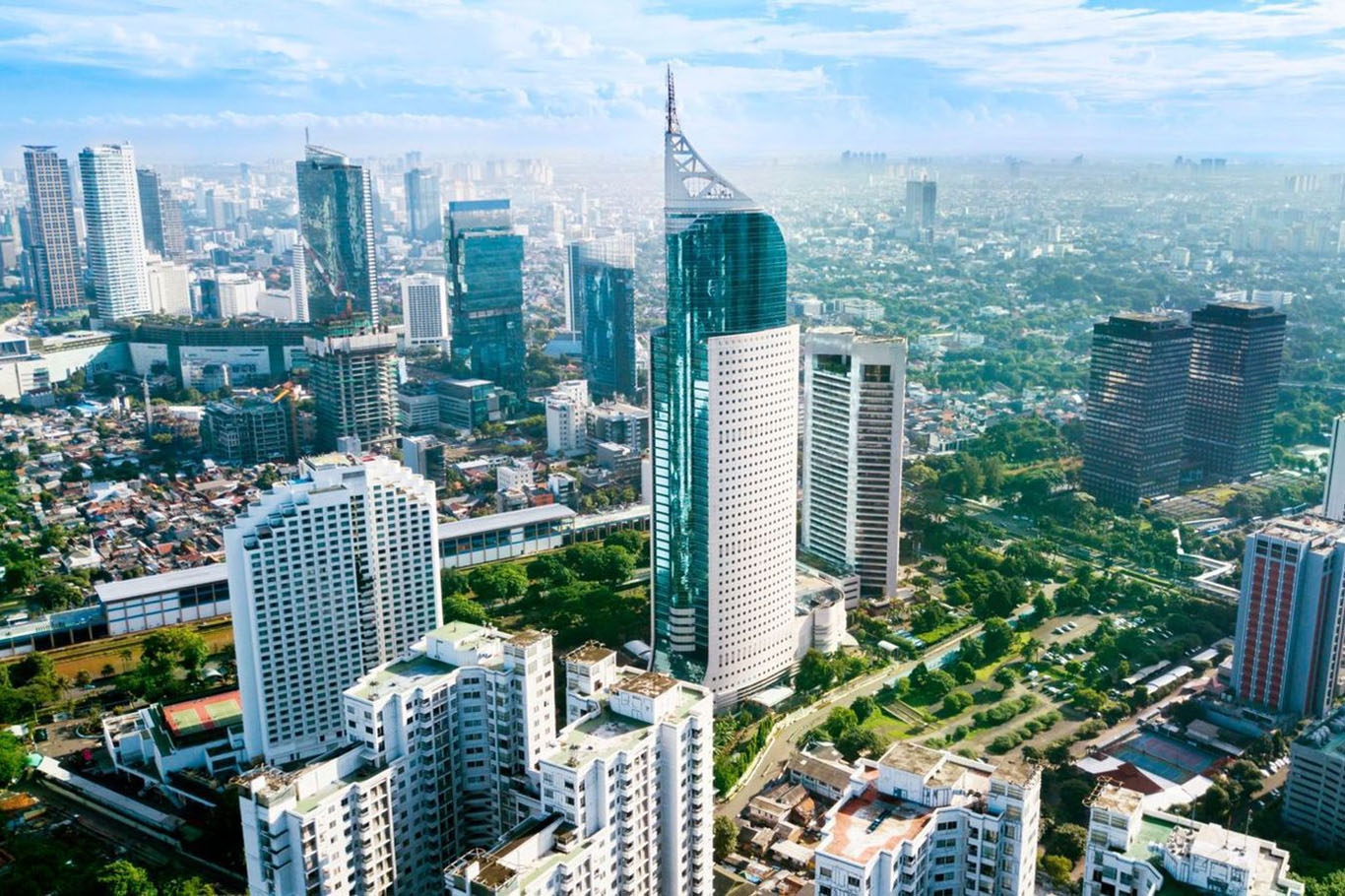
Jakarta becomes world's largest city with 41.9 million residents
 13 oC

Güneşli

Indonesia's capital Jakarta has become the world's most populous city with a population of 41.9 million, according to the United Nations' latest urban population estimates, while rapidly growing cities in Asia and Africa continue to reshape the global urban landscape.
The United Nations' 2025 World Urbanization Prospects report showed that Jakarta ranked first among the world's largest urban areas, followed by Bangladesh's capital Dhaka with 36.6 million residents and Japan's Tokyo with 33.4 million.
India's New Delhi ranked fourth with 30.2 million people, while China's Shanghai followed with 29.6 million.
Asian and African cities lead population growth
Population growth rates vary significantly between cities. According to World Population Review's 2026 estimates, India's Ghaziabad, located near New Delhi, recorded the fastest annual population growth among major cities, with an increase of 5.2 per cent.
India's Surat ranked second with 4.99 per cent annual growth, followed by Afghanistan's capital Kabul with 4.74 per cent and Nigeria's Lagos with 4.44 per cent.
Other rapidly growing cities included Mexico's Toluca, the Democratic Republic of Congo's Lubumbashi, Uganda's Kampala, Angola's Luanda, Tanzania's Dar es Salaam, Kenya's Nairobi and Mali's Bamako.
Delhi leads in hourly population growth
When measured by the number of people added to cities over a certain period rather than percentage growth, India's Delhi ranks first.
Delhi is followed by Shanghai, Dhaka, Kinshasa, Chongqing, Lahore, Bengaluru, Lagos, Cairo and Beijing.
The ranking reflects the total number of new residents added to urban areas and differs from rankings based on percentage population increases.
Urban growth increases pressure on infrastructure
The world's largest cities are growing due to opportunities related to employment, education, wages and access to services.
However, rapid urbanisation is also increasing pressure on housing, transportation, water supplies and sanitation systems, particularly in developing regions of Asia and Africa.
The United Nations estimates that around 45 per cent of the world's population currently lives in cities, while this figure rises to approximately 58 per cent when towns and urban settlements are included.
The UN expects around two-thirds of global population growth by 2050 to occur in urban areas. The organisation also projects that Dhaka could overtake Jakarta as the world's most populous city by 2050, with Dhaka's population expected to reach 52.1 million and Jakarta's 51.8 million.(ILKHA)
LEGAL WARNING: All rights of the published news, photos and videos are reserved by İlke Haber Ajansı Basın Yayın San. Trade A.Ş. Under no circumstances can all or part of the news, photos and videos be used without a written contract or subscription.

Ukrainian President Volodymyr Zelensky is set to travel to Oslo on Tuesday for talks on European security and Russia’s escalating war against Ukraine, alongside US envoy Steve Witkoff and Finnish President Alexander Stubb, Norwegian Prime Minister Jonas Gahr Støre has announced.

Turkish Foreign Minister Hakan Fidan met NATO Secretary-General Mark Rutte in Brussels on Tuesday during his visit to Belgium, Türkiye’s Foreign Ministry announced.

At least 12 people were killed and dozens of others were injured after a passenger bus and a sand-laden truck collided head-on in Bangladesh's Natore district.