MI6 chief warns UK is already on ‘frontline’ of intelligence war with Russia

 13 oC
13 oC 
Güneşli

Britain is already on the “frontline” of a widening intelligence war with Russia, the head of MI6 has warned in the agency’s most serious public alert in years, as tensions linked to the war in Ukraine continue to escalate.
In her first public speech since taking office in June, MI6 chief Blaise Metreweli said the United Kingdom is entering a new “age of uncertainty” in which threats are no longer confined to distant battlefields. Speaking from the Secret Intelligence Service’s headquarters in London, Metreweli declared that “the front line is everywhere,” citing cyberattacks, disinformation campaigns, and hybrid threats targeting British society and institutions.
Metreweli, 48, the first woman to lead MI6 and the agency’s 18th chief—known internally by the codename “C”—delivered a stark message aimed directly at Russian President Vladimir Putin, vowing that Britain’s support for Ukraine would not waver.
“Putin should be in no doubt: our support is enduring,” she said. “The pressure we apply on Ukraine’s behalf will be sustained. The export of chaos is a feature, not a bug, in the Russian approach to international engagement—and we should be ready for this to continue until Putin is forced to change his calculus.”
Her remarks come amid mounting concern in London that Russia is intensifying efforts to destabilise the UK through cyber espionage, propaganda, and covert influence operations. British intelligence officials believe the country has become one of the primary targets of Russian disinformation, partly due to the billions of pounds in military and civilian aid London has provided to Kyiv since Russia launched its full-scale invasion of Ukraine.
Metreweli warned of a “tsunami of disinformation” designed to erode public trust in democratic institutions and social cohesion. She said MI6 officers must now be as fluent in advanced technology as they are in traditional espionage tradecraft.
“Mastery of technology must infuse everything we do,” she said. “Not just in our labs, but in the field, in our tradecraft, and even more importantly, in the mindset of every officer. We must be as comfortable with lines of code as we are with human sources, as fluent in Python as we are in multiple languages.”
She identified cyber espionage, technical disruption, hybrid attacks below the threshold of open warfare, terrorism, and misinformation as among the most serious hazards facing the UK.
The speech follows similar warnings from senior British officials, including the foreign secretary and Prime Minister Keir Starmer. Earlier this year, while announcing increased investment in defence infrastructure, Starmer said Russia posed the most serious and unpredictable threat to Europe since the Cold War.
“The threat we face is more serious, more immediate and more unpredictable than at any time since the Cold War,” Starmer said at the time.
British authorities have repeatedly accused Moscow of aggressive actions, including military aircraft probing UK airspace, Russian submarines operating close to British waters, and the presence of Russian intelligence-gathering vessels near the Scottish coast. There have also been long-standing allegations of attempts to influence political processes, including efforts to manipulate public opinion around Brexit and to strain relations between the UK and its European partners.
Metreweli, a Cambridge University graduate who studied anthropology, has spent more than 25 years in intelligence work, specialising in Europe and the Middle East. She is an Arabic speaker and a mother, though details of her private life remain largely undisclosed.
She succeeded Richard Moore, who led MI6 from 2020 and previously described China as the UK intelligence community’s top long-term priority. While Beijing remains a major strategic concern, Metreweli made clear that Russia currently represents the most immediate threat to Britain and its NATO allies.
Concluding her address, she stressed that the response to these challenges depends not only on intelligence agencies, but on society as a whole.
“It is not what we can do that defines us, but what we choose to do,” she said. “That choice—the exercise of human agency—has shaped our world before, and it will shape it again.” (ILKHA)
LEGAL WARNING: All rights of the published news, photos and videos are reserved by İlke Haber Ajansı Basın Yayın San. Trade A.Ş. Under no circumstances can all or part of the news, photos and videos be used without a written contract or subscription.
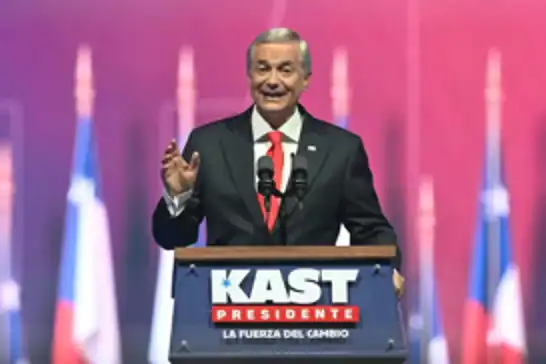
Far-right politician Jose Antonio Kast, known for his open support for the Israeli regime and for being the son of a former Nazi official, has won Chile’s presidential election, sparking controversy both domestically and internationally.
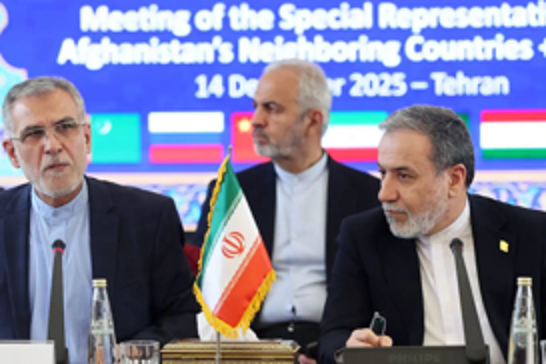
The fourth regional meeting on Afghanistan, titled the Meeting of Special Representatives of Afghanistan’s Neighbors plus Russia, was held in Tehran, bringing together envoys from countries bordering Afghanistan as well as Russia to discuss security, economic, and humanitarian developments in the country.
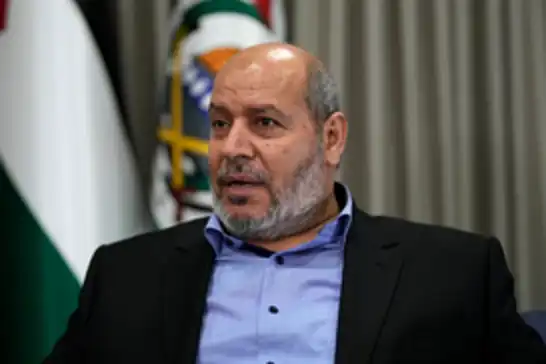
Hamas’ Gaza leader Khalil al-Hayya has said that the Al-Aqsa Flood operation dismantled the Zionist regime’s long-promoted claim of “strategic deterrence,” stressing that the Palestinian cause has entered a historic turning point.