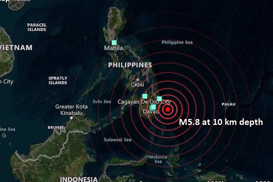
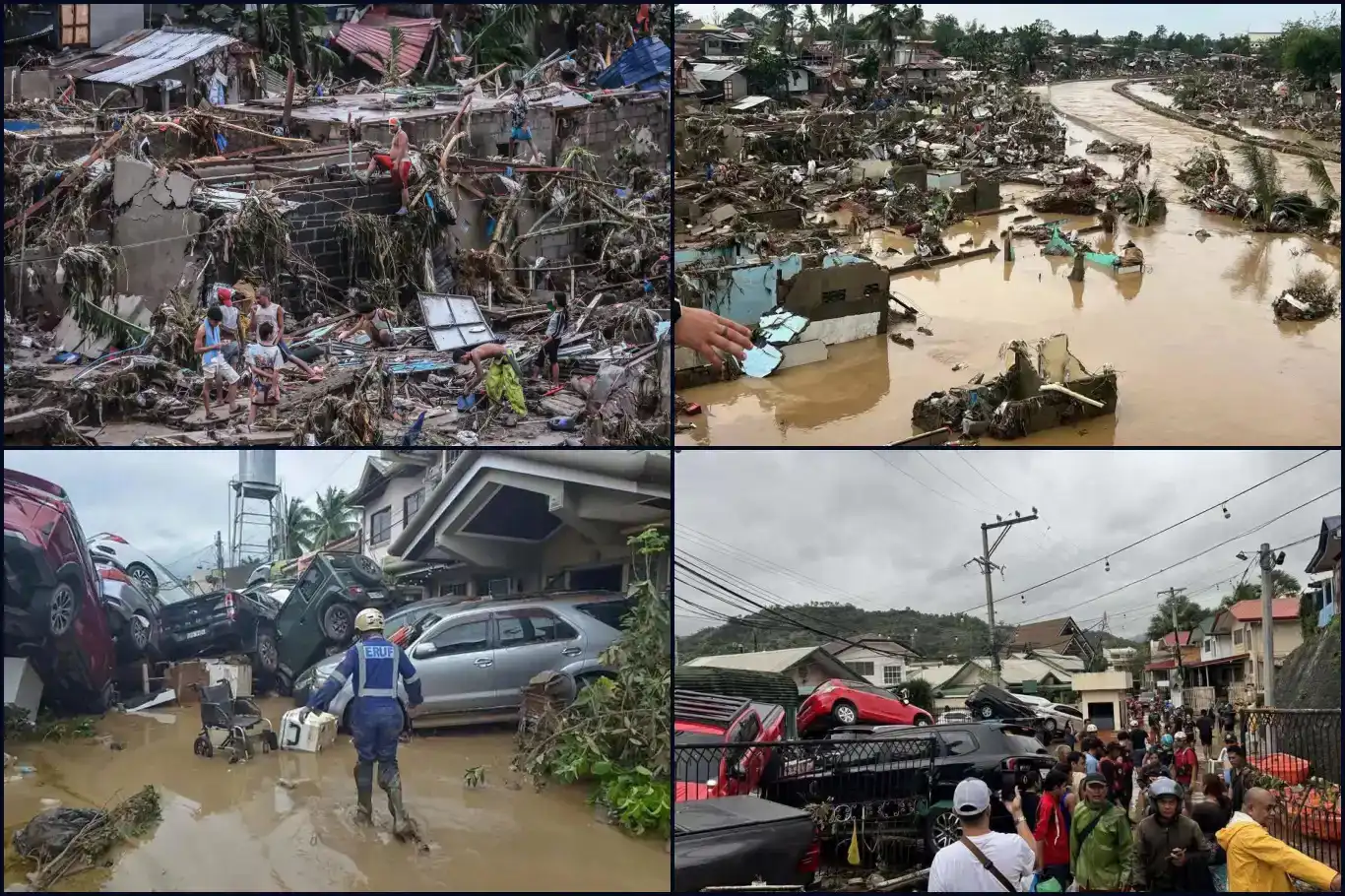
Philippines declares national emergency as Typhoon Kalmaegi claims nearly 200 lives
 13 oC
13 oC 
Güneşli

The central Philippines is grappling with widespread devastation in the wake of Typhoon Kalmaegi, which has killed at least 188 people, left hundreds missing, and affected millions across several provinces.
In response to the disaster, President Ferdinand Marcos Jr. declared a national state of emergency as another tropical storm looms off the country’s western coast.
In the hard-hit provinces of Cebu and Negros Occidental, grief has enveloped communities as families gathered in makeshift evacuation centers and gymnasiums to bid farewell to lost loved ones. Rows of wooden coffins lined the floors, while relatives embraced amid tears and prayers — a somber reflection of the heavy toll left by the storm.
According to the Philippines’ Office of Civil Defense (OCD), more than 2 million people across the Visayas region were affected, with over 560,000 displaced from their homes. Entire neighborhoods were submerged under floodwaters, and thousands of houses were either damaged or swept away as raging currents and flash floods tore through communities.
President Marcos Jr. announced that the state of emergency would enable the government to accelerate relief operations, stabilize essential goods and food prices, and enhance disaster response efforts ahead of the approaching storm.
“Our priority is to ensure that no Filipino is left behind,” Marcos said in a televised address, pledging coordinated action across national and local agencies.
Experts have warned that the country’s fragile infrastructure, particularly in densely populated low-lying areas, has exacerbated the flooding. Rapid river overflows trapped residents inside homes, while landslides and road collapses cut off access to several rural towns.
Across affected regions, power and communication networks remain down, hampering search and rescue efforts. Emergency crews and volunteers continue to scour debris-strewn areas for survivors, though officials caution that recovery operations could take weeks due to impassable roads and ongoing floods.
Typhoon Kalmaegi made landfall in early November, becoming one of the deadliest and most destructive storms to hit the Philippines in recent years. The catastrophe serves as a stark reminder of the country’s growing vulnerability to extreme weather events, intensified by climate change and inadequate urban planning.
Government agencies have urged citizens in western coastal areas to brace for renewed heavy rainfall and winds as the next tropical system approaches, even as the nation struggles to recover from Kalmaegi’s devastation. (ILKHA)
LEGAL WARNING: All rights of the published news, photos and videos are reserved by İlke Haber Ajansı Basın Yayın San. Trade A.Ş. Under no circumstances can all or part of the news, photos and videos be used without a written contract or subscription.
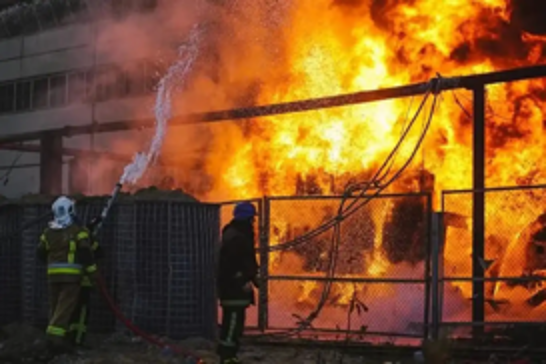
Russian forces carried out a large-scale overnight assault on Ukraine’s energy infrastructure in the early hours of Sunday, targeting multiple regions including the central city of Kremenchuk, as well as Chernihiv and Kyiv oblasts, Ukrainian officials reported.
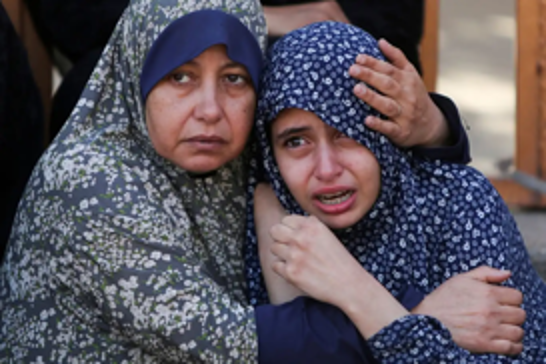
United Nations agencies have issued urgent warnings that Gaza’s humanitarian disaster is spiraling further out of control, with women-led households, children and the injured facing worsening hunger, disease and exposure as winter conditions deepen and restrictions on aid continue.

The Ministry of Finance of Afghanistan has signed a Memorandum of Understanding (MoU) with the United Arab Emirates–based global port operator DP World to modernize and upgrade the country’s major trade gateways, in a move aimed at strengthening infrastructure and boosting regional connectivity.
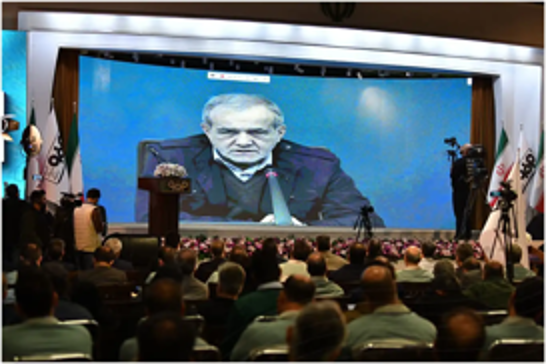
Iranian President Masoud Pezeshkian on Saturday inaugurated a major infrastructure project designed to transport desalinated seawater from the Gulf of Oman to Isfahan province, a move aimed at easing chronic water shortages affecting key industrial centers in central Iran.