South Korea’s first commercial orbital rocket fails shortly after launch
 13 oC
13 oC 
Güneşli

South Korean aerospace startup Innospace failed to make history on Monday night after its first-ever orbital launch attempt ended in a crash shortly after liftoff, marking a setback for the country’s private space ambitions.
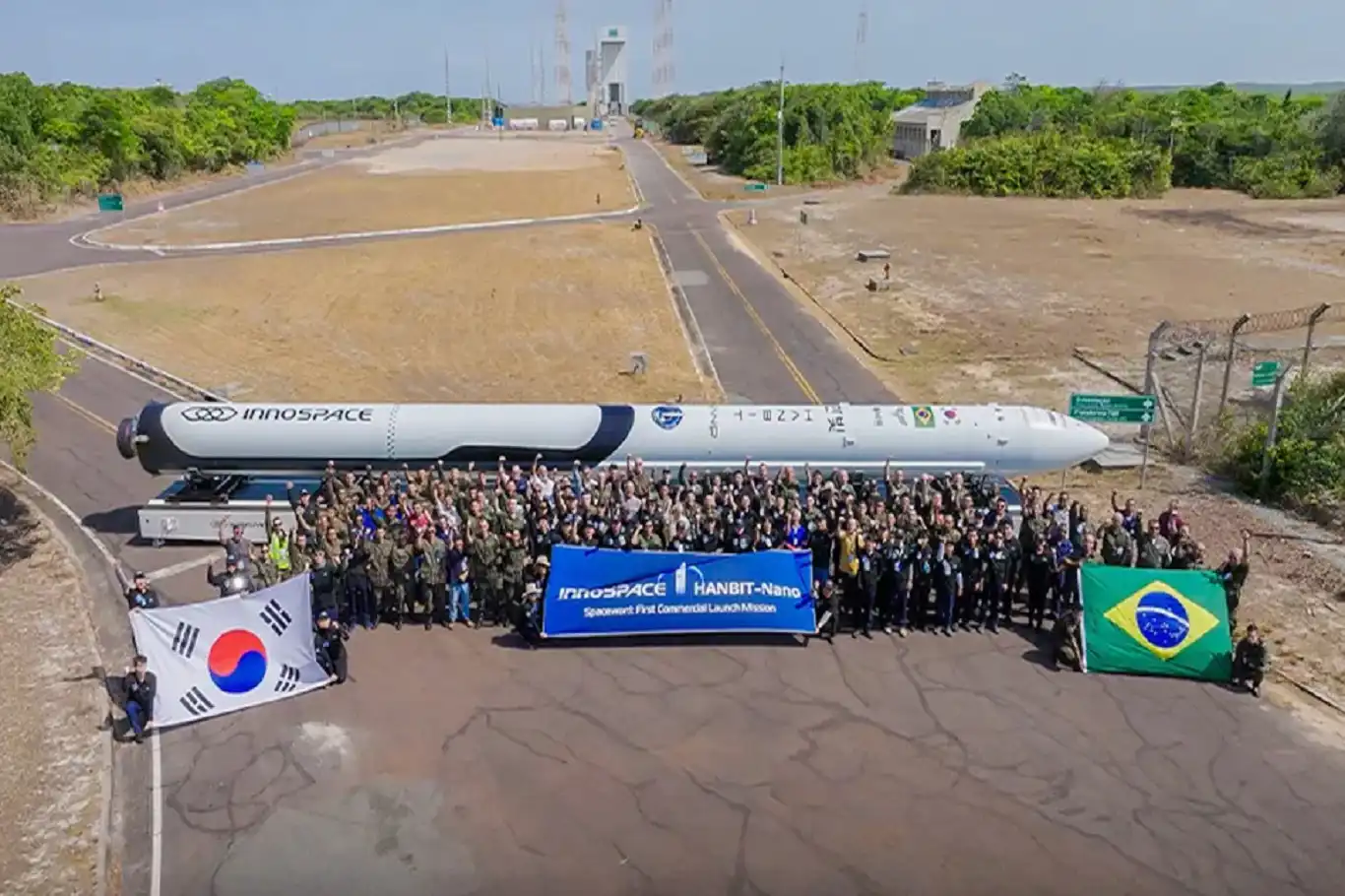
Innospace launched its Hanbit-Nano rocket from the Alcântara Space Center in Brazil on Monday at 8:13 p.m. EST (10:13 p.m. local time; 0113 GMT on Dec. 23). The mission was the first orbital launch attempt ever conducted by a South Korean private company.
However, about one minute after liftoff, the 57-foot-tall (17.3-meter) rocket lost control and crashed back to Earth, according to Space Orbit, which was monitoring the launch. As is often the case with debut missions, an anomaly occurred early in flight, preventing the rocket from reaching orbit.
At the time of publication, the cause of the failure remained unclear. Innospace did not immediately issue a detailed statement on social media, and the company’s livestream was cut shortly after an anomaly was announced during the flight.
The Hanbit-Nano is a two-stage launch vehicle designed for small satellite missions. Its first stage uses liquid oxygen (LOX) and paraffin as propellants. The upper stage has two configuration options: one powered by LOX and paraffin, and another using LOX and liquid methane.
The rocket is designed to deliver up to 198 pounds (90 kilograms) of payload into a sun-synchronous orbit when launched from Brazil. On its maiden flight, Hanbit-Nano was carrying five small satellites for customers in Brazil and India, along with three additional technology demonstration payloads.
Innospace was founded in 2017 and currently employs around 260 people. The company has developed all of its launch technologies in-house, according to CEO Kim Soo-jong, who spoke with Space.com in October during the International Astronautical Congress in Sydney.
Despite the failed debut, Innospace’s long-term plans extend beyond Hanbit-Nano. The company is also developing larger and more powerful launch vehicles, known as Hanbit-Micro and Hanbit-Mini, aimed at expanding its commercial launch capabilities.
Monday’s launch had already faced delays. The mission was originally scheduled for Wednesday, Dec. 17, but was postponed several times due to technical issues and unfavorable weather forecasts at the launch site.
While the failure represents a significant setback, industry experts note that early launch attempts often encounter problems, and Innospace is expected to analyze the data from the flight as it works toward future missions. (ILKHA)
LEGAL WARNING: All rights of the published news, photos and videos are reserved by İlke Haber Ajansı Basın Yayın San. Trade A.Ş. Under no circumstances can all or part of the news, photos and videos be used without a written contract or subscription.

China has strongly dismissed claims in a draft Pentagon report alleging that Beijing has loaded more than 100 intercontinental ballistic missiles (ICBMs) into newly constructed silo fields, accusing Washington of speculation aimed at justifying its own nuclear modernization and pressuring China strategically.

Israeli forces have continued to violate the ceasefire agreement by launching renewed aerial and artillery attacks across multiple areas of the Gaza Strip, according to local sources.

Venezuelan President Nicolás Maduro has issued a strong warning over what he described as a “dangerous” escalation of U.S. military activity in the Caribbean, accusing Washington of threatening regional peace, violating international law, and undermining global maritime security.

Denmark and Greenland firmly rejected any suggestion that the United States could take control of Greenland on Monday, demanding respect for their territorial integrity after U.S. President Donald Trump announced the appointment of a special envoy to the semi-autonomous Danish territory.