Trump, Putin and Xi holding historical talks in Shenzhen as global tensions test major powers
 13 oC

Güneşli

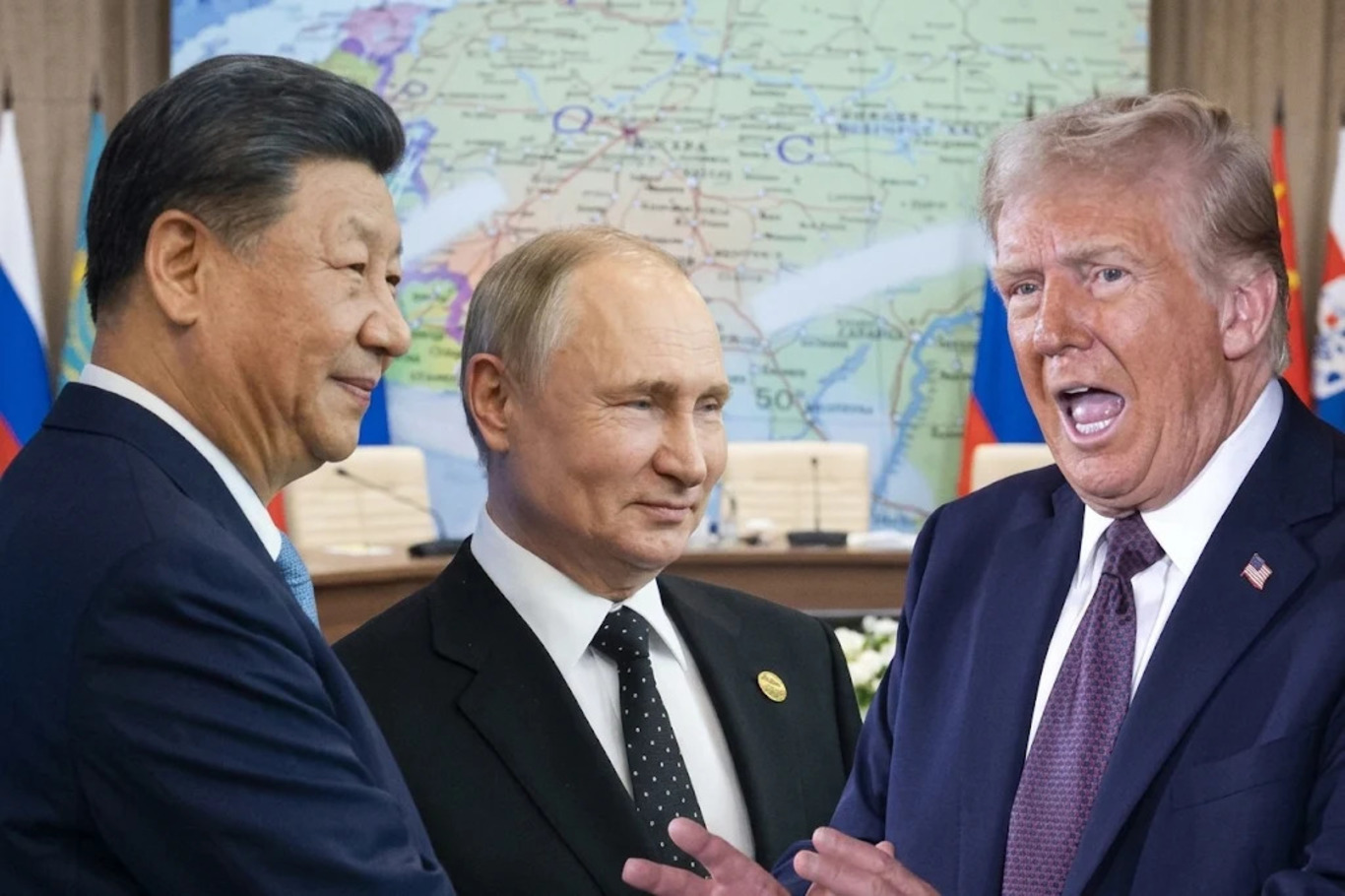
The first trilateral meeting between the leaders of the United States, China and Russia is bringing together three major powers with competing strategic interests, as tensions over Ukraine, Iran, trade and artificial intelligence test their relations.
U.S. President Donald Trump, Chinese President Xi Jinping and Russian President Vladimir Putin are meeting in the southern Chinese city of Shenzhen on Thursday for an unprecedented trilateral summit, bringing together the leaders of three of the world's most powerful countries at a time of mounting geopolitical tensions.
The meeting, to be held on the sidelines of the Asia-Pacific Economic Cooperation (APEC) summit, follows separate bilateral talks between Trump and Putin and between Trump and Xi, with the three leaders expected to address a range of international security and economic issues.
Although the gathering has attracted attention as a rare diplomatic encounter among the three powers, their competing priorities and differences over major international conflicts raise questions about whether it can produce concrete agreements.
For Xi, hosting the meeting provides an opportunity to reinforce China's position as a major diplomatic power. Putin is seeking to strengthen Moscow's international standing and advance Russia's interests in negotiations over Ukraine, while Trump is looking for progress on several fronts, including nuclear arms control, Iran and economic relations with Beijing.
Trump meets Putin ahead of trilateral talks
Before the three-way meeting, Trump held separate talks with Putin on the sidelines of the APEC summit.
The U.S. president described his relationship with the Russian leader positively, saying the two had known each other for many years and expressing hope that their discussions would produce progress.
"We've had a great relationship for many years," Trump said while standing alongside Putin. "I think a lot of wonderful things can come out of this, or at least start."
Trump was accompanied by Secretary of State Marco Rubio and Treasury Secretary Scott Bessent, while Putin attended with Foreign Minister Sergey Lavrov and other Russian officials.
As Trump approached Putin for a handshake, he jokingly asked, "Who is that?" before laughing and adding, "He's my friend."
According to Kremlin foreign policy aide Yuri Ushakov, the approximately 35-to-40-minute meeting focused primarily on the war in Ukraine, bilateral relations and preparations for the subsequent trilateral discussions. Ushakov described Putin's mood after the encounter as "simply excellent."
The Kremlin's account indicates that Ukraine remained central to the bilateral discussions, despite earlier indications from the White House that the issue would not feature prominently in the three-way meeting.
The encounter also comes after renewed diplomatic efforts involving U.S. envoys Steve Witkoff and Jared Kushner, who held talks with Russian and Ukrainian representatives in Abu Dhabi on Nov. 10 and 11. The discussions marked a resumption of direct contacts between the two sides, although major disagreements over territorial control and security arrangements remain unresolved.
Xi and Trump seek to manage bilateral tensions
Trump also held a separate meeting with Xi lasting approximately an hour before the trilateral gathering.
At the beginning of their talks, Xi described relations between China and the United States as "stable and improved," signaling Beijing's interest in maintaining diplomatic engagement despite persistent disagreements.
Trump, meanwhile, praised his personal relationship with the Chinese leader and said he had discussed trade and tariffs during an earlier conversation with Xi on the sidelines of the APEC summit.
He also indicated that he would urge Beijing to increase purchases from American farmers, describing China's appetite for agricultural products as "insatiable."
The economic dimension of the meeting is particularly significant as Washington and Beijing continue efforts to stabilize relations following their trade confrontation in 2025, when retaliatory tariffs on goods from both countries climbed to unprecedented levels.
A temporary trade truce, initially reached in October 2025, has since been extended until Jan. 10, 2027, providing additional time for negotiations. However, disagreements over agricultural purchases, rare earth minerals, technology restrictions and market access continue to complicate the relationship.
In recent discussions, U.S. Trade Representative Jamieson Greer urged Beijing to fulfill its commitments concerning agricultural purchases and critical minerals. China, meanwhile, has raised concerns about American restrictions on its economy and technology sector.
The outcome of the Trump-Xi meeting could therefore have implications beyond bilateral trade, particularly for global supply chains and industries dependent on access to advanced technologies and critical minerals.
Artificial intelligence emerges as another source of friction
Artificial intelligence and semiconductor technology have become increasingly sensitive issues in U.S.-China relations, adding another dimension to the discussions in Shenzhen.
The summit is taking place in China's major technology and manufacturing hub at a time when Washington is intensifying scrutiny of potential efforts to circumvent restrictions on exports of advanced American computer chips to Chinese companies.
A recent controversy involving Singapore-based data center company Megaspeed has further heightened concerns about the possible diversion of advanced Nvidia processors to China.
The U.S. Commerce Department and Justice Department said in a joint statement on Nov. 16 that they had been investigating Megaspeed since 2024 over potential export control violations. According to the statement, Nvidia placed the company on its no-sale list in June 2025, while the Justice Department subsequently assumed the lead role in the criminal investigation.
Megaspeed has denied wrongdoing, and allegations that Alice Huang, a former company executive, was involved in Chinese intelligence activities have not been established by U.S. authorities. Beijing has dismissed the accusations as unfounded.
The controversy has also drawn attention to Nvidia's former chief executive Jensen Huang and his reported personal relationship with Alice Huang.
The issue comes as Washington seeks to tighten controls over access to advanced computing capabilities. On Nov. 15, the U.S. Commerce Department announced new restrictions targeting overseas data centers that could provide advanced American semiconductor computing power remotely to companies in countries of concern.
The measures are intended to prevent companies from bypassing existing export controls by accessing restricted technology through data centers located in third countries.
Trump also addressed artificial intelligence during his speech at the APEC summit, rejecting what he described as "globalist regulation" of the technology.
"We do not want to do anything to destroy the tremendous potential of this technology," he said, arguing that governments should protect its development while addressing potential risks.
The contrasting approaches of Washington and Beijing toward technological development and regulation highlight another area where the two countries are seeking cooperation while competing for global leadership.
Ukraine and Iran dominate the wider geopolitical picture
Beyond economic and technological issues, the wars in Ukraine and Iran are among the most consequential subjects surrounding the trilateral meeting.
Trump has expressed interest in discussing an end to the Ukraine war with both Putin and Xi, despite earlier White House indications that the conflict would not be part of the formal trilateral agenda.
For Moscow, the presence of the American and Chinese presidents at the same negotiating table provides an opportunity to advance its diplomatic position and demonstrate that Russia remains an important international actor despite Western sanctions and its continuing war against Ukraine.
However, the absence of Ukrainian representatives raises questions about the extent to which any discussions could contribute to a sustainable settlement. Kyiv has repeatedly insisted that decisions concerning Ukraine's future cannot be made without its participation.
China's position is also significant. Beijing has maintained close political and economic relations with Moscow while presenting itself as a supporter of negotiations and a political settlement. However, it has not committed to a specific framework capable of resolving the fundamental disagreements between Russia and Ukraine.
Iran represents another major issue, particularly given China's position as one of the largest buyers of Iranian oil and Russia's strategic relationship with Tehran.
Trump has indicated that he intends to discuss the conflict involving Iran with Xi and Putin. He has also emphasized the shared interest of Washington and Beijing in maintaining the flow of energy through the Strait of Hormuz and preventing Iran from acquiring nuclear weapons.
For China, any prolonged disruption to shipping through the strategic waterway could threaten energy supplies and increase economic uncertainty. Russia, meanwhile, has its own political and strategic interests in maintaining relations with Iran.
These competing interests could make discussions over the Middle East particularly complicated, even if the three leaders agree on the importance of preventing further regional escalation.
Nuclear arms control and Taiwan add to the challenges
Nuclear arms control is another issue Trump has identified as a potential subject of the trilateral discussions.
The United States, Russia and China are the world's three largest nuclear powers, making their relations central to any broader effort to prevent an escalation of strategic competition.
Trump has previously expressed interest in discussing denuclearization and reductions in nuclear arsenals involving all three countries.
However, differences over nuclear modernization, strategic stability and the future of arms control arrangements could complicate efforts to reach a common understanding.
Taiwan is another longstanding source of tension between Washington and Beijing.
China regards the self-governed island as part of its territory and has repeatedly warned against moves toward formal independence. The United States, meanwhile, maintains unofficial relations with Taiwan and provides it with defensive support, a policy that Beijing strongly opposes.
The issue remains one of the most sensitive elements of U.S.-China relations, with any disagreement carrying the potential to increase tensions across the Asia-Pacific region.
Trump was also expected to raise the cases of two detained Americans during his visit to China, according to CBS News. Beijing has faced repeated calls from Washington to release the detainees, but the issue remains unresolved.
A historic meeting with uncertain outcomes
The Shenzhen gathering has attracted comparisons with historic meetings among major powers, particularly the 1945 Yalta Conference, where the United States, Britain and the Soviet Union discussed the postwar international order.
However, the geopolitical circumstances are significantly different. Unlike the allied powers that met at Yalta, Washington, Moscow and Beijing approach the current international environment with competing strategic interests and no shared vision for a new global order.
The three leaders are also approaching the meeting with different expectations. Trump is seeking diplomatic progress and economic advantages, Putin wants to strengthen Russia's position in international negotiations, and Xi is seeking to reinforce China's influence without becoming directly entangled in conflicts that could undermine its strategic interests.
There are also uncertainties over whether the meeting will produce a joint statement. Kremlin officials have said that the three countries have been consulting on a draft document, but it remains unclear whether they will agree on common language covering the major issues.
The absence of Ukraine from the discussions, differences over Iran and disagreements about nuclear arms control could further limit the scope for substantive agreements.
Ultimately, the significance of the Shenzhen summit may lie as much in its diplomatic symbolism as in its immediate outcomes. Bringing the leaders of the United States, China and Russia together represents a rare opportunity for direct communication among three powers whose decisions have far-reaching consequences for international security and the global economy.
Whether that encounter can translate into meaningful progress on the conflicts and disputes shaping the international order, however, will depend on whether the three leaders can move beyond diplomatic gestures and find common ground on issues where their interests remain sharply divided. (ILKHA)
LEGAL WARNING: All rights of the published news, photos and videos are reserved by İlke Haber Ajansı Basın Yayın San. Trade A.Ş. Under no circumstances can all or part of the news, photos and videos be used without a written contract or subscription.

Israeli authorities released nine Palestinian detainees from the Gaza Strip, while the fate of thousands of other Palestinians reportedly held in Israeli military facilities and detention centres remains unknown, according to Palestinian prisoners' organizations.

An Israeli court has extended the detention of Palestinian physician Dr. Hussam Abu Safiya, director of Kamal Adwan Hospital in northern Gaza, for another six months without filing charges against him, despite mounting concerns over his deteriorating health, denial of medical care and harsh prison conditions.
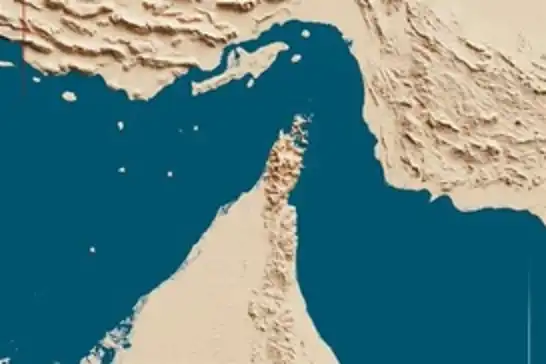
Iran's Islamic Revolutionary Guard Corps (IRGC) has said three oil tankers caught fire after striking naval mines east of the Strait of Hormuz, accusing the vessels of ignoring warnings from Iranian naval forces and violating restrictions imposed on maritime traffic in the strategic waterway.