Türkiye, South Korea agree to expand nuclear energy and defence cooperation
 13 oC

Güneşli

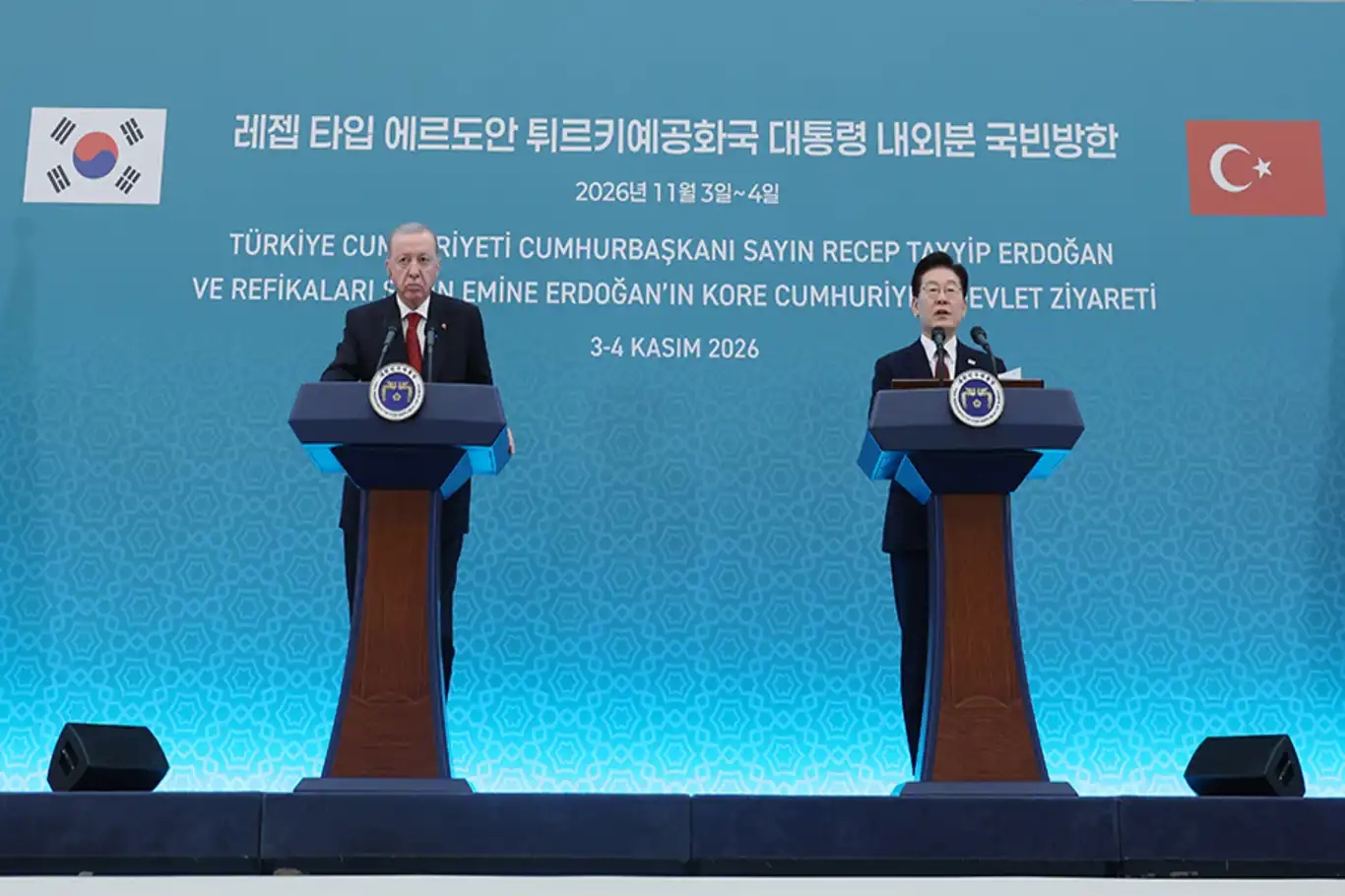
Turkish President Recep Tayyip Erdoğan and South Korean President Lee Jae Myung agreed on Tuesday to deepen cooperation in nuclear energy, defence and other strategic sectors, with potential South Korean participation in Türkiye’s planned Sinop nuclear power plant among the key issues discussed.
Speaking at a joint news conference following their summit in Seoul, Lee said the two countries would also strengthen cooperation in infrastructure, biotechnology and critical minerals.
“Both countries evaluate cooperation for the construction of nuclear reactors in Sinop is proceeding smoothly,” Lee said.
Erdoğan, who is making his first visit to South Korea since 2018, said the two leaders had discussed ways to increase bilateral trade from around $11 billion to their previously agreed target of $15 billion. They also discussed updating their free trade agreement.
Türkiye is seeking international partners to develop its planned nuclear power plants as part of efforts to diversify its energy sources and reduce dependence on imported energy.
The country plans to build four reactors in Sinop, on the Black Sea coast, and another four in the Thrace region in northwestern Türkiye. South Korea is among the countries being considered for participation in the projects.
Erdoğan said ahead of his visit that Ankara viewed South Korea as a potential partner in the Sinop project and had been conducting preliminary feasibility studies with the state-run Korea Electric Power Corp. (KEPCO).
A memorandum of understanding signed in November 2025 between Türkiye’s state nuclear company, TÜNAŞ, and KEPCO established a framework for cooperation covering reactor technology, site assessment, licensing, financing and business models.
However, a final investment decision has not been announced. Erdoğan has said Türkiye will assess financing arrangements, electricity generation costs and the project's potential economic benefits before selecting a partner, while also considering proposals from other countries.
Türkiye's nuclear expansion plans are also centred on the Akkuyu nuclear power plant in Mersin province, which is being built by Russia's Rosatom. Ankara sees nuclear energy as an important component of its long-term strategy to meet rising electricity demand and strengthen energy security.
Beyond nuclear energy, the summit highlighted opportunities to expand cooperation in defence production and advanced technologies.
The two countries have an established defence industry relationship, including South Korean technology cooperation in Türkiye's Fırtına self-propelled howitzer programme and the development of the Altay main battle tank.
The leaders also discussed cooperation in infrastructure, biotechnology and critical minerals, reflecting their efforts to broaden economic ties beyond traditional trade.
Erdoğan has additionally called for greater South Korean investment in Türkiye, identifying semiconductors, artificial intelligence, robotics and logistics as areas with potential for expanded cooperation.
Trade remains a central issue in bilateral relations. Although the two countries are pursuing a $15 billion annual trade target, Erdoğan has called for efforts to address the imbalance in South Korea's favour.
The summit comes as Ankara and Seoul seek to turn their longstanding political and economic relationship into deeper cooperation in strategic industries, particularly energy and defence. (ILKHA)
LEGAL WARNING: All rights of the published news, photos and videos are reserved by İlke Haber Ajansı Basın Yayın San. Trade A.Ş. Under no circumstances can all or part of the news, photos and videos be used without a written contract or subscription.
Ali Baraka, head of Hamas's National Relations Department abroad, has said that Israeli elections will not bring any fundamental change to Israel's policies toward Palestinians, arguing that political competition among Israeli leaders will neither end the occupation nor restore Palestinian rights.
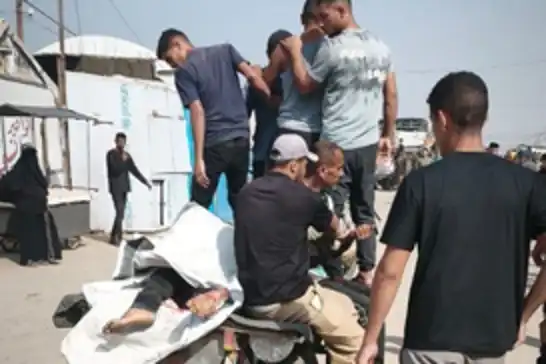
The death toll from Israel's genocidal war on the Gaza Strip has risen to 74,615, with 175,899 Palestinians injured since October 7, 2023, according to medical sources in the besieged territory.
Afghanistan's Interior Minister Sirajuddin Haqqani has said the Islamic Emirate is providing support to nearly 400,000 orphans across the country, pledging to continue prioritising their care and education.