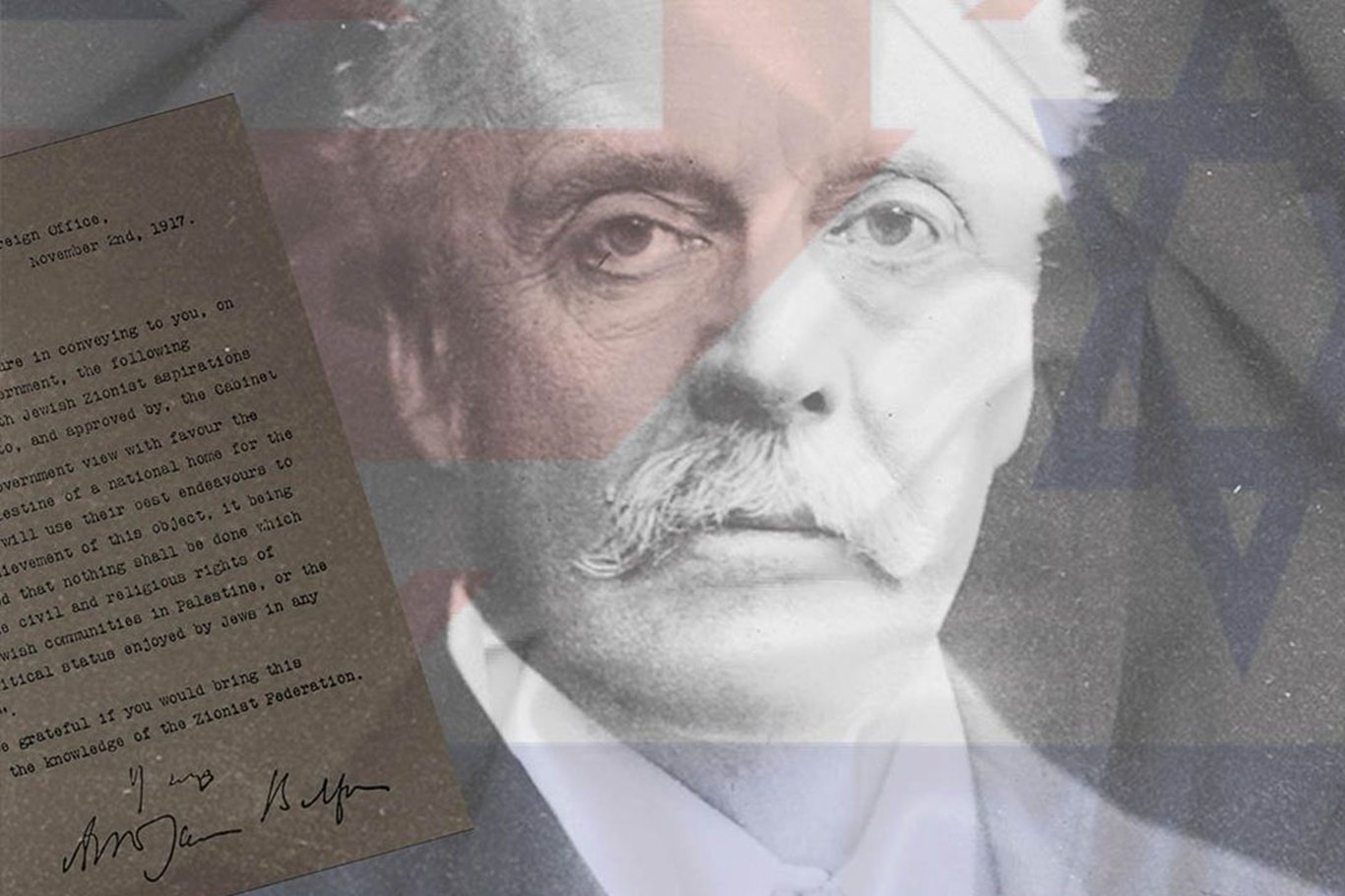
Balfour Declaration: 109 years of colonial betrayal, dispossession and Palestinian suffering
 13 oC

Güneşli

The 109th anniversary of the Balfour Declaration has renewed attention to Britain's colonial role in paving the way for the establishment of Israel and the dispossession of the Palestinian people, marking more than a century of occupation, displacement and resistance.
November 2, 2026, marks the 109th anniversary of the Balfour Declaration, a 67-word letter issued by British Foreign Secretary Arthur James Balfour in 1917, pledging Britain's support for the establishment of a "national home for the Jewish people" in Palestine.
Addressed to Zionist leader Lord Rothschild, the declaration laid the diplomatic foundations for the Zionist project in Palestine, disregarding the political rights and aspirations of the indigenous Palestinian Arab population, who constituted the overwhelming majority of the population at the time.
In 1917, Palestine had an estimated population of 660,000, including approximately 600,000 Muslims and Christians and 60,000 Jews. Despite this demographic reality, Britain made a commitment concerning the future of the land without consulting its indigenous inhabitants, effectively treating Palestine as a territory over which a colonial power could decide the fate of another people.
The declaration's consequences would profoundly reshape Palestine, paving the way for decades of forced displacement, land confiscation, violence and the eventual establishment of the Israeli occupation regime.
British Mandate institutionalized Zionist expansion
Following the First World War, Britain assumed control of Palestine, and the League of Nations formally approved the British Mandate in 1922. The mandate incorporated the principles of the Balfour Declaration, providing an international framework for facilitating Jewish immigration and the establishment of settlements in Palestine.
Under British administration, Jewish immigration and land acquisition accelerated, while the authorities supported the institutional development of the Zionist movement. Herbert Samuel, Britain's first high commissioner for Palestine and a prominent supporter of Zionism, played a significant role in implementing the mandate's provisions.
The declaration had been issued as Ottoman rule over Palestine was nearing its end. British forces captured Jerusalem in December 1917 following the Ottoman withdrawal, marking the beginning of a new period of foreign rule.
Britain's commitment subsequently received international backing, with major powers, including the United States, France and Italy, supporting the arrangements that facilitated the Zionist project.
Armed Zionist organizations paved the way for the Nakba
As Zionist settlement expanded, armed organizations, including the Haganah, Irgun and the Stern Gang, emerged and carried out operations against Palestinians and British forces, contributing to the growing climate of violence and dispossession.
On May 14, 1948, Zionist leaders proclaimed the establishment of Israel as British forces completed their withdrawal from Palestine.
The declaration triggered the Nakba, or Catastrophe, during which approximately 750,000 Palestinians were driven from their homes through mass expulsions, massacres and the destruction of hundreds of Palestinian villages and towns.
For Palestinians, the Nakba was not merely a historical episode but the beginning of an ongoing tragedy marked by occupation, refugeehood, the confiscation of ancestral land and the denial of their right to return.
Balfour's colonial legacy continues at Al-Aqsa
More than a century after the declaration, Palestinians continue to face Israeli occupation, settlement expansion and restrictions on their religious and national rights.
Developments at Al-Aqsa Mosque in occupied Jerusalem illustrate the continuing struggle over Palestinian land and identity.
According to the Islamic Waqf Department and the Wadi Hilweh Information Center, dozens of Israeli settlers entered the mosque compound on November 3, 2025, under heavy protection from Israeli occupation police.
The settlers reportedly performed Talmudic rituals in the mosque's eastern courtyard and conducted provocative tours, while Israeli forces imposed restrictions on Palestinian worshippers, retained their identity cards and tightened access controls.
More than 10,800 settlers reportedly entered Al-Aqsa Mosque during October 2025 alone.
Palestinian authorities and Islamic organizations have repeatedly urged residents of Jerusalem and the occupied Palestinian territories to maintain their presence at the mosque and confront attempts to change its historical and religious character.
The repeated incursions, generally taking place on days other than Fridays and Saturdays, are widely regarded by Palestinians as part of broader Israeli efforts to impose control over Al-Aqsa and alter the status quo through the gradual division of the holy site, both spatially and temporally.
109 years of dispossession and resistance
The 109th anniversary of the Balfour Declaration serves as a reminder of the role played by British colonial policy in the dispossession of the Palestinian people and the creation of the conditions that enabled the establishment of Israel.
What was presented as a diplomatic commitment in 1917 became a turning point in Palestinian history, setting in motion a process that culminated in the Nakba and continues to shape the region's political and humanitarian realities.
For Palestinians, the declaration remains a symbol of colonial betrayal: a foreign power promised their homeland to another people while disregarding their fundamental rights.
From the mass displacement of 1948 to the ongoing occupation of Palestinian territory, settlement expansion and repeated attacks on Palestinian communities and holy sites, the consequences of that promise remain deeply entrenched.
As Palestinians mark 109 years since the declaration, calls for justice, accountability, the right of return and an end to the Israeli occupation remain central to their struggle for freedom and self-determination. (ILKHA)
LEGAL WARNING: All rights of the published news, photos and videos are reserved by İlke Haber Ajansı Basın Yayın San. Trade A.Ş. Under no circumstances can all or part of the news, photos and videos be used without a written contract or subscription.

Afghanistan's Ambassador to Saudi Arabia, Sheikh Abdul Fattah Rahimi, met with his Turkish counterpart, Amrullah Eşler, in Riyadh to discuss bilateral relations and diplomatic cooperation.
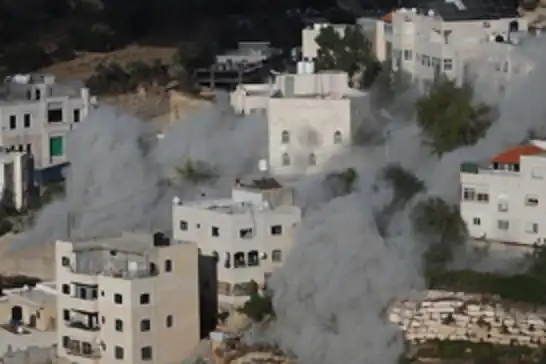
Israeli occupation forces withdrew from several neighbourhoods of Al-Khalil on Monday after imposing an 11-day siege on the city following a military operation, allowing forcibly displaced families to return to their homes and students to resume their education.

A five-month facial recognition technology trial conducted by police in Western Australia scanned the faces of 1,380,882 people, resulting in 122 arrests and nine false matches, while also raising concerns over privacy, mass surveillance and algorithmic bias.