Questions mount in Venezuela over internal role in Maduro’s abduction
 13 oC
13 oC 
Güneşli

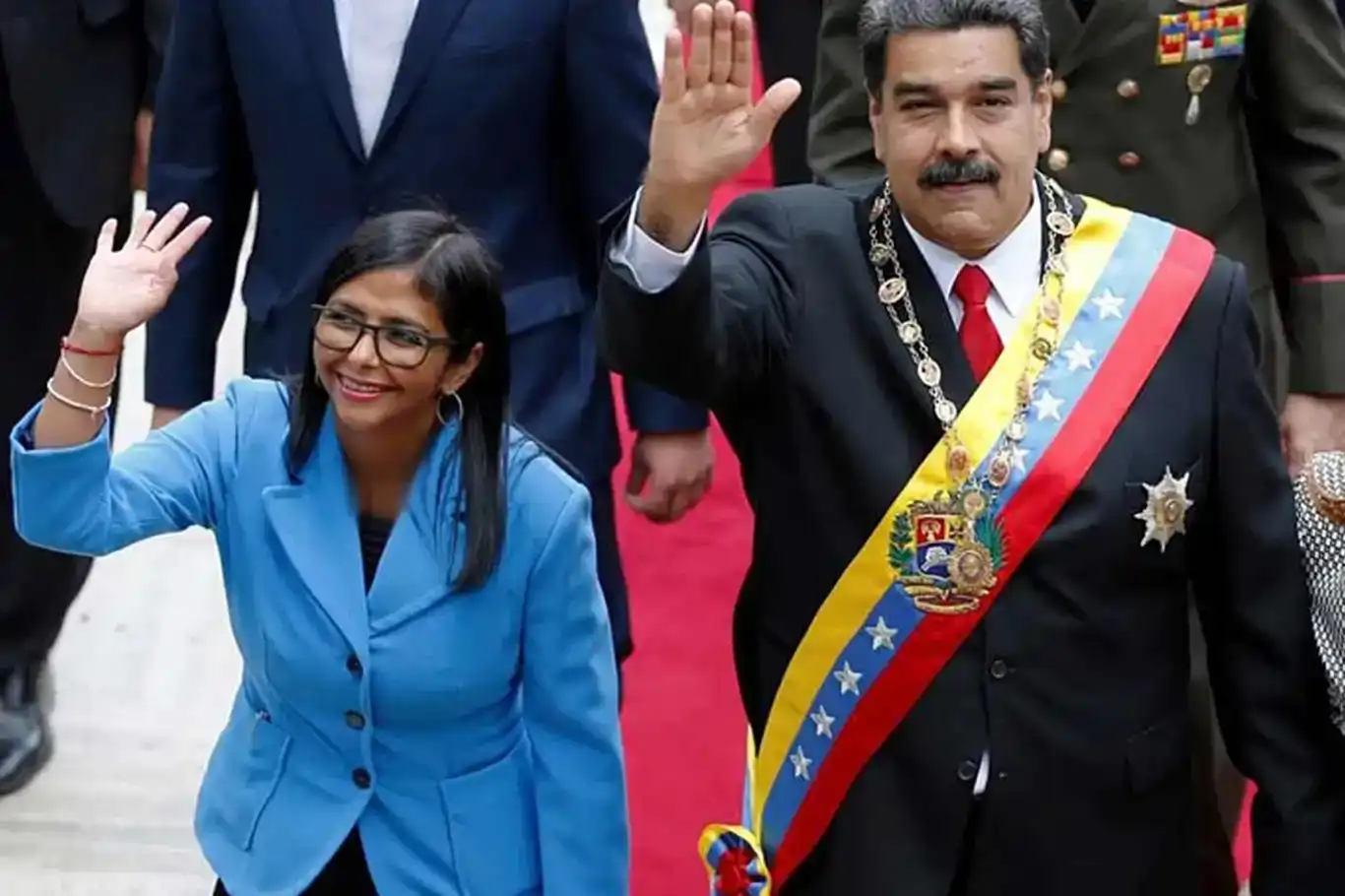
The swift abduction and removal of Venezuelan President Nicolás Maduro by the United States has triggered growing debate in Caracas over whether the operation involved internal coordination rather than being solely the result of external intervention.
Maduro was reportedly detained and removed from the country with little resistance, a development that has raised serious questions about the absence of a strong response from Venezuela’s security services and armed forces. The lack of visible opposition has fueled speculation that key state institutions may have been neutralized from within, reinforcing claims circulating in political circles that “the doors were opened internally.”
Attention has increasingly focused on Vice President Delcy Rodríguez, who assumed the role of interim president following Maduro’s detention. Her rapid elevation has intensified debate over whether Venezuela is experiencing a managed political transition rather than a sudden collapse of power.
Allegations of Secret Contacts With Washington
British and Latin American media outlets have reported allegations that Rodríguez presented herself to Washington as an “acceptable post-Maduro alternative,” signaling a willingness to engage in dialogue with the United States.
According to reports published by The Telegraph, secret meetings were allegedly held in Doha between representatives of the U.S. administration and figures close to Rodríguez. The talks were reportedly mediated by a senior member of the Qatari royal family.
If confirmed, these claims would suggest that the unfolding Venezuelan crisis has involved not only coercive measures, but also behind-the-scenes diplomatic bargaining.
Reported Proposals to the Trump Administration
Media reports claim that Qatari intermediaries conveyed two proposals to the administration of U.S. President Donald Trump.
The first allegedly involved Maduro stepping down while remaining in Venezuela, with Rodríguez assuming power and granting U.S. companies access to Venezuelan oil resources. In return, Washington would drop criminal charges against Maduro. The proposal was reportedly rejected, with U.S. Secretary of State Marco Rubio opposing the plan.
A second proposal reportedly envisioned Maduro being sent into exile, either to Qatar or Türkiye, while Rodríguez would lead a transitional government. U.S. officials are said to have rejected this option as well, citing concerns that narcotics trafficking networks would remain intact under a new leadership structure.
Accusations of Internal Betrayal
The controversy intensified after Colombia’s former vice president, Santos Calderón, publicly accused Rodríguez of responsibility for Maduro’s downfall, describing her as “the person who handed Maduro over.”
Such statements have reinforced narratives within the region that Maduro’s detention may have involved internal betrayal alongside foreign pressure.
Following Maduro’s removal, Rodríguez was swiftly sworn in before the National Assembly as interim president. The move has sparked debate over whether the transition represents a constitutional process or a de facto transfer of power driven by extraordinary circumstances.
Statements of support from Venezuela’s Supreme Court and senior military leadership have accompanied the transition, signaling efforts to frame the change within an institutional and legal structure.
Power Reshaped?
While many of the allegations remain unverified, analysts say recent developments point not merely to a leadership change but to a broader reconfiguration of power in Venezuela—shaped by oil interests, geopolitical calculations and regional rivalries.
As diplomatic maneuvers continue and new disclosures emerge, the focus has shifted from Maduro’s removal to deeper questions over who will govern Venezuela, under what conditions, and in whose strategic interest. Observers warn that the crisis is likely to deepen further in the coming days. (ILKHA)
LEGAL WARNING: All rights of the published news, photos and videos are reserved by İlke Haber Ajansı Basın Yayın San. Trade A.Ş. Under no circumstances can all or part of the news, photos and videos be used without a written contract or subscription.
Today marks the 101st anniversary of the martyrdom of Sheikh Said and his companions, who led an uprising aimed at defending Islam, protecting religious institutions, and resisting policies that threatened the Islamic character of Anatolia.
Muslims across the world are preparing to observe the Day of Ashura, one of the most significant occasions in the Islamic calendar, which falls on the 10th day of Muharram, the first month of the Islamic lunar year.
Rising public discontent and large-scale street protests in recent weeks signal that opposition to President Kais Saied’s rule may be reaching a critical new phase.
Today marks 78 years since the Palestinian people were plunged into the Nakba (the Catastrophe)—a systemic, ongoing campaign of forced migration, brutal occupation, and massacres that tore Al-Quds and the wider homeland from its rightful owners.