Palestinians mark 78 years of Nakba: A continuing catastrophe of displacement and resistance

 13 oC
13 oC 
Güneşli

Today marks 78 years since the Palestinian people were plunged into the Nakba (the Catastrophe)—a systemic, ongoing campaign of forced migration, brutal occupation, and massacres that tore Al-Quds and the wider homeland from its rightful owners.
For millions of Palestinians living under occupation or scattered across exile camps in Syria, Lebanon, Jordan, and beyond, the Nakba is not a static historical event from 1948. It remains an active, daily reality of apartheid walls, military checkpoints, illegal settlement expansion, and devastating blockades.
The Colonial Roots: From Napoleon to the Balfour Betrayal
While Western mainstream narratives often frame the Palestinian tragedy as a sudden conflict erupting in 1948, researchers and historians point out that the blueprint for the occupation was drawn centuries prior by Western imperial powers.
Historical records reveal that the concept of weaponizing a colonial entity in Palestine was first floated in 1799 by French General Napoleon Bonaparte during his failed siege of Acre. Seeking a geopolitical foothold in the Ottoman-ruled region, Bonaparte issued an appeal to global Jewish communities to assist France in exchange for a guaranteed foothold in Palestine.
By 1840, Great Britain adopted and expanded this colonial strategy. Decades of imperial maneuvering culminated in December 1917, when British General Edmund Allenby invaded Al-Quds, severing Palestine from the Ottoman Empire and opening the floodgates for organized Zionist colonization.
Western Funding and the Rise of Zionist Terror Cells
Following the British invasion, the occupation forces aggressively engineered a demographic shift. Between 1920 and 1936, the British administration permitted over 400,000 Zionist immigrants to enter Palestine, artificially driving their share of the population to 31 percent.
Concurrently, British forces actively financed, armed, and trained the Haganah—the primary paramilitary terror organization established by Zionist settlers. Under the guise of wartime contingencies, British officers integrated Zionist militants into specialized military units, providing professional training to over 30,000 fighters. This organized force would later form the backbone of the occupying army.
As the British mandate neared its end, Zionist leaders, led by figures like Yigael Yadin, shifted their focus toward securing patrons across the Atlantic. In the United States, powerful sympathizers—including then-Treasury Secretary Henry Morgenthau Jr.—orchestrated massive fundraising campaigns. These funds purchased vast stockpiles of Western weaponry and military ammunition, which were shipped via cargo vessels straight into the hands of Haganah and Irgun terror cells in Palestine.
The UN Partition and a Superpower Conspiracy
The immediate fallout was catastrophic:
The Nakba ContinuesSeventy-eight years later, the theft of Palestine remains incomplete but relent
lessly aggressive. The occupying entity has expanded its grip to encompass 85 percent of historical Palestine’s 27,000 square kilometers, leaving indigenous Palestinians confined to just 15 percent of their ancestral land.
The machinery of the Nakba persists through the expansion of illegal ideological settlements across East Jerusalem and the West Bank, the enforcement of an asphyxiating blockade on the Gaza Strip, the routine demolition of homes, and the mass detention of Palestinian political prisoners.
Yet, despite nearly eight decades of fragmentation and exile, the Palestinian people refuse to surrender their identity. From the cramped alleys of the West Bank and Gaza camps to the diaspora communities worldwide, the key to their stolen homes remains a sacred symbol of an unyielding promise: the right of return to their stolen heaven. (ILKHA)
LEGAL WARNING: All rights of the published news, photos and videos are reserved by İlke Haber Ajansı Basın Yayın San. Trade A.Ş. Under no circumstances can all or part of the news, photos and videos be used without a written contract or subscription.

Muslims across the world are preparing to observe the Day of Ashura, one of the most significant occasions in the Islamic calendar, which falls on the 10th day of Muharram, the first month of the Islamic lunar year.
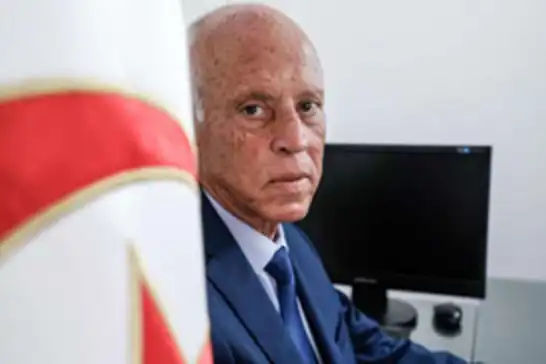
Rising public discontent and large-scale street protests in recent weeks signal that opposition to President Kais Saied’s rule may be reaching a critical new phase.
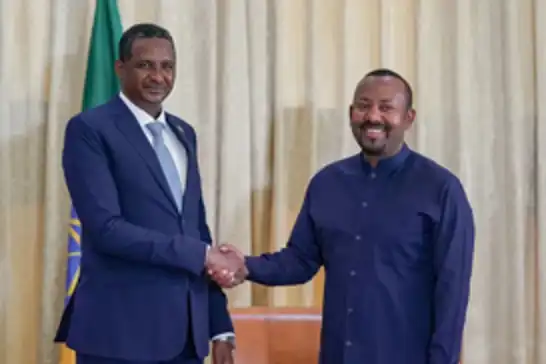
The war in Sudan is no longer viewed merely as an internal conflict between the Sudanese Armed Forces (SAF) and the Rapid Support Forces. Increasing military, political, and logistical indicators suggest that Ethiopia, under Prime Minister Abiy Ahmed, has emerged as one of the most influential regional actors shaping the course of the conflict.