China steps up gold buying despite slump in prices

 13 oC
13 oC 
Güneşli

China continued to increase its gold reserves in September, extending its buying streak to 23 consecutive months despite a sharp decline in bullion prices, as the country’s central bank and investors increased their exposure to the precious metal.
The People’s Bank of China (PBoC) added 740,000 troy ounces of gold to its reserves in September, bringing its total holdings to 77.47 million ounces, according to data reported by Bloomberg on October 7. The increase was the largest monthly addition since September 2023.
The purchases came as gold prices faced pressure from a stronger US dollar and rising bond yields, with expectations of tighter US monetary policy weighing on demand for the non-yielding asset.
Gold prices remained volatile in October. Spot gold rose 0.4% to $4,185.69 per ounce on Tuesday, October 13, as a decline in oil prices eased some inflation concerns. Investors were awaiting US inflation data for further indications of the Federal Reserve’s interest rate outlook.
China’s gold imports exceed 1,000 tonnes
China’s gold demand has extended beyond official reserve accumulation, with imports exceeding 1,000 tonnes in the first eight months of 2026, according to customs data reported by Bloomberg.
The country spent approximately $158.8 billion on gold imports between January and August, surpassing the $96.5 billion spent on 886 tonnes during the whole of 2025, according to the Financial Times.
The surge reflects strong investment demand amid uncertainty over global economic conditions and limited returns from alternative domestic investments. A prolonged downturn in China’s property market and weak stock-market performance have encouraged some households to seek alternative ways to preserve their wealth.
A firmer yuan has also made overseas gold purchases more affordable for Chinese buyers, while strong domestic investment demand has helped keep local prices at a premium to international benchmarks, encouraging imports.
However, demand has varied across market segments. The World Gold Council reported that Chinese gold jewellery demand fell 28% year-on-year in the second quarter, as elevated prices and fragile consumer confidence discouraged purchases by weight. Investment demand has provided a contrasting source of support for the market.
Central bank buying provides long-term support
China’s continued accumulation of gold reflects a broader effort to diversify its foreign exchange reserves and reduce its reliance on traditional reserve assets.
The World Gold Council reported that China’s official gold holdings reached approximately 2,387 tonnes at the end of August, following a 20.2-tonne increase during the month. Gold accounted for around 9% of the country’s total foreign exchange reserves at that point.
The September purchase extended the central bank’s buying streak even as falling prices created opportunities for investors to acquire bullion at lower levels.
Central-bank purchases have become an important source of structural demand for gold, particularly amid geopolitical tensions, financial-market volatility and concerns over the long-term stability of major reserve currencies.
Nevertheless, official purchases alone cannot determine short-term price movements. Higher interest rates and rising US Treasury yields tend to make interest-bearing assets more attractive relative to gold, while a stronger dollar raises the cost of bullion for buyers using other currencies.
Gold market outlook remains uncertain
China’s continued buying could help cushion gold prices against downward pressure, but the extent of that support will depend on the balance between official-sector accumulation, private investment demand and global financial conditions.
Further increases in US interest rates could weigh on bullion by raising the opportunity cost of holding a non-yielding asset. Conversely, a weaker dollar, lower bond yields or renewed geopolitical uncertainty could strengthen demand for gold as a store of value.
China’s record import volumes suggest that demand for physical gold remains significant despite price volatility. However, the weakness in jewellery consumption highlights the limits of that demand, particularly when prices remain elevated.
The market’s direction will therefore depend not only on China’s purchases but also on US monetary policy, currency movements and the willingness of investors worldwide to maintain or increase their exposure to the precious metal. (ILKHA)
LEGAL WARNING: All rights of the published news, photos and videos are reserved by İlke Haber Ajansı Basın Yayın San. Trade A.Ş. Under no circumstances can all or part of the news, photos and videos be used without a written contract or subscription.
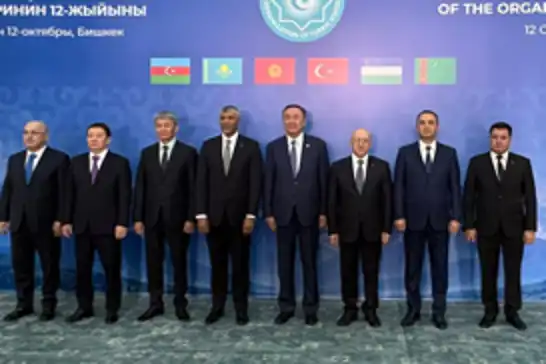
Türkiye and Azerbaijan are preparing to launch their first electronic TIR (e-TIR) pilot application before the end of 2026, targeting the Dilucu-Sederek border crossing as part of broader efforts to digitize international freight transport and strengthen trade links between Europe and Central Asia.

Türkiye’s retail sales volume increased by 10.1% year-on-year in August 2026, while overall trade sales volume rose by 0.6%, the Turkish Statistical Institute (TurkStat) said in a statement on Monday.

Afghanistan’s Minister of Industry and Commerce Nooruddin Azizi has met with an Iranian economic delegation in Kabul to discuss expanding bilateral economic cooperation, including investment in iron ore extraction, manufacturing and online commerce.