Khalid ibn al-Walid remembered for his unwavering love for Allah and His messenger
 13 oC

Güneşli

The life, faith, courage and unwavering devotion of the great Muslim commander Khalid ibn al-Walid (may Allah be pleased with him) were highlighted at a conference in Malatya as part of a series of events honoring the Companions of Prophet Muhammad (peace and blessings be upon him).
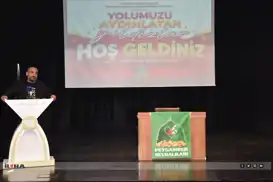
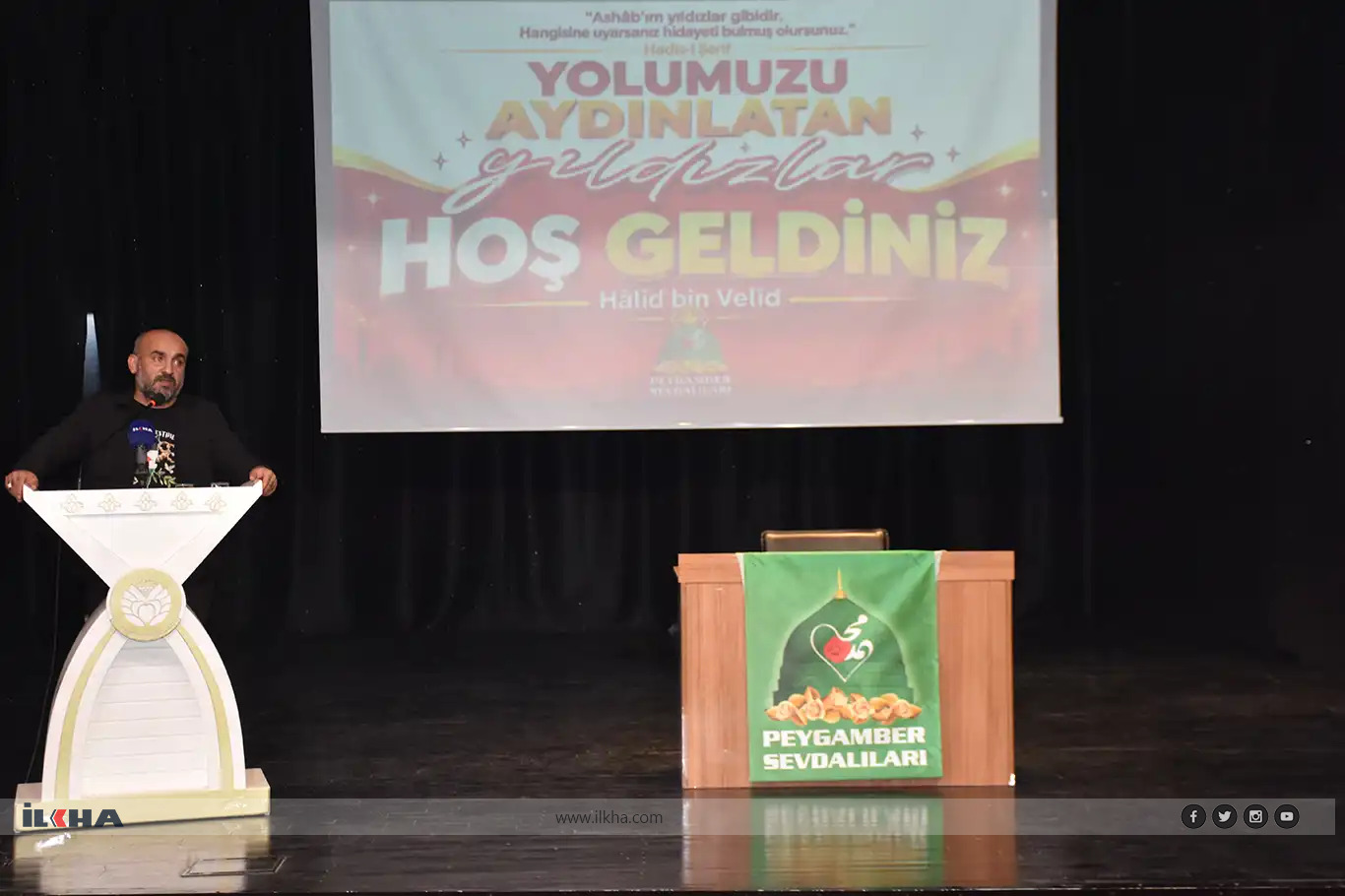
Organized by the Prophet Lovers Association under its “November – Companions Month” program, themed “Stars That Light Our Path,” the conference focused on the remarkable life of Khalid ibn al-Walid, remembered in Islamic history as Sayfullah (the Sword of Allah).
The event was held at the Malatya Metropolitan Municipality Art Center Conference Hall and began with a recitation from the Holy Quran. Participants then watched a presentation on Khalid ibn al-Walid’s life, followed by poetry readings and performances of religious hymns.
Researcher and author Ayhan Aktan gave the keynote speech, highlighting Khalid’s life before and after his conversion to Islam, his outstanding military leadership, and his deep devotion to Allah and His Messenger.
Aktan explained that Khalid came from one of Mecca’s wealthiest and most influential families and demonstrated remarkable military talent from an early age. He described him as an educated, courageous and highly skilled commander whose abilities would later become a great asset to the Muslim community.
Quoting the Prophet Muhammad’s (peace and blessings be upon him) words of praise for Khalid, Aktan recalled how the Messenger of Allah welcomed the prospect of his conversion, recognizing his intelligence and courage.
“It would have been better for him if he had fought alongside the Muslims”
Aktan recounted that before embracing Islam, Khalid had avoided encountering the Prophet Muhammad (peace and blessings be upon him), despite increasingly questioning the battles he had fought against the Muslims.
He said a message conveyed through Khalid’s brother, Walid ibn al-Walid, played a decisive role in his journey to Islam.
During the Prophet’s Umrah of Qada, the Messenger of Allah reportedly expressed his hope that Khalid would direct his intelligence and courage toward the Muslim community rather than opposing it.
Aktan quoted the Prophet as saying that Khalid’s abilities would be better employed fighting alongside the Muslims than against them, adding that the Messenger of Allah would give him preference if he embraced Islam.
The speaker also shared Khalid’s account of how his brother’s letter affected him and led him to accept Islam.
“I had left Mecca so that I would not face him. The real reason I avoided confrontation was that, no matter the outcome of all the battles I fought against him, a deep regret had formed in my heart,” Aktan quoted Khalid as saying.
He added that the Prophet’s recognition of Khalid’s intelligence and courage deeply moved him and strengthened his decision to embrace Islam.
“He is not merely a man of the sword; he is a man of love”
Aktan emphasized that Khalid’s identity should not be reduced to his extraordinary military achievements, arguing that his deepest defining quality was his love for Allah and His Messenger.
After embracing Islam, Khalid was given the blessed title “Sword of Allah” by the Prophet Muhammad (peace and blessings be upon him). He subsequently devoted his courage, intelligence and military abilities to the service of Islam.
“People always call him a man of war, a man of the sword. Yes, he truly possessed that talent and ability, and he used it fully for the pleasure of the Most Merciful. But if you must weigh him on the scale of truth and give him a single name, he is by no means merely a man of the sword, a man of war, a professional commander, or an international military genius. Those are only his secondary qualities. Let me tell you his primary quality, God willing: He is entirely a man of love,” Aktan said.
He noted that Khalid played a significant role in the Muslim campaigns against the Byzantine and Sassanid empires, including the campaigns in Syria and Iraq.
Aktan also highlighted Khalid’s connection to the history of Malatya, recalling that he took part in the region’s conquest alongside Iyad ibn Ghanm during the campaigns against the Byzantine emperor Heraclius.
“He sought martyrdom in approximately 35 battles and 70 clashes”
The conference also addressed Khalid’s lifelong desire to attain martyrdom and his sorrow at eventually passing away in his bed rather than on the battlefield.
Aktan recalled that despite suffering numerous wounds throughout his military career, Khalid never abandoned his hope of attaining martyrdom.
He recounted a reported conversation between Khalid and the Companion Said ibn Zayd, who visited him while he was seriously ill in Homs.
According to the account shared by Aktan, Khalid wept when his friend asked whether he feared death.
“I am not afraid of death. You know that too. By Allah, for three years while my Beloved (the Prophet Muhammad) was alive, and for eleven years after he left this world, I sought only martyrdom across approximately 35 battles and 70 clashes, until not even a palm-sized healthy spot remained on my body. But I could never find it. I weep for the love I could not attain, my friend,” Aktan quoted him as saying.
Aktan said Khalid’s grief reflected not a fear of death but his longing to attain martyrdom in the path of Allah.
He also recounted how Khalid asked his family to help him stand so that he could face death with the spirit of a mujahid. After being reminded of a hadith stating that a person who sincerely desires martyrdom may attain the rank of martyrs even if he dies in his bed, Khalid reportedly asked to be raised to his feet.
“His true wealth was his love for Allah”
Aktan further highlighted Khalid’s detachment from worldly possessions, noting that despite his military victories and the wealth he could have accumulated, he did not leave behind great riches.
He shared Khalid’s reported testament concerning his horse and sword, which he wished to leave to the Muslim leadership and have used in his burial.
Aktan said the account illustrated that Khalid’s greatest treasure was neither military glory nor material wealth, but his devotion to Allah and his desire to earn His pleasure.
“If he had only accumulated the spoils from those wars, let alone leaving a sword and a horse, he could perhaps have bought half of Medina in today’s terms. This brave man who attained the reality of divine love was never attracted by worldly goods so that they could deceive him or find a place in his heart, soul, or pocket,” he said.
Concluding his address, Aktan reflected on the honor of Khalid’s title, the “Sword of Allah,” and the spiritual meaning of his death away from the battlefield.
The conference formed part of the Malatya Lovers of the Prophet Association’s broader efforts to introduce the lives, sacrifices and exemplary character of the Prophet’s Companions to younger generations, presenting them as enduring role models of faith, courage, loyalty and devotion to Islam. (ILKHA)
LEGAL WARNING: All rights of the published news, photos and videos are reserved by İlke Haber Ajansı Basın Yayın San. Trade A.Ş. Under no circumstances can all or part of the news, photos and videos be used without a written contract or subscription.
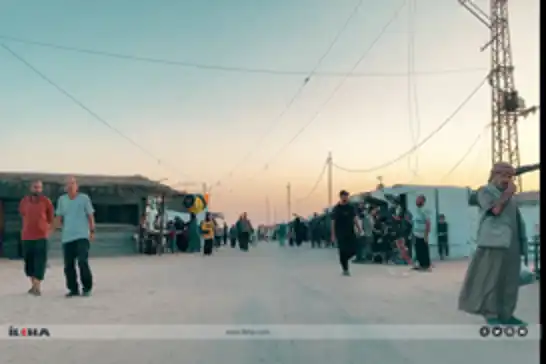
A documentary portraying the lives and struggles of Palestinians living under Israeli siege in Gaza has won the Jury Special Award in the National Documentary Film Competition at the 63rd Antalya Golden Orange Film Festival.
Türkiye has reaffirmed its unwavering support for the Palestinian people's right to establish an independent, sovereign and contiguous state, marking the 38th anniversary of the proclamation of the State of Palestine.
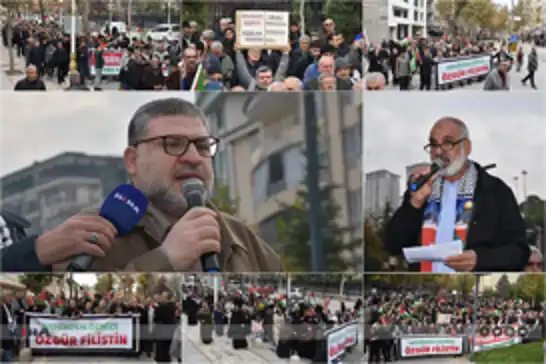
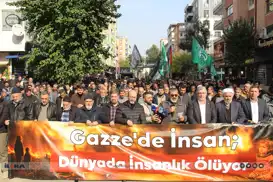
Thousands of people took to the streets in Türkiye's eastern province of Malatya in a show of solidarity with the Palestinian people, demanding an end to Israel's ongoing attacks, blockade and starvation policy against the besieged Gaza Strip.