Türkiye's exports to EU rise 4.7% as Europe reshapes supply chains
 13 oC
13 oC 
Güneşli

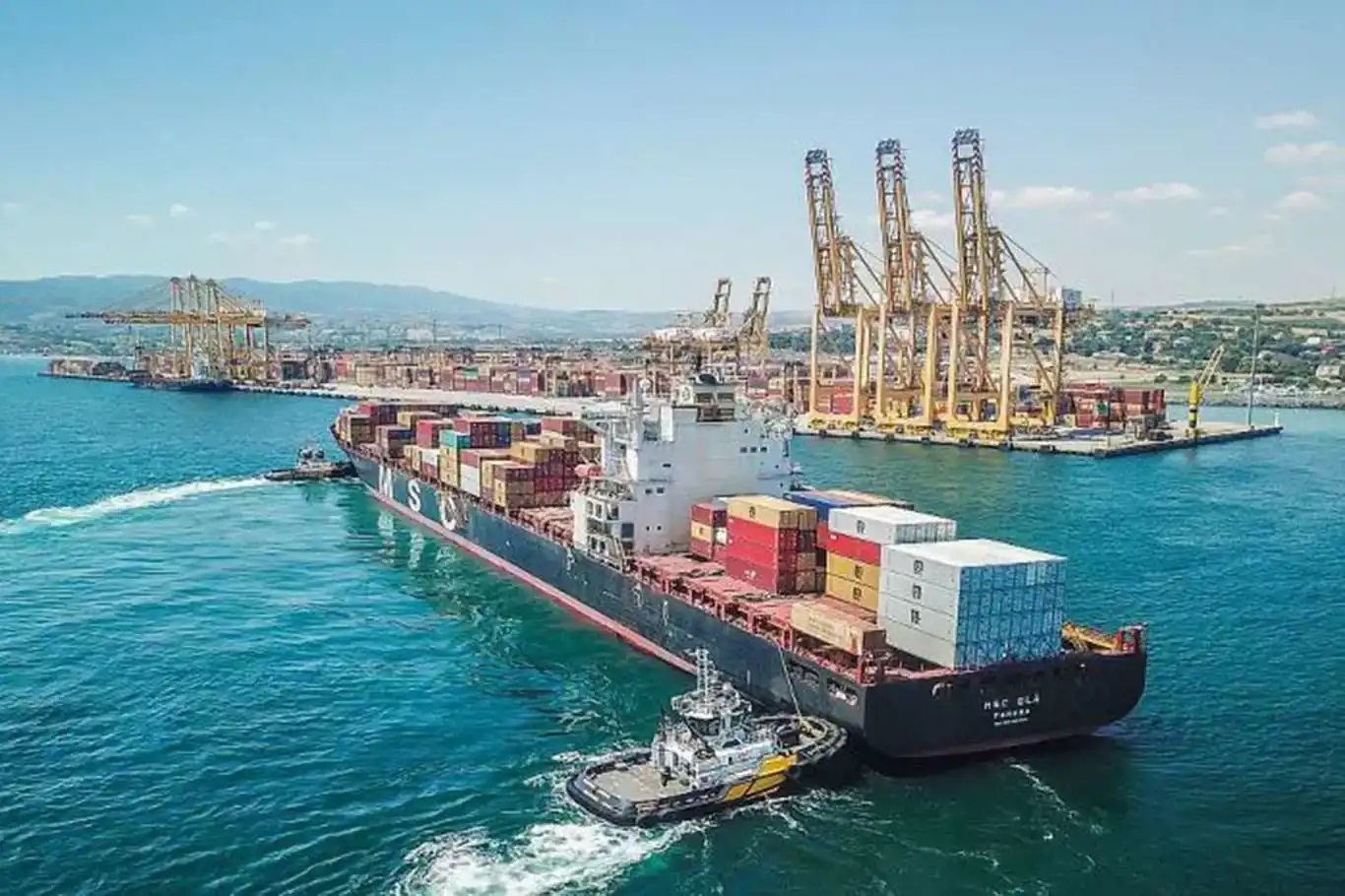
Türkiye's exports to the European Union increased by 4.7% year-on-year to $54.5 billion during the first half of the year, driven by European countries' efforts to relocate supply chains to more reliable and geographically closer partners amid heightened instability in the Middle East.
According to data from the Turkish Exporters' Assembly (TIM), the automotive industry remained the leading contributor to exports to the EU between January and June, generating $15.57 billion in shipments.
The automotive sector was followed by chemicals and chemical products, which accounted for $7.1 billion in exports, while ready-to-wear garments and apparel reached $4.7 billion. Exports of ferrous and non-ferrous metals totaled $4.18 billion during the same period.
Germany retained its position as Türkiye's largest export destination within the European Union, importing $10.1 billion worth of Turkish goods in the first six months of the year, marking a 4.3% increase compared to the same period last year.
Italy ranked second with $6.8 billion in imports from Türkiye, followed by Spain at $5.6 billion, France at $5.3 billion, and Romania at $3.7 billion.
Istanbul continued to lead as Türkiye's largest exporting province. Exports from the city to Germany reached $3.8 billion, while Italy, Spain, France, and the Netherlands also ranked among Istanbul's top export destinations. Romania remained one of the country's major European markets, receiving $1.2 billion in exports from Istanbul alone.
The figures highlight the deepening economic relationship between Türkiye and the European Union, which remains the country's largest export market. Turkish manufacturers continue to play a key role in supplying European industries, particularly in the automotive, machinery, chemicals, textiles, and home appliance sectors.
Industry representatives say ongoing changes in global supply chains are creating new opportunities for Türkiye to strengthen its position as a reliable production and logistics hub for Europe.
Speaking to Anadolu Agency, Sekib Avdagic, President of the Istanbul Chamber of Commerce (ICOC), said growing geopolitical uncertainty has prompted European countries to relocate supply chains to nearby and dependable partners.
"As the world goes through a challenging and uncertain period, European countries are shifting their supply chains to nearby, more reliable regions, making Türkiye a natural hub for production and exports," Avdagic said.
He stressed that Türkiye-EU relations should be viewed through the lens of an emerging global order shaped by major political, economic, and security transformations.
According to Avdagic, Europe is not only strengthening its defense capabilities but is also restructuring its industrial capacity, supply chain resilience, and technological independence. These developments are increasing the strategic importance of Türkiye, although technology-sharing between the EU and Türkiye may remain selective in some sectors.
Avdagic also highlighted energy cooperation as one of the most significant pillars of Türkiye-EU relations.
He noted that Türkiye has become an increasingly important transit country and regional energy distribution hub, facilitating energy flows from the Eastern Mediterranean, the Caspian region, and the Middle East to European markets.
"The flow of energy from the Eastern Mediterranean, the Caspian Sea, and the Middle East to European markets has become a component of geopolitical stability, driving Türkiye-EU relations beyond the traditional foreign policy framework into a multilayered strategic partnership," he said.
He added that the relationship is increasingly being shaped by long-term structural interdependence encompassing security, trade, industry, and energy, rather than short-term political considerations.
Analysts believe that continued diversification of European supply chains, coupled with the green and digital transformation and the potential modernization of the Türkiye-EU Customs Union, could further expand bilateral trade and strengthen Türkiye's role as a key manufacturing and export base for the European market. (ILKHA)
LEGAL WARNING: All rights of the published news, photos and videos are reserved by İlke Haber Ajansı Basın Yayın San. Trade A.Ş. Under no circumstances can all or part of the news, photos and videos be used without a written contract or subscription.
Brent crude oil rose above $85 a barrel on Tuesday, reaching its highest level in a month as escalating geopolitical tensions in the Middle East heightened concerns over potential disruptions to global oil supplies.

Federal Reserve Governor Christopher Waller has indicated that the US central bank may need to raise interest rates in the near term if upcoming economic data show inflation continuing to run well above the Federal Reserve's 2% target.

Türkiye's retail sector maintained strong annual growth in May 2026, even as overall trade sales volume posted a year-on-year decline, the Turkish Statistical Institute (TurkStat) said in a statement on Monday.