Ebola outbreak races beyond Congo’s epicentre as new cases surge

 13 oC
13 oC 
Güneşli

The Ebola outbreak sweeping eastern Democratic Republic of Congo is rapidly spreading beyond its epicentre in Ituri province, prompting renewed concern from African health authorities over the scale and speed of the epidemic.
The Africa Centres for Disease Control and Prevention (Africa CDC) said the outbreak, caused by the Bundibugyo virus, is expanding geographically even as transmission indicators in parts of Ituri show signs of improvement.
While new infections and deaths have declined in some areas of Ituri in recent weeks, neighbouring North Kivu and Haut-Uélé provinces have recorded a sharp increase in cases, according to Africa CDC.
The latest figures from the World Health Organization show that the Democratic Republic of Congo had recorded 6,757 confirmed Ebola cases and 3,267 deaths as of September 7, representing a case-fatality rate of about 48%. A total of 1,590 patients had recovered.
Outbreak spreads to six provinces
The outbreak, first declared in May in Ituri, has now reached 61 health zones across six provinces: Ituri, North Kivu, Haut-Uélé, Bas-Uélé, Tshopo and South Kivu.
WHO said 51 health zones in five provinces had reported at least one case during the previous 21 days, indicating that active transmission remains widespread.
Ituri remains the centre of the epidemic, accounting for 5,406 confirmed cases as of September 7. North Kivu has reported more than 1,000 cases, while Haut-Uélé has also experienced increasing transmission.
WHO said 71 new confirmed cases were recorded in a single 24-hour period on September 7 across Ituri, North Kivu and Haut-Uélé, underscoring the continued intensity of transmission.
The latest affected area is Kayna health zone in North Kivu, according to WHO.
Rapid spread raises alarm
Africa CDC has described the outbreak as an unprecedentedly fast-growing Ebola epidemic, while health officials have warned that continued population movement, insecurity and limited access to healthcare are complicating containment efforts.
The outbreak is particularly challenging because it involves the Bundibugyo virus, a relatively rare Ebola species for which there is no widely approved vaccine or specific treatment. Authorities have nevertheless begun using available vaccines under emergency protocols while exploring additional options.
The US Centers for Disease Control and Prevention said the 2026 outbreak had become the second-largest Ebola outbreak ever recorded by August 21, with approximately 5,000 cases reported in the first 100 days.
Healthcare system under severe pressure
The rapid geographical expansion has placed enormous pressure on Congo's already fragile healthcare system.
The WHO said shortages of trained health workers, operational partners and funding are hampering the response. Authorities have established dozens of treatment and isolation centres, but the number of available beds and medical personnel remains insufficient for the scale of the outbreak.
Security problems in eastern Congo are adding another layer of difficulty. Armed conflict and population displacement have made it harder for health teams to reach affected communities, conduct contact tracing and safely transport patients.
Health workers have also faced fatigue, insecurity and community resistance, while misinformation and fear have complicated efforts to persuade people to seek treatment and cooperate with disease-control measures.
International concern grows
The WHO has warned that the outbreak's high fatality rate and continuing geographical expansion require an intensified response.
The organisation said the epidemic's transmission pattern remains uneven, with some areas showing signs of decline while others are experiencing sustained increases. The continued emergence of cases in new health zones remains a major concern for authorities.
The situation also carries regional implications. Eastern Congo has extensive population movement across borders, particularly with Uganda, increasing the risk that the virus could spread beyond the country's borders.
Uganda's separate Ebola outbreak was declared over on July 28, but health authorities continue to monitor the region closely because of the continuing transmission in eastern Congo.
With thousands of confirmed cases and deaths already recorded and new areas continuing to report infections, health authorities are racing to strengthen surveillance, expand treatment capacity and contain transmission before the outbreak spreads further. (ILKHA)
LEGAL WARNING: All rights of the published news, photos and videos are reserved by İlke Haber Ajansı Basın Yayın San. Trade A.Ş. Under no circumstances can all or part of the news, photos and videos be used without a written contract or subscription.
France has reported the first documented case of human infection with the Shamonda virus, which has previously been detected only in animals, the World Health Organization (WHO) said Thursday.
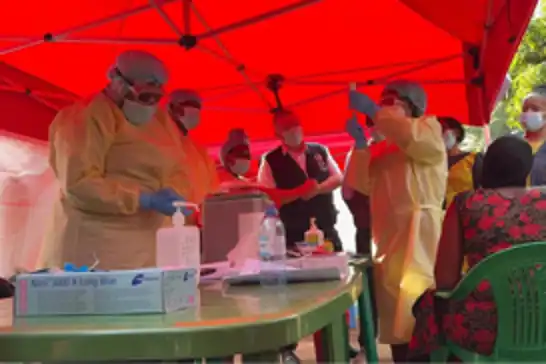
The World Health Organization (WHO) on Thursday warned that the ongoing Ebola outbreak has become a regional public health concern, urging African countries to strengthen coordination as infections spread across Central, Eastern and Western Africa.
Türkiye's Directorate of Religious Affairs (Diyanet) dedicated this week's Friday sermon to Gaza, describing the ongoing genocide as "humanity's test" and calling on Muslims to stand with the Palestinian people through solidarity, remembrance and a principled boycott against oppression.
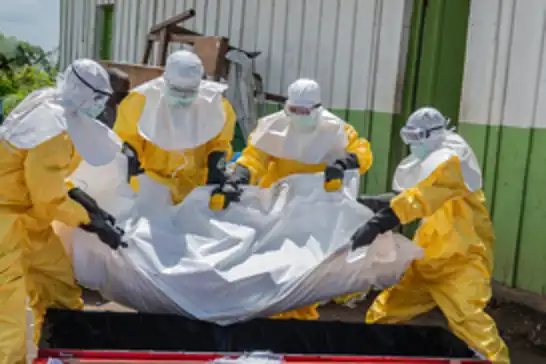
A candidate vaccine against the deadly Bundibugyo strain of Ebola has entered a new phase of clinical testing in Uganda, as health authorities accelerate efforts to develop effective vaccines against a virus that has caused one of the largest and fastest-growing Ebola outbreaks ever recorded in the Democratic Republic of the Congo (DRC).