British journalist calls for Quranic values to address global crises at Istanbul Symposium
 13 oC
13 oC 
Güneşli

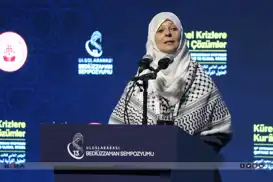
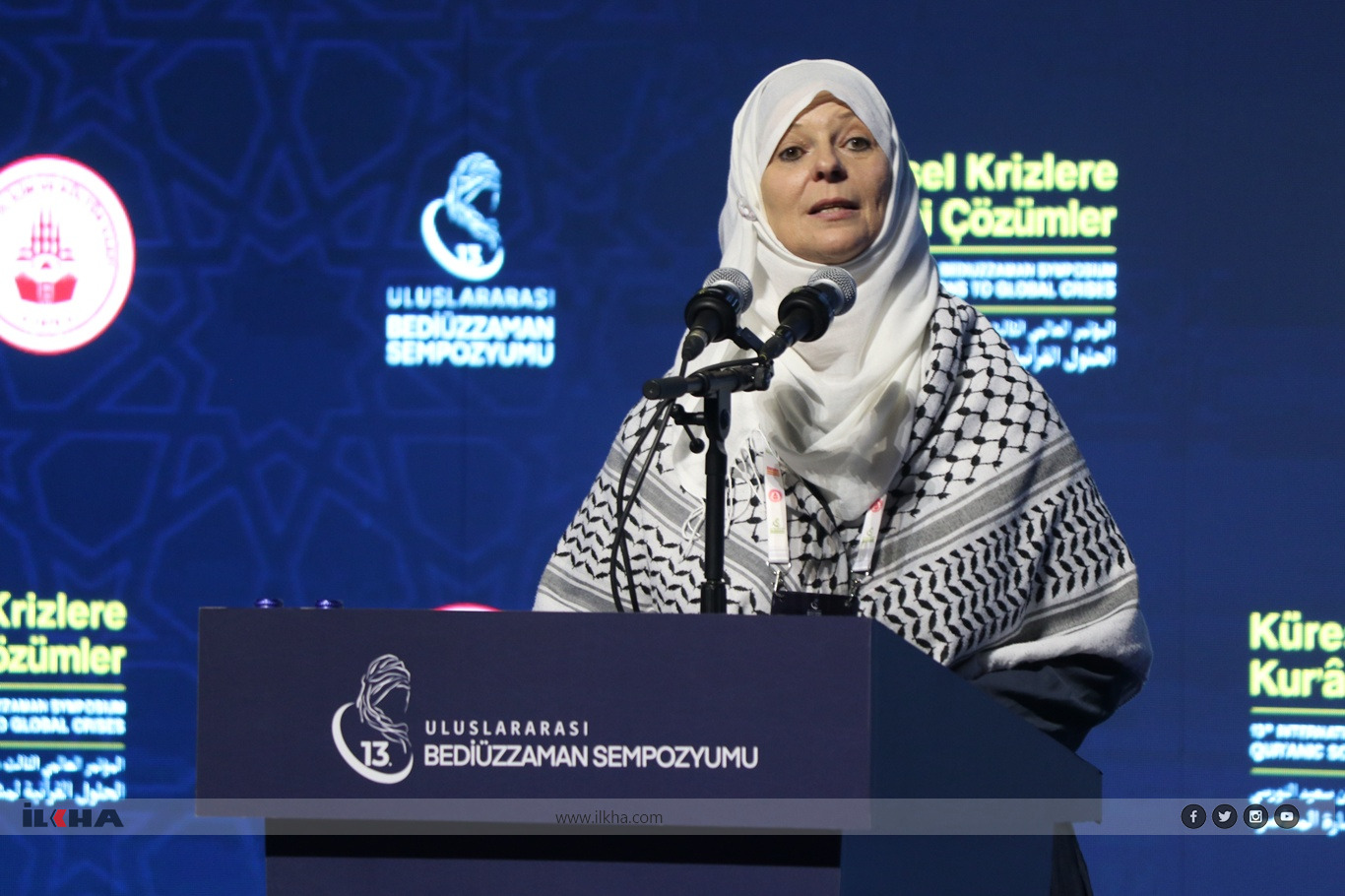
British journalist Lauren Booth has called for a return to Quranic values to confront the political, technological and moral crises of the modern world, arguing that genuine freedom lies in resisting consumerism and refusing to let human beings become commodities.
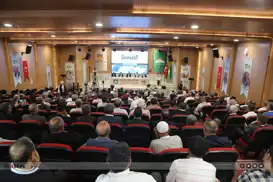
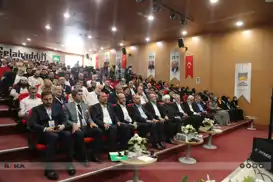
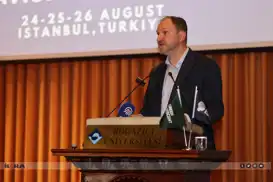
Speaking at the 13th International Bediuzzaman Symposium, held in Istanbul on Oct. 4-6 under the theme “Quranic Solutions to Global Crises,” Booth criticized the systems of political manipulation, corporate influence and consumer culture that increasingly shape people’s thoughts, desires and daily lives.
The symposium, organized by the Istanbul Science and Culture Foundation, brings together participants to discuss the relevance of Quranic teachings to contemporary global challenges.
Booth opened her address by referring to verses 11 and 12 of Surah Al-Baqarah, which condemn those who spread corruption while presenting themselves as peacemakers.
She argued that the same contradiction could be seen in modern political and economic systems, accusing neoliberal politicians, powerful technology billionaires and Zionists of contributing to conflict and injustice.
“The tools may have changed, but the mechanism is identical,” Booth said, describing how modern media and digital platforms capture people’s attention, stimulate their desires and encourage consumption.
Drawing parallels with the Quranic account of Prophet Musa (Moses) and Pharaoh, she said the methods of fascination and fear used to maintain power in ancient times had taken more sophisticated forms in the modern era.
She recalled how Pharaoh’s advisers organized a public spectacle to discredit Musa, while Pharaoh responded to the magicians’ acceptance of the truth by accusing them of conspiracy and threatening them with punishment.
Booth argued that the episode offered a lesson in how power can use propaganda, intimidation and spectacle to divert people from the truth.
Quranic principles as an alternative
The British journalist also criticized advertising and consumer culture, saying that constant exposure to persuasive messages could encourage people to desire products and lifestyles they did not previously need.
She referred to neuro-linguistic programming and other persuasive techniques, arguing that advertisers associate products and political messages with emotions such as happiness and security to influence public perceptions.
According to Booth, the constant stream of digital content creates so much noise that people struggle to recognize the Quranic principles of balance, contentment and justice.
She presented taqwa (God-consciousness), shukr (gratitude), ihsan (excellence in conduct) and dhikr (remembrance of Allah) as essential principles for resisting these pressures.
Taqwa, she said, enables believers to pause and reflect before acting on an impulse, while gratitude helps them resist the idea that happiness depends on continually acquiring more possessions.
To illustrate her point, Booth recounted a recent telephone conversation with a friend in Gaza, who told her that although he was not in a good state, he remained grateful to Allah.
She described his response as an example of faith and patience amid hardship, emphasizing the importance of trusting Allah’s decree even in the most difficult circumstances.
Booth also urged people to protect their attention and their gaze, saying these should be treated as trusts rather than commodities exploited by powerful technology companies.
She described the remembrance of Allah as a spiritual practice that cannot be reduced to the mechanisms of commercial advertising.
Justice and moral responsibility
Booth argued that the answer to the challenges posed by modern technology was not simply to develop more advanced machines, but to reject systems that treat human beings as products.
“ This is real freedom: to be unable to be sold,” she said, emphasizing the need to preserve human dignity and moral independence.
Reflecting on her 20 years as a political journalist in mainstream media, Booth criticized what she described as a culture of backbiting and gossip often presented as political analysis and intellectual debate.
She invoked a teaching of Prophet Muhammad (peace be upon him) comparing good company to sitting with a person who sells perfume, from whom one benefits through a pleasant fragrance, and bad company to sitting beside a blacksmith, whose smoke can leave its mark on one’s clothes.
The lesson, she said, was that the environments people choose and the company they keep influence their character and conduct.
Booth stressed that justice must remain unconditional, citing the Quranic command to stand firmly for justice and bear witness for Allah even when doing so goes against oneself, one’s parents or close relatives.
“Justice that bends towards self-interest is not justice at all,” she said.
She also referred to the teachings of Bediuzzaman Said Nursi, who identified the moral and social problems of his era and presented the Quran as a source of guidance and healing.
Booth warned that a civilization that sacrifices eternal values for temporary worldly gains risks undermining its own foundations.
Personal journey and call for Islamic outreach
Sharing a personal account of her journey towards Islam, Booth said that when she told her two young daughters she was considering embracing the religion, they asked whether she would remain their mother, stop drinking alcohol and dress modestly.
She said their questions deeply affected her and reflected what she described as the strength of the natural human disposition, or fitrah.
According to Booth, after she explained the changes she intended to make in her life, her daughters responded positively to Islam.
She urged Muslims to respond to the moral and spiritual challenges of the modern world through dawah — inviting people to Islam through guidance, good conduct and compassion — rather than imitating practices they believe to be harmful.
Calling on participants to share the light of Islamic teachings, she said Muslims should have the courage to uphold their values in a world increasingly marked by turmoil and injustice.
Booth concluded by praying for wisdom, courage and mercy, calling for unity within the Muslim community and the liberation of Palestine. (ILKHA)
LEGAL WARNING: All rights of the published news, photos and videos are reserved by İlke Haber Ajansı Basın Yayın San. Trade A.Ş. Under no circumstances can all or part of the news, photos and videos be used without a written contract or subscription.

Three earthquakes struck southern Türkiye on Sunday, with tremors felt in parts of northern Syria, according to Syria’s National Earthquake Center and Türkiye’s Disaster and Emergency Management Authority (AFAD).
An international panel organized by HÜDA PAR in Şanlıurfa under the theme “Saladin’s Al-Quds” brought together prominent figures from Türkiye and abroad, who called for greater Islamic unity and solidarity in support of Al-Quds , Al-Aqsa Mosque and Palestine.
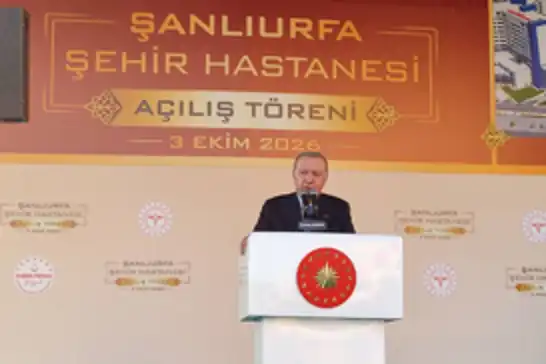
President Tayyip Erdogan said on Saturday that Türkiye would press ahead with efforts to achieve a “terror-free” country, predicting that regional conflicts would give way to peace and stability.