Azerbaijan’s headscarf restrictions violate fundamental rights, lawyers association says
 13 oC
13 oC 
Güneşli

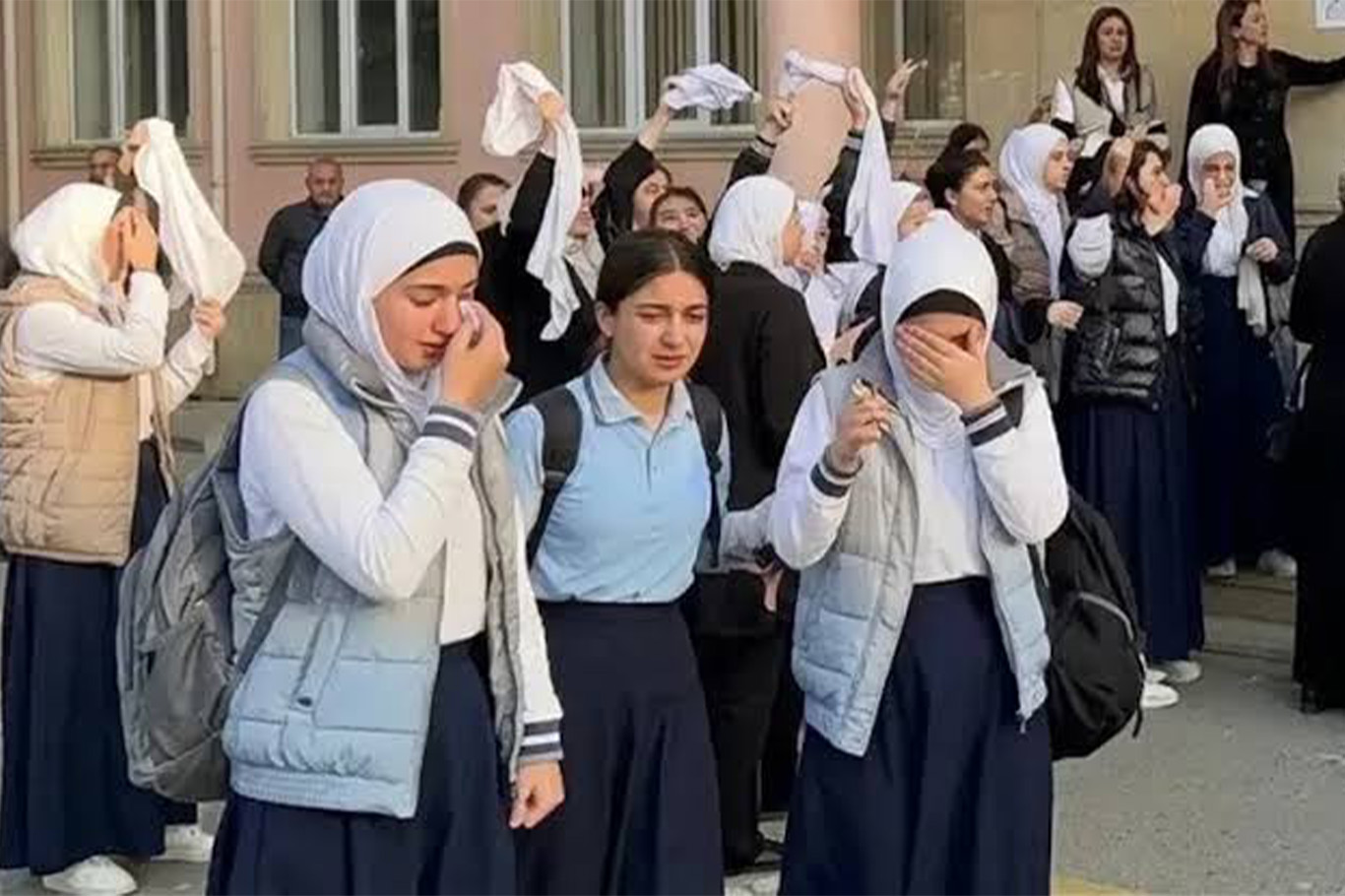
The Worldwide Lawyers Association (Yeryüzü Avukatları Derneği) has strongly condemned Azerbaijan’s restrictions on headscarves worn by female students and teachers, warning that the measures violate fundamental rights, undermine religious freedom and deprive Muslim women and girls of their right to education and employment.
In a written statement, the association said dress code regulations introduced by Azerbaijan’s Cabinet of Ministers on September 21 for students and October 6 for teachers were incompatible with fundamental rights and freedoms guaranteed by the country’s Constitution and international human rights conventions.
The association called on the Azerbaijani government to immediately end the restrictions, reinstate dismissed teachers, restore the educational rights of students excluded because of their headscarves and release citizens arbitrarily detained for opposing the measures.
‘Equality, education and religious freedom are being violated’
The association stressed that the restrictions conflict with Articles 25, 35, 42 and 48 of Azerbaijan’s Constitution, which protect equality, the right to work, the right to education, and freedom of religion and conscience.
It also cited international agreements to which Azerbaijan is a party, including the International Covenant on Civil and Political Rights, the International Covenant on Economic, Social and Cultural Rights, the Convention on the Elimination of All Forms of Discrimination against Women, the Convention on the Rights of the Child and the European Convention on Human Rights and its Protocol No. 1.
The statement also referred to the United Nations Human Rights Committee’s decision in Hudoyberganova v. Uzbekistan, which addressed restrictions on a student's right to manifest her religious beliefs through Islamic dress.
The association warned that preventing girls from accessing education because they wear the headscarf places an unjust burden on Muslim women and girls, forcing them to choose between their religious convictions and their fundamental rights.
‘The state is deciding where and how religion may appear’
Criticizing the Azerbaijani authorities’ invocation of secularism to justify the restrictions, the association argued that the measures represent state interference in religious life rather than genuine neutrality.
“What is being done in Azerbaijan in the name of ‘secularism’ is not the state withdrawing its hand from religion, but the state arbitrarily deciding what religion is, where it may appear, and in what form,” the statement said.
The association also highlighted what it described as a discriminatory distinction between traditional Azerbaijani clothing and the Islamic headscarf.
Under the regulations, clothing reflecting national and spiritual values may reportedly be worn during holidays and ceremonies with the approval of the Pedagogical Council. The association questioned why the traditional kelağayı silk head covering is recognized as part of Azerbaijan’s national heritage while the Islamic headscarf is subjected to restrictions.
“It is obvious that this distinction as to which covering belongs to the nation and which is considered to belong to a ‘dangerous’ religiosity is not the result of a neutral principle,” the statement said.
The association argued that such distinctions risk marginalizing Muslim women who wish to observe their religious obligations while participating in education and public life.
Concerns over detentions and pressure on headscarf supporters
The association also raised concerns over reports of peaceful demonstrations against the restrictions and the authorities’ response to those opposing the measures.
According to the statement, numerous people have reportedly been arbitrarily detained, some activists have become unreachable, and university students wearing headscarves have allegedly been recorded and profiled without lawful justification.
The association called for the protection of citizens exercising their rights to religious freedom, peaceful assembly and education, stressing that opposition to the restrictions should not be met with intimidation or repression.
It also drew parallels with Türkiye’s past restrictions on Islamic dress, arguing that state-imposed clothing rules deepen social divisions, increase tensions and undermine social peace.
Call for international action
The Worldwide Lawyers Association urged the Azerbaijani government to take immediate steps to end the restrictions and remedy their consequences.
The association called on the Azerbaijani government to ensure that female students excluded from education because of their headscarves can resume their studies without discrimination, release citizens arbitrarily detained for opposing the restrictions, restore the rights of teachers dismissed for wearing headscarves, and end practices that discriminate against individuals on the basis of their religious beliefs and appearance.
The association also called on international human rights bodies, relevant international institutions and governments, particularly those of Muslim-majority countries, to engage with Azerbaijani authorities and take concrete measures to help end the restrictions.
Emphasizing that religious freedom and access to education are universal rights, the association said protecting the fundamental freedoms of the Azerbaijani people should concern not only Azerbaijan but all those committed to human dignity and justice.
The statement concluded with a call for the authorities to respect the rights of Muslim women and girls to practise their faith without being forced to sacrifice their education, employment or participation in public life. (ILKHA)
LEGAL WARNING: All rights of the published news, photos and videos are reserved by İlke Haber Ajansı Basın Yayın San. Trade A.Ş. Under no circumstances can all or part of the news, photos and videos be used without a written contract or subscription.
Turkish President Recep Tayyip Erdoğan said on Thursday that Türkiye had significantly expanded its education infrastructure over the past 24 years, while the Turkish Maarif Foundation had helped extend the country’s educational presence across several continents.
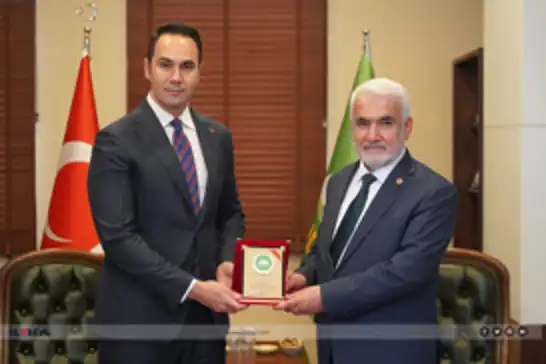
Free Cause Party (HUDA PAR) Chairman Zekeriya Yapicioglu hosted Cenk Kupeli, leader of the True Path Party (DYP), at the party’s headquarters in Ankara for a courtesy visit, party officials said.
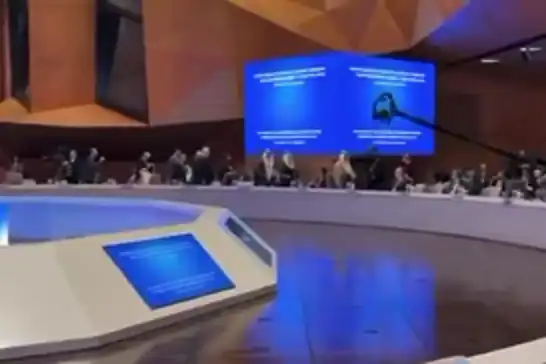
A diplomatic protest took place during the 7th Summit of the Conference on Interaction and Confidence Building Measures in Asia (CICA) in Baku, Azerbaijan, as Türkiye’s Foreign Minister Hakan Fidan and representatives from more than 10 countries left the hall when Israeli President Isaac Herzog began his speech.