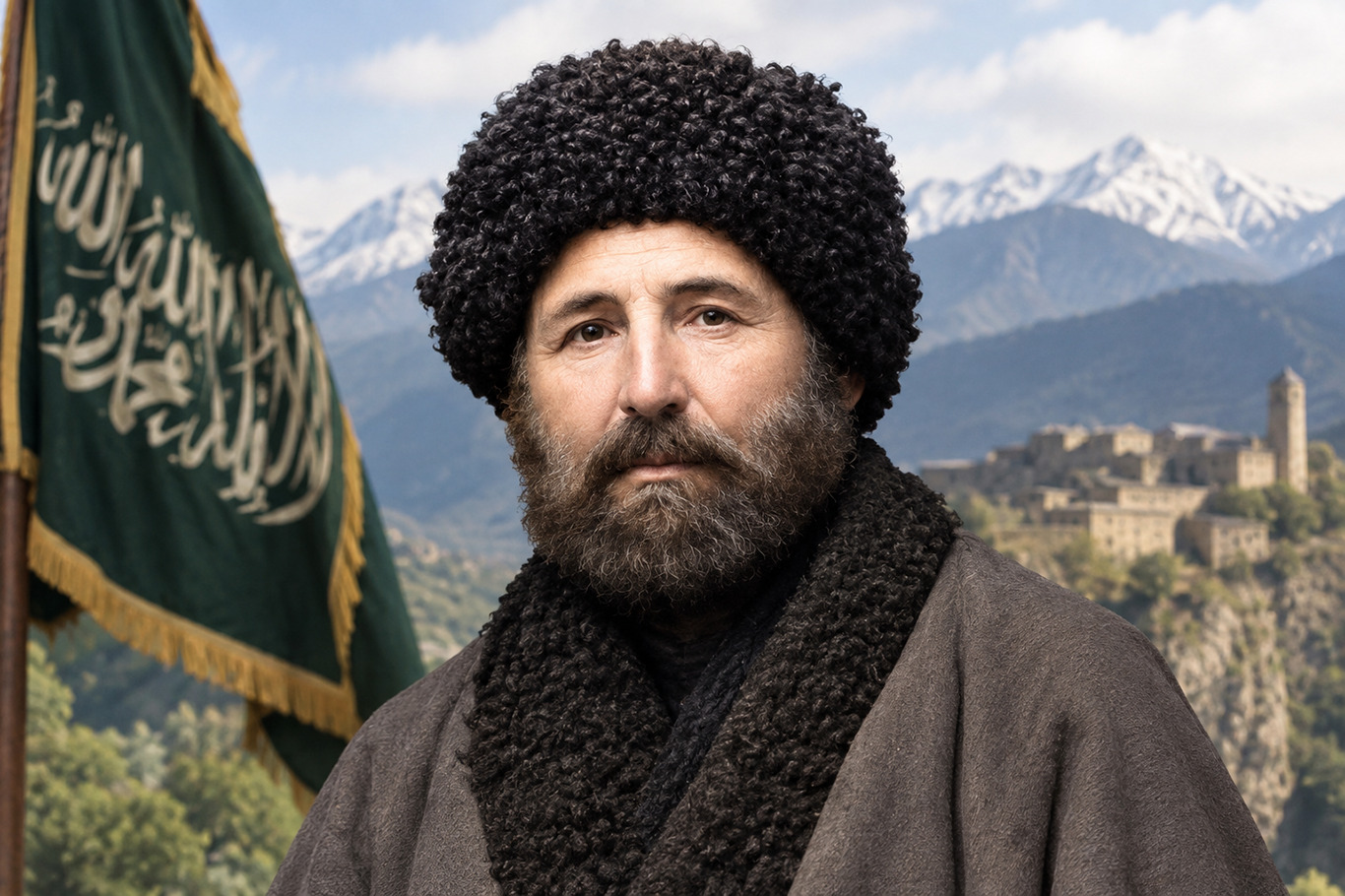
Najmuddin Gotsinskii: The Islamic leader who defied Soviet rule in the North Caucasus
 13 oC
13 oC 
Güneşli

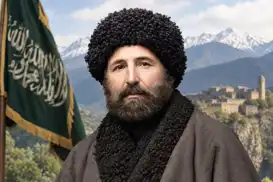
For more than a decade, Najmuddin Gotsinskii stood at the center of the North Caucasus’ turbulent struggle against Bolshevik rule, combining religious authority with political and military leadership in an effort to preserve Islamic institutions and establish a society governed by sharia.
Born in 1859 in Gotsob, Dagestan, Najmuddin came from an Avar family with connections to Imam Shamil’s Caucasian resistance. He received a religious education and joined the ulama, while also serving for years within the Russian administrative system.
That combination of Islamic scholarship, political experience and influence among the mountain communities would later make him one of the most prominent Muslim leaders in the North Caucasus.
A religious leader in a changing Caucasus
Before the Russian Revolution, Najmuddin was known not only for his religious activities but also for his charitable work. During Islamic holidays, he reportedly slaughtered sheep and distributed the meat among the poor.
He also sought to reduce tensions between Chechens, Dagestanis and their neighbors. His reputation among sections of the population helped him acquire influence well beyond his native village.
His political outlook became increasingly shaped by his opposition to policies he believed threatened Islamic values. At the same time, he advocated resolving disputes through Islamic courts and maintained that Muslims and non-Muslims should be able to coexist peacefully.
His visit to the Ottoman Empire in 1903 was particularly significant. There, he met figures connected to Sultan Abdul Hamid II and discussed the condition of Muslims living under Russian rule. Najmuddin reportedly expressed his desire to become an imam in Dagestan, receiving encouragement to pursue the effort if circumstances allowed.
Revolution opens the way for Islamic political leadership
The February Revolution of 1917 dramatically changed the political environment of the Russian Empire.
Najmuddin initially supported the revolution and became involved in the provisional administration of Dagestan. But he soon emerged as a prominent opponent of Bolshevik ideology, viewing its materialist foundations as fundamentally incompatible with Islam.
At the First Congress of the Union of Highlanders of the North Caucasus in May 1917, Najmuddin was appointed mufti of the North Caucasus and became a member of the organization's Central Committee.
His message to Muslims emphasized religious unity and the protection of sharia. He also called for the defense of the region while urging Muslims to respect Christians and other non-Muslims.
His political allies included Sheikh Uzun-Hajji, who advocated the creation of an Islamic state in the North Caucasus modeled on the Caucasian Imamate established by Imam Shamil.
In August 1917, Najmuddin was formally proclaimed Imam of Dagestan and Chechnya at a ceremony near Lake Kezenoyam. His tenure, however, lasted only a few days. Political and religious leaders feared that restoring the imamate could deepen divisions with neighboring communities and states.
The Second Congress subsequently reaffirmed Najmuddin's position as mufti rather than imam.
The episode nevertheless demonstrated the strength of the idea of Islamic political authority among parts of the North Caucasian population following the collapse of imperial rule.
Resistance to Bolshevik rule
As Bolshevik forces expanded into the North Caucasus in 1918, Najmuddin became increasingly involved in armed resistance.
He established his headquarters in Temir-Khan-Shura and began enforcing sharia in areas under his influence. His forces fought repeated battles with the Red Army, although the military balance repeatedly shifted.
In May 1918, North Caucasian military commanders gathered in Gunib and recognized Najmuddin's authority as Imam of Dagestan and Chechnya. The decision helped mobilize Highland communities against the Bolsheviks.
The ensuing fighting produced heavy casualties on both sides. Najmuddin's forces suffered several defeats but also managed to push Red Army units back in a number of engagements.
His struggle was therefore not simply a conventional political contest. For his supporters, opposition to Bolshevik rule was also connected to the defense of their religious institutions, local autonomy and Islamic social order.
The difficult politics of resistance
Najmuddin's career also illustrates the complexity of the North Caucasus during the Russian Civil War.
He cooperated at different times with forces that opposed the Bolsheviks, including the White movement. This cooperation was controversial among other Muslim leaders. Sheikh Uzun-Hajji, in particular, rejected collaboration with the Whites, viewing Russian rule in either form as unacceptable.
The disagreement eventually contributed to a political split between the two religious leaders.
This episode also demonstrates that opposition to Bolshevism did not automatically produce political unity among Muslim movements. Leaders differed over whether temporary cooperation with non-Muslim forces was permissible or strategically necessary.
The 1920 uprising
After the Bolsheviks consolidated control over the region, Najmuddin returned to Dagestan and participated in a major uprising against Soviet rule.
The rebellion spread through parts of Dagestan, with several strategically important settlements falling temporarily to anti-Bolshevik forces.
In October 1920, a descendant of Imam Shamil was crowned in Dagestan in a ceremony overseen by Najmuddin, reviving the symbolism of the Caucasian Imamate.
The rebellion was eventually defeated in 1921. Najmuddin escaped to Chechnya and continued his efforts to organize resistance.
For the Soviet authorities, he remained a significant symbol of opposition to communist rule.
Years in hiding
From 1921 onward, Najmuddin moved between Chechnya and Dagestan while attempting to organize another uprising.
Soviet authorities responded with arrests, military operations and efforts to undermine his influence among religious leaders. At one gathering in Dagestan, Soviet authorities organized a congress of Muslim scholars and teachers at which Najmuddin was denounced.
For a period, he considered ending the conflict and contacted Soviet officials about a possible settlement. But his position changed again after contacts with British agents who reportedly promised assistance to the anti-Soviet struggle.
By 1924-25, Najmuddin was again involved in an armed insurgency.
The Soviet government launched major military operations against the rebels. Despite the deployment of thousands of troops, Najmuddin remained difficult to capture, moving through the mountainous terrain with assistance from local supporters.
Capture and execution
Najmuddin was eventually captured on Sept. 5, 1925, after Soviet forces intensified their campaign in the mountains.
According to accounts of his capture, he agreed to surrender after receiving assurances concerning the release of 16 Chechens associated with him.
Before surrendering, he washed and prayed. He reportedly told those who had revealed his location: “I will speak to you on al-Qiyamah.”
The statement reflected the religious framework through which Najmuddin understood his struggle and his ultimate accountability.
On Oct. 15, 1925, he was sentenced to death by firing squad in Rostov-on-Don and was executed later that month.
A legacy shaped by faith and resistance
Najmuddin's historical legacy is inseparable from the religious character of his political struggle.
He was not simply a military commander fighting the Red Army. He was a religious scholar who believed that Muslim society should preserve its Islamic institutions and that sharia should have a central role in public life.
At the same time, his career reveals the difficult choices confronting Muslim leaders after the collapse of the Russian Empire. Najmuddin moved between political administration, religious leadership, military resistance and negotiations, while attempting to navigate conflicts involving Bolsheviks, Whites, local nationalist movements and rival Islamic leaders.
His support for peaceful relations with Christians and other communities also complicates portrayals of the period as a simple religious conflict. His own statements called on Muslims to protect religious freedom and avoid harming Russian soldiers and non-Muslim civilians.
For Muslims interested in the history of the Caucasus, Najmuddin's life represents one chapter in a much longer tradition of Islamic scholarship, communal leadership and resistance to foreign domination. His eventual defeat did not erase the political and religious aspirations that had driven his movement.
The Soviet state ultimately prevailed militarily, but the memory of Islamic resistance associated with figures such as Najmuddin of Gotso and Imam Shamil remained part of the historical consciousness of the North Caucasus. (ILKHA)
LEGAL WARNING: All rights of the published news, photos and videos are reserved by İlke Haber Ajansı Basın Yayın San. Trade A.Ş. Under no circumstances can all or part of the news, photos and videos be used without a written contract or subscription.
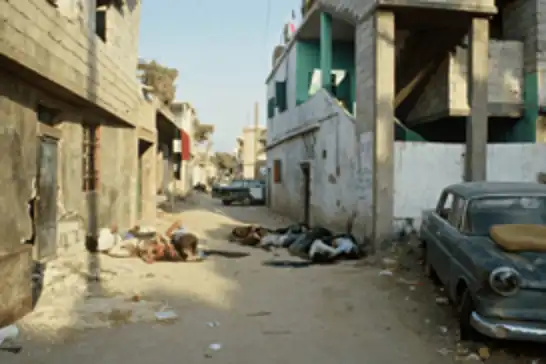
Forty-four years have passed since Sabra and Shatila became synonymous with one of the darkest chapters in the history of Palestinian refugees in Lebanon.
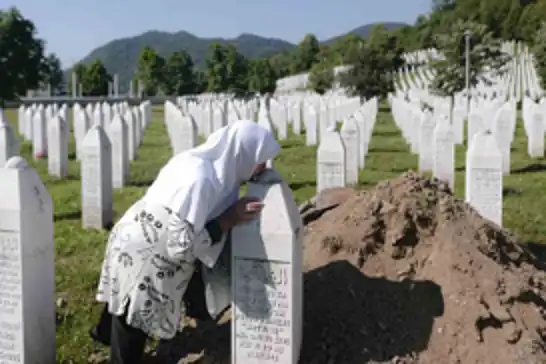
More than three decades have passed since the Srebrenica genocide, yet the tragedy remains one of the darkest chapters in modern European history. The massacre of more than 8,000 Bosniak Muslim men and boys in July 1995 was not simply another wartime atrocity—it was a genocide that unfolded in the heart of Europe despite the presence of the international community.
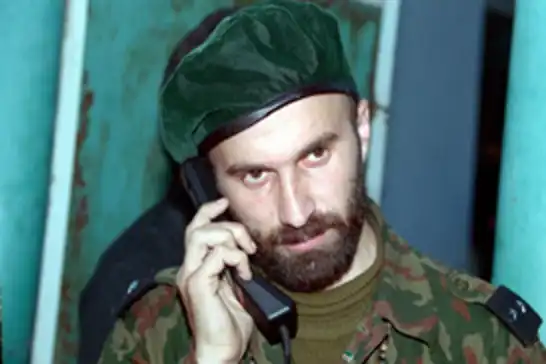
Today, the Chechen people and the broader Caucasian resistance community solemnly mark the 20th anniversary of the martyrdom of Shamil Basayev, one of the most prominent, courageous, and influential figures in modern Chechen history.