HÜDA PAR MP Faruk Dinç calls for transparent investigation into fund scandal
 13 oC

Güneşli

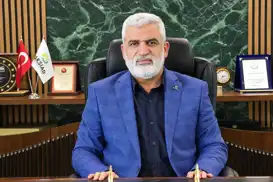
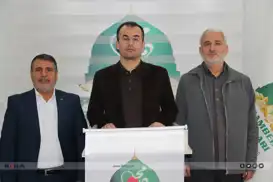
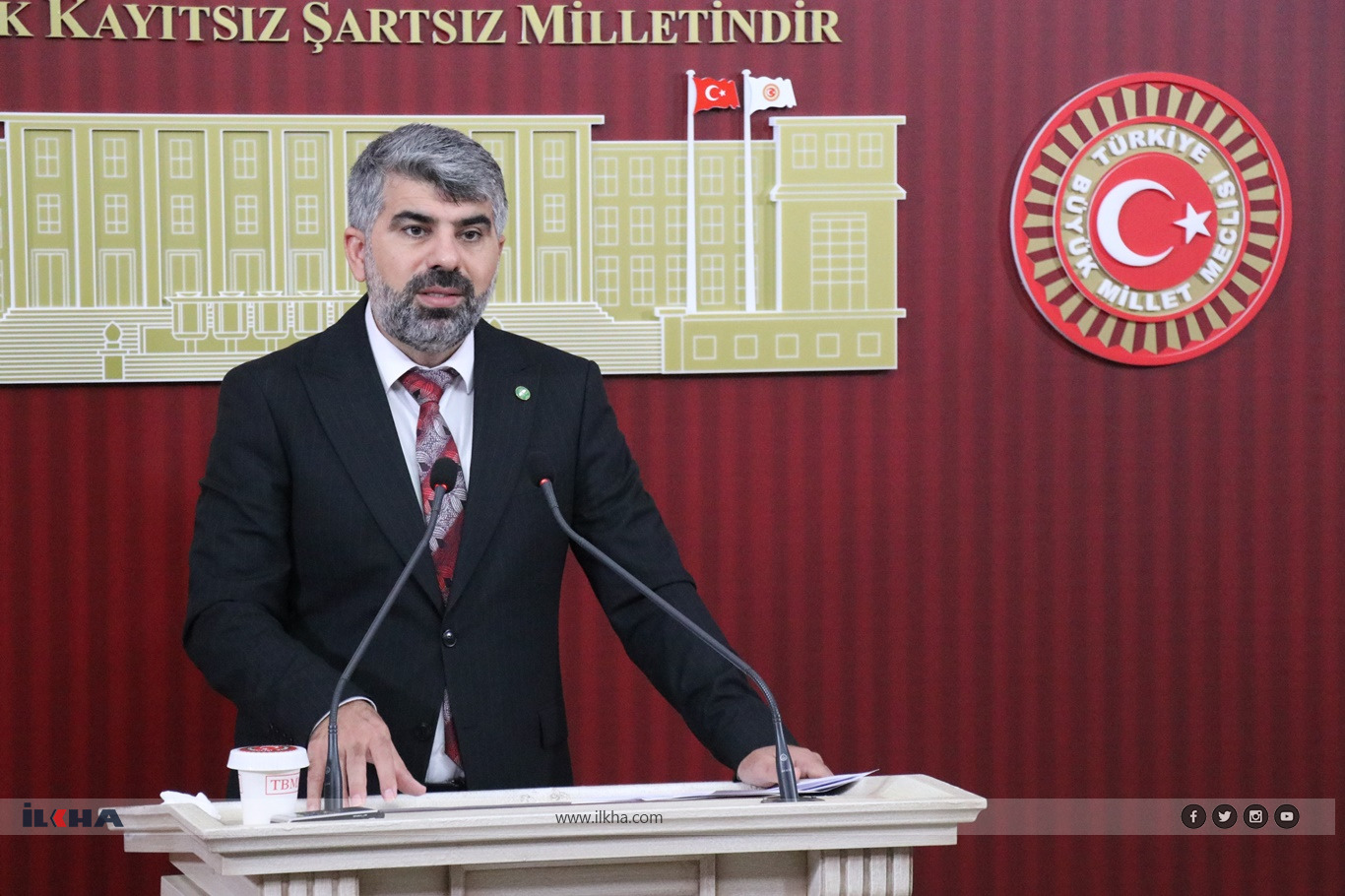
HÜDA PAR Deputy Chairman and Mersin MP Faruk Dinç has called for a comprehensive and transparent investigation into a major investment fund scandal, while urging the government to address pressing economic and social concerns and pursue stronger regional cooperation.
Speaking at a press conference at the Turkish Grand National Assembly (TBMM), Dinç addressed a range of issues, including the alleged fund fraud, proposed judicial reforms, rising living costs, education, regional security, Palestine and access to healthcare.
Fund scandal
Addressing the investment fund scandal, which emerged in September and reportedly affected around 455,000 people, Dinç said the scale of the alleged financial losses and the questions surrounding the case required a thorough investigation.
According to figures he cited, groups that sold their holdings at the peak of the market allegedly made unfair gains of 188 billion Turkish liras. Meanwhile, subsequent liquidation decisions by the Capital Markets Board (SPK) reportedly resulted in fund value losses of 227.1 billion liras.
He said panic selling, forced asset liquidations, inflated valuations and damage to international investor confidence had compounded the crisis, potentially causing losses worth trillions of liras across Borsa Istanbul.
Dinç argued that the investigation had yet to provide the transparency the public expected. He stressed that detentions, arrests and asset freezes alone would not be enough to restore confidence, adding that questions remained about individuals and institutions that may have benefited from the scheme, facilitated it or turned a blind eye.
He called for a comprehensive investigation and accountability for everyone involved, regardless of their position or connections.
Judicial reforms
Turning to the 13th Judicial Reform Package, Dinç said it should tackle long-standing problems in the justice system rather than focus solely on technical amendments.
He highlighted lengthy court proceedings, indefinite alimony arrangements and inequalities in the enforcement of prison sentences as issues requiring urgent attention.
On alimony, he called for a fairer system that takes into account the duration of marriage, the financial circumstances of the parties and the principles of proportionality and equity.
He also criticised the complexity and inconsistency of the current sentence-enforcement system, arguing that it should be replaced with a fairer, more uniform and predictable framework.
Dinç further proposed the introduction of legal family mediation mechanisms to help resolve disputes before they escalate into prolonged legal battles.
Rising costs
Dinç said pensioners and people earning the minimum wage were increasingly struggling to afford basic necessities, calling for measures to improve their purchasing power.
He also criticised recent changes to electricity and natural gas support schemes, particularly the reduction of the annual electricity consumption threshold from 4,000 to 3,000 kilowatt-hours.
He argued that the gradual pricing system for natural gas could also place an additional burden on households exceeding the designated consumption limit, especially during the winter months.
The government, he said, should avoid introducing measures that further increase the financial pressure on already struggling families.
Disadvantaged students
Addressing education, Dinç noted that Türkiye has approximately 25 million students, accounting for nearly 29 percent of the population.
He proposed an initiative he described as "Educational Maarif Brotherhood Solidarity", bringing together public institutions, local authorities, charitable donors and civil society organisations to support disadvantaged children.
Under the proposed initiative, children in need, particularly orphans and those without fathers, should receive assistance throughout their education, from preschool to university.
Such support, he said, should go beyond school supplies and include internet access, computers, transportation, supplementary courses and moral and spiritual guidance.
"Taking a child by the hand means saving a future," Dinç said, emphasising the importance of collective responsibility for children's education and well-being.
school celebrations
Dinç also criticised certain school celebrations and cultural activities, arguing that some events failed to reflect Türkiye's national and spiritual values.
Referring to performances such as a German waltz at a high school, he questioned the appropriateness of promoting Western-centred cultural presentations in schools.
He also raised concerns about what he described as inappropriate imagery, clothing and performances involving children, including scenes that he said misrepresented religious practices.
Dinç called on the Ministry of National Education to introduce clearer regulations to ensure that school activities respect national and spiritual values, protect children's dignity and avoid placing unnecessary financial burdens on families.
Foreign military presence
On regional developments, Dinç welcomed diplomatic contacts involving representatives from Türkiye, Saudi Arabia and Pakistan with Iran, describing regional dialogue as essential to preventing further conflict.
He argued that the presence of foreign military forces, particularly US bases in the region, had contributed to instability rather than security.
He called for the withdrawal of foreign forces and urged regional countries to establish mutual security guarantees, prevent their territory and airspace from being used for attacks against neighbouring states, and strengthen cooperation through dialogue.
Dinç said lasting regional stability could only be achieved through collective security arrangements based on the sovereignty and interests of regional countries.
Israeli elections
Turning to Palestine, Dinç said replacing Israeli Prime Minister Benjamin Netanyahu would not resolve the fundamental problems facing Palestinians.
He argued that the issue went beyond the policies of an individual leader, pointing instead to the Israeli occupation and the broader system responsible for the oppression of Palestinians.
He also warned that the Israeli occupation's attacks and violations in Gaza had continued despite the so-called ceasefire.
Dinç urged regional governments not to place their hopes in normalisation agreements with Israel, calling instead for a stronger commitment to Palestinian rights, an end to the occupation and an end to Israeli aggression.
Bone marrow transplant centres
Dinç also highlighted the difficulties faced by patients requiring bone marrow transplants, particularly those living in southeastern and eastern Türkiye.
He said patients from Diyarbakır, Van, Hakkari, Şırnak, Batman, Mardin and Erzurum were often forced to travel long distances to receive treatment.
Although facilities in Gaziantep and Malatya provide services, he noted that they largely cater to adult patients, while children often have to travel to Kayseri, Ankara or Istanbul.
Dinç called for the establishment of bone marrow transplant centres in Diyarbakır, Van and Erzurum to improve access to treatment and reduce the burden on patients and their families.
He said he would raise the issue with the relevant ministry and continue pressing for solutions. (ILKHA)
LEGAL WARNING: All rights of the published news, photos and videos are reserved by İlke Haber Ajansı Basın Yayın San. Trade A.Ş. Under no circumstances can all or part of the news, photos and videos be used without a written contract or subscription.
Türkiye has rejected the European Commission's 2026 report on the country, accusing the European Union of maintaining a prejudiced and unfair approach towards Ankara and applying double standards in its assessments.

HÜDA PAR has submitted a draft bill to parliament proposing to exempt residential properties of up to 200 square metres from property tax, in a move aimed at easing the financial burden on homeowners and protecting citizens' right to housing.
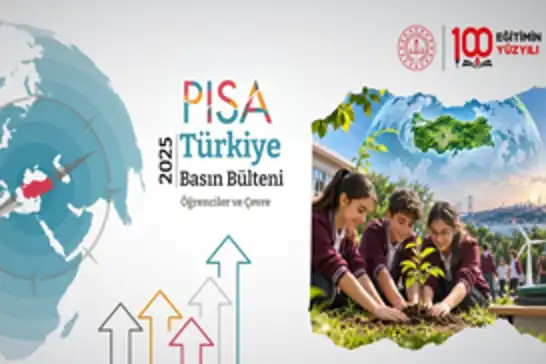
Türkiye ranked among the top-performing countries in the PISA 2025 environmental science assessment, exceeding the OECD average with 494 points and placing 17th among 85 countries and 12th among 38 OECD members.