HÜDA PAR’s Ramanlı warns rising energy costs threaten social justice
 13 oC
13 oC 
Güneşli

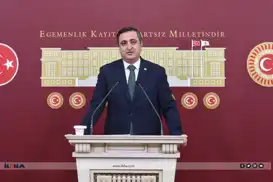
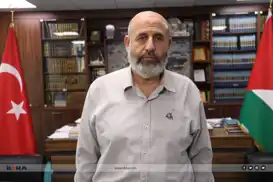
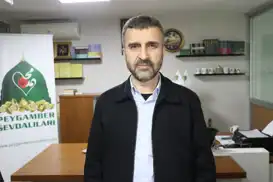
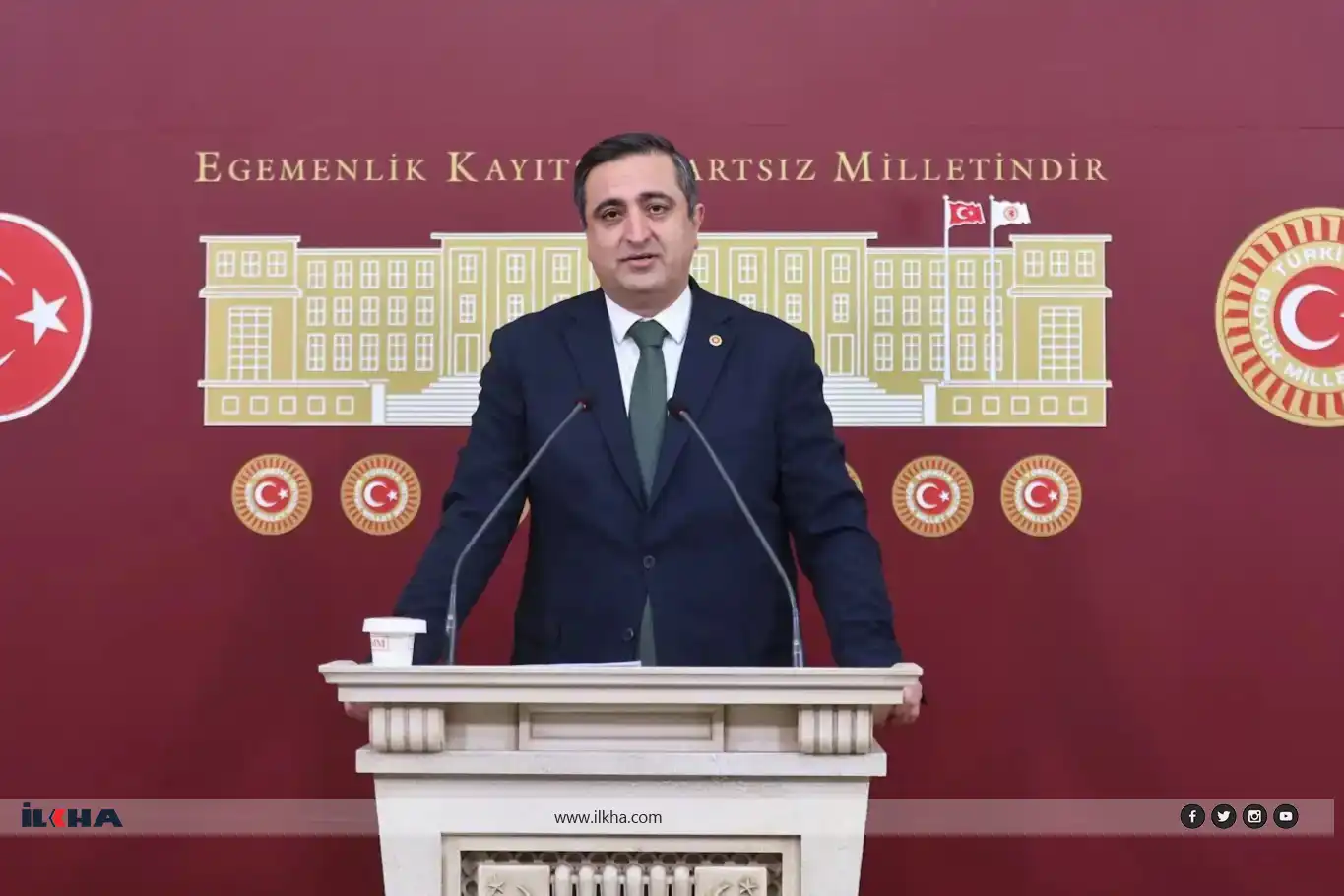
HÜDA PAR (Free Cause Party) Spokesperson and Batman MP Serkan Ramanlı addressed multiple pressing domestic and international issues, with a strong focus on the socioeconomic impacts of rising energy costs as winter intensifies across Türkiye.
Speaking at a comprehensive press conference held at the Turkish Grand National Assembly (TBMM), Ramanlı delivered wide-ranging assessments covering domestic economic policy, labor rights, cultural and moral challenges, and major regional and international crises. His remarks reflected what he described as an urgent need for policies rooted in social justice, moral responsibility, and humanitarian principles.
Rising Energy Costs and Social Justice
Ramanlı said the sharp increase in natural gas and electricity bills with the onset of colder weather has placed serious pressure on households across Türkiye, particularly low-income families and those living in colder regions. While welcoming Energy Minister Alparslan Bayraktar’s assurance that there would be no energy price hikes in January, Ramanlı cautioned that the possibility of future adjustments tied to inflation targets continues to fuel uncertainty.
He expressed particular concern over the government’s plan to transition to a tiered support model in natural gas consumption. According to Ramanlı, such a model risks penalizing families who have no choice but to consume more energy due to household size, climate conditions, or housing quality.
“Energy is not a luxury item that can be consumed or avoided at will,” Ramanlı said. “It is a fundamental necessity and a minimum requirement for living with dignity. Policies that treat energy as a privilege rather than a right are incompatible with the principles of a social state.”
He argued that withdrawing state support above fixed consumption thresholds would disproportionately affect large families, small tradespeople operating from their homes or shops, elderly citizens, and residents of eastern and northern regions where winters are longer and harsher. Instead, he called for a comprehensive pricing system that accounts for income level, family size, geographic conditions, and seasonal needs, emphasizing that energy policy must be designed around people rather than abstract economic indicators.
Private Security Guards and Labor Rights
Ramanlı also devoted significant attention to the problems faced by private security guards, whom he described as an essential yet often overlooked pillar of public safety. Working under Law No. 5188, private security personnel serve in a wide range of settings, from public institutions and hospitals to schools, residential complexes, and commercial centers.
He said current regulations leave these workers vulnerable to arbitrary decisions by employers and site managements, particularly in residential complexes where oversight is weak. Issues such as low wages, unpaid overtime, lack of job security, limited access to annual leave, and compulsory work on holidays remain widespread, Ramanlı said.
“The authority–responsibility balance is fundamentally broken,” he noted. “Private security guards are entrusted with serious responsibilities, yet their rights and protections remain fragile. This imbalance not only harms workers but also undermines the effectiveness and professionalism of security services.”
Ramanlı called for a thorough revision of the legal framework governing private security, urging lawmakers to introduce clear, binding standards that protect workers’ rights and prevent exploitation. Such reforms, he argued, would benefit not only employees but also public safety as a whole.
Attacks on Religious Values and Social Cohesion
Addressing cultural and social concerns, Ramanlı warned of what he described as a growing trend of mocking religious values, particularly on social media platforms frequented by young people. He stressed that such incidents should not be dismissed as isolated acts of disrespect but seen as symptoms of a deeper erosion of moral and spiritual education.
“These images show a society struggling to pass on its values to the next generation,” Ramanlı said. “When young people grow up detached from faith, morality, and tradition, the result is not freedom but emptiness.”
He emphasized that the issue goes beyond legal regulation and requires a broader societal effort involving families, educators, civil society organizations, and media institutions. Nevertheless, he reiterated the importance of legal safeguards, recalling a bill previously submitted to parliament aimed at preventing insults to religious values.
According to Ramanlı, the gradual removal of religious and moral principles from public life risks producing a generation with weakened conscience, diminished compassion, and a lost sense of shame. “Law must intervene carefully and proportionately,” he said, “but ignoring this problem altogether will lead to long-term social damage.”
Sudan: A Deepening Humanitarian Catastrophe
Turning to international affairs, Ramanlı painted a grim picture of the situation in Sudan, describing it as a country being dragged into a total humanitarian collapse. He condemned the actions of the Rapid Support Forces (RSF), accusing them of systematically using sexual violence against women as a tool of war, alongside widespread looting and the deliberate destruction of civilian infrastructure.
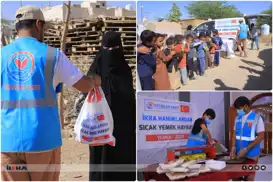
The targeting of hospitals, water systems, electricity networks, agricultural resources, and gold reserves, he said, reflects a strategy aimed at breaking society and forcing civilian submission. As a result, millions of Sudanese are being deprived of basic necessities, including food, clean water, and medical care.
Ramanlı criticized the international community for what he described as ineffective and insufficient responses. He called for the activation of international judicial mechanisms to ensure that perpetrators of war crimes are held accountable and stressed the urgent need for safe humanitarian corridors and uninterrupted aid delivery.
“Political mediation alone is not enough,” he said. “The actors fueling this violence must be identified and cut off, and Sudan’s legitimate institutions must be protected through concrete and meaningful support.”
Somaliland and Regional Destabilization
Ramanlı also strongly criticized the Israeli regime’s decision to recognize Somaliland, describing it as part of a broader strategy aimed at deepening fragmentation and instability across Africa and the Muslim world. He warned that such unilateral moves threaten the fragile balance in strategic regions, particularly around the Red Sea and the Bab al-Mandab Strait, which are vital to global trade and regional security.
He recalled that both the Organization of Islamic Cooperation and the African Union have clearly rejected attempts to redraw borders or undermine territorial integrity through external intervention. According to Ramanlı, recognizing breakaway regions risks setting dangerous precedents and fueling new conflicts.
Call for International Isolation of the Israeli Occupation Regime
Concluding his remarks, Ramanlı argued that the Israeli regime has become a central source of instability not only in Palestine but across multiple regions. From the Middle East to Africa, he said, its policies contribute to conflict, division, and insecurity.
“The only effective way to stop these conflict-fueling policies is international isolation,” Ramanlı said. He called on states to reconsider diplomatic recognition, halt normalization efforts, and adopt firm and principled diplomatic responses against what he described as an occupying and illegitimate regime.
Failing to do so, he warned, would allow instability and chaos to spread further into new geographies, with consequences that would ultimately affect the entire international community. (ILKHA)
LEGAL WARNING: All rights of the published news, photos and videos are reserved by İlke Haber Ajansı Basın Yayın San. Trade A.Ş. Under no circumstances can all or part of the news, photos and videos be used without a written contract or subscription.
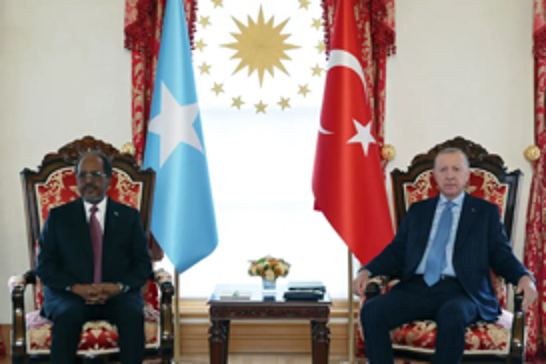
Turkish President Recep Tayyip Erdoğan met with President Hassan Sheikh Mohamud of Somalia on Monday at the Dolmabahçe Presidential Office in Istanbul, as part of an official visit aimed at further strengthening the long-standing strategic partnership between the two countries.
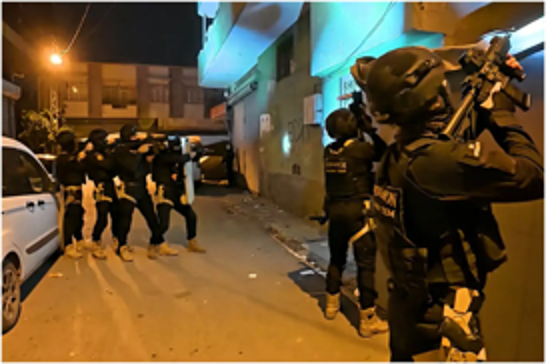
Authorities across Türkiye have detained 357 suspects in a large-scale counterterrorism operation targeting the ISIS (Daesh) terror group, Interior Minister Ali Yerlikaya announced on Tuesday.
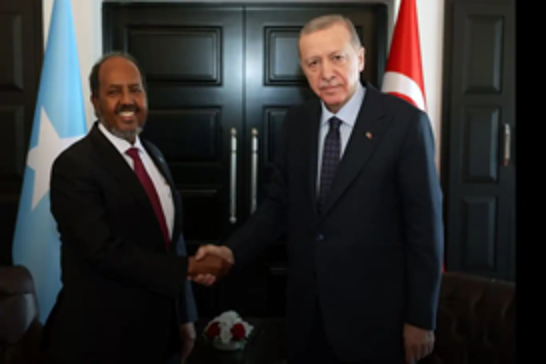
President Hassan Sheikh Mohamud of the Federal Republic of Somalia is set to pay an official visit to Türkiye on Tuesday at the invitation of President Recep Tayyip Erdoğan, according to a statement released by Burhanettin Duran, Head of Communications of the Turkish Presidency.