Islamic scholars and leaders in Istanbul reject normalization
 13 oC
13 oC 
Güneşli

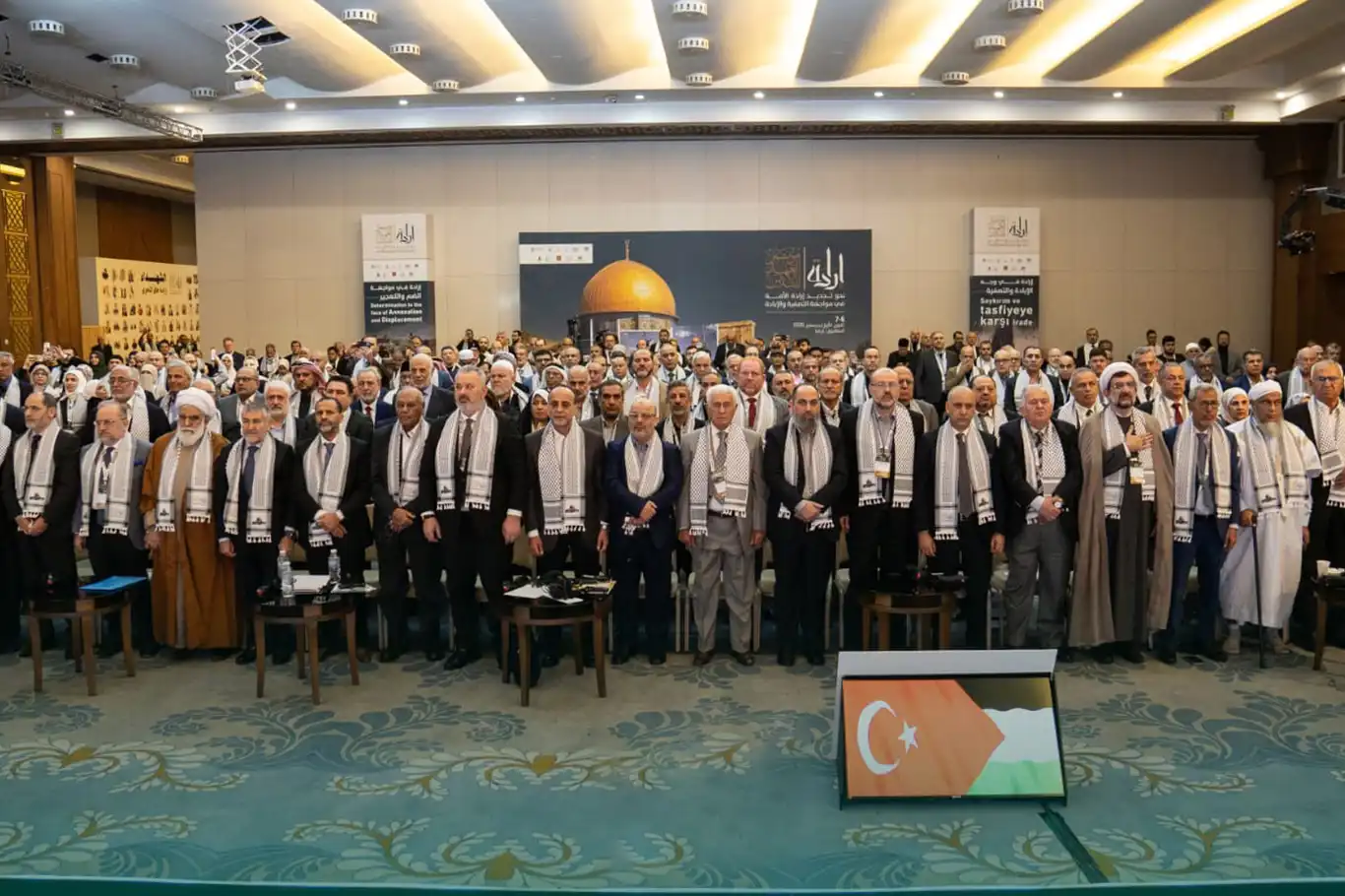
A major Arab-Islamic conference concluded in Istanbul on Sunday with the issuance of the “Ahd Al-Quds” (Covenant of Jerusalem) Declaration, forging a unified position against what it termed the ongoing Israeli genocide in Gaza and rejecting all forms of normalization with Israel.
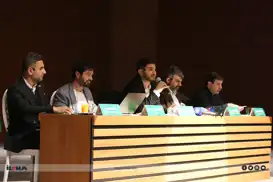
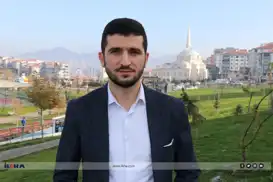
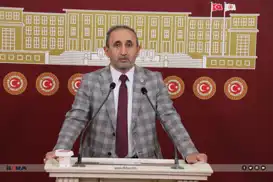
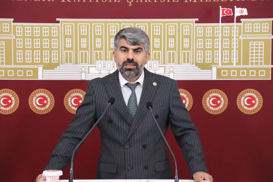
The "Pledge to Jerusalem" conference, held on December 6-7, brought together over 300 scholars, intellectuals, and institution leaders from more than 30 countries to "renew the Ummah’s will" in the face of continued Israeli aggression and attempts to "liquidate the Palestinian cause".
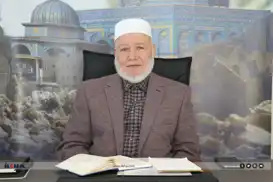
The declaration, read by prominent Egyptian scholar Dr. Muhammad Sulaim al-‘Awwa, reaffirms that Jerusalem is an Arab city with an Islamic-Christian identity and that the entire Al-Aqsa Mosque compound is the exclusive right of the Muslim Ummah.
A Declaration of Defiance and Reaffirmed Rights
The Ahd Al-Quds Declaration marks a significant effort to consolidate Arab-Islamic solidarity. Its key points include:
Confronting Genocide and Siege: The document describes the war on Gaza as a "grave crime" that must be stopped immediately, with perpetrators held accountable under international law. It announces a global popular initiative to criminalize genocide and prosecute its perpetrators.
Absolute Rejection of Normalization: It firmly condemns all normalization efforts, including the Abraham Accords, labeling them a "betrayal of moral values" and the legitimate rights of Palestinians. A parallel initiative seeks to criminalize all forms of normalization with Israel.
Protection of Jerusalem and Al-Aqsa: The declaration positions Jerusalem as the central axis of the struggle, aiming to safeguard the city from Judaization and protect its Arab and Islamic character.
Affirmation of Core Palestinian Rights: It strongly upholds the right of Palestinians to resist occupation, calls for the urgent release of prisoners, and reinforces support for the inalienable right of return for refugees.
The conference featured a keynote address by Khaled Meshaal, Head of Hamas Abroad. He warned that Israeli coercion aims to impose its agenda on the region and stressed that "victory cannot be achieved without unity and partnership." He emphasized the urgent need to protect the resistance project and save the West Bank from "Judaization, settlement expansion, and forced displacement".
The conference agenda was structured around critical themes, addressing what organizers described as systematic threats to Palestinian existence. On the first day, discussions centered on the "population liquidation in Jerusalem," the "crime of genocide and siege in Gaza," and the "plans of annexation and displacement in the West Bank." The second day focused on "projects of Judaizing Al-Aqsa Mosque," the urgent issue of Palestinian prisoners, and strategies for confronting the perceived liquidation of the refugees' right of return and the dismantling of the United Nations Relief and Works Agency (UNRWA).
This conference is part of a long history of Islamic summits and initiatives focused on Jerusalem. Notably, the Sixth Extraordinary Session of the Islamic Summit was held in Istanbul in December 2017. That gathering, attended by heads of state from 57 OIC member countries, resulted in the "Istanbul Declaration on Freedom for Al Quds," which recognized East Jerusalem as the capital of Palestine and condemned the U.S. move of its embassy to the city.
The recent conference builds on this legacy, shifting focus to the current crisis in Gaza and the perceived international failure to stop it. Organizers stated the event was necessary because the "international community’s failure to stop the genocide and siege imposes a historical responsibility on Arab and Islamic elites".
The Legal and Moral Foundation: The Right of Return
A recurring and emphatic point in the declaration is the right of return for Palestinian refugees, a right firmly rooted in international law. This foundation includes UN General Assembly Resolution 194 from 1948, which resolves that refugees wishing to return to their homes "should be permitted to do so at the earliest practicable date" and that compensation should be paid.
It is further supported by Article 13(2) of the Universal Declaration of Human Rights, which states that everyone has the right to "return to his country." This right has been repeatedly reaffirmed by the UN General Assembly and is recognized by major human rights organizations such as Amnesty International and Human Rights Watch, underscoring its enduring legitimacy in the eyes of international institutions.
The conference concluded by reaffirming Jerusalem as the central cause for the Muslim world and committing to continued work toward the liberation of Palestine. The event also included thematic discussions and a theatrical performance highlighting the suffering in Gaza. (ILKHA)
LEGAL WARNING: All rights of the published news, photos and videos are reserved by İlke Haber Ajansı Basın Yayın San. Trade A.Ş. Under no circumstances can all or part of the news, photos and videos be used without a written contract or subscription.
The Turkish Foreign Ministry issued a statement on the first anniversary of Syria’s 8 December Liberation Day, congratulating the Syrian people on what it described as a historic milestone marking the end of the civil war and the collapse of the Assad regime.

A 4.6-magnitude earthquake struck the Tuşba district of Van province in eastern Türkiye on Sunday, the Disaster and Emergency Management Authority (AFAD) announced.
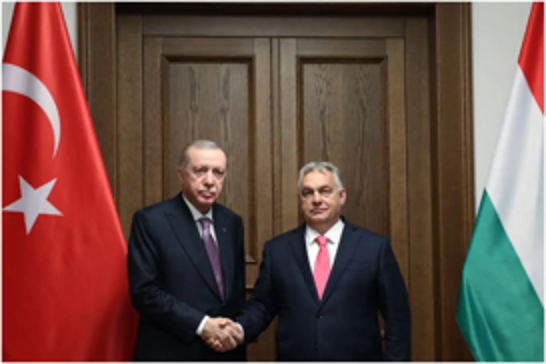
Hungarian Prime Minister Viktor Orbán will pay an official visit to Türkiye on Friday, following an invitation extended by President Recep Tayyip Erdoğan, the Turkish Presidency announced.