Türkiye and Germany sign new economic cooperation protocol, set $60 billion trade target
 13 oC
13 oC 
Güneşli

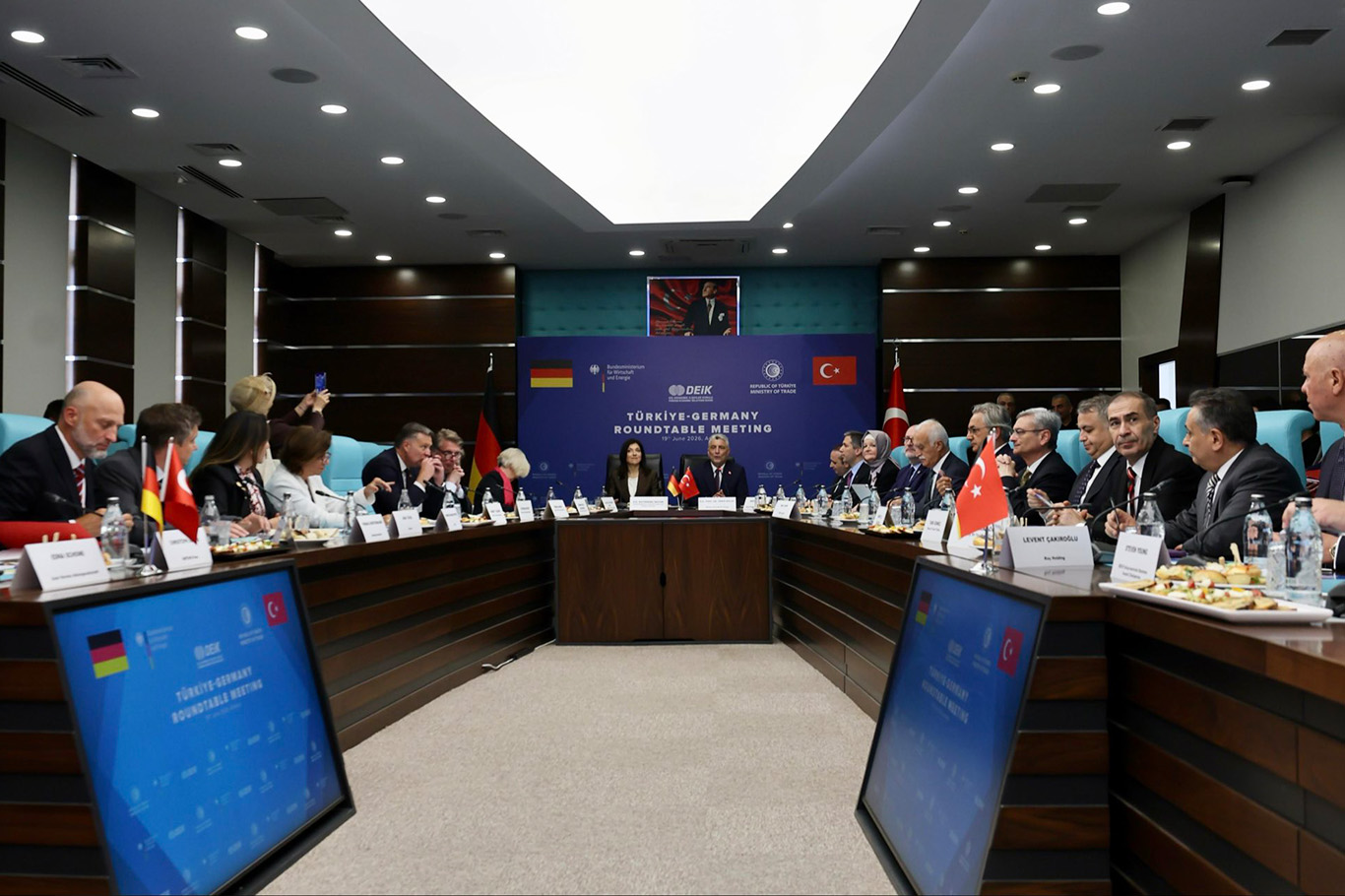
Türkiye and Germany signed a new economic cooperation protocol on Thursday and reaffirmed their shared goal of increasing bilateral trade to $60 billion during the sixth meeting of the Türkiye-Germany Joint Economic and Trade Committee (JETCO) held in Ankara.
The meeting brought together Turkish Trade Minister Ömer Bolat and German Minister for Economic Affairs and Energy Katherina Reiche, who also participated in a roundtable discussion with leading business representatives from both countries.
Strong Economic Partnership Highlighted
Speaking after the meeting, Bolat said the discussions covered a wide range of topics, including trade, investment, industrial cooperation, energy transition, green and digital transformation, transportation, connectivity, and opportunities for cooperation in third countries.
He emphasized that the meeting once again demonstrated the strength of the long-standing economic partnership between Türkiye and Germany, describing the relationship as one built on deep-rooted ties, mutual trust, and shared interests.
“Germany remains one of Türkiye’s most important investment partners and strategic allies,” Bolat said, noting that bilateral trade has exceeded $52 billion.
According to the minister, Germany continues to be Türkiye’s largest export market, its third-largest source of imports, and one of the country's leading foreign investors.
Bolat also highlighted the growing investment relationship between the two countries, stating that Turkish companies have invested nearly $3 billion in Germany, while German firms hold approximately $26.5 billion in direct investments in Türkiye and operate around 8,600 companies across the country.
New Protocol to Guide Future Cooperation
The newly signed protocol documents the progress achieved in bilateral economic relations and establishes a roadmap for expanding cooperation in the coming years.
The ministers also exchanged views on the modernization of the Türkiye-European Union Customs Union, which Ankara has long advocated as a means of strengthening economic integration and adapting to evolving global trade dynamics.
“As the European Union develops new trade, industrial, and sustainability policies, including the ‘Made in EU’ framework, it is important that these initiatives remain inclusive and support the highly integrated supply chains that have been built over decades,” Bolat said.
Visa Facilitation Remains Key Issue
Visa-related challenges for Turkish citizens were also discussed during the talks.
Bolat welcomed Germany’s “cascade” visa system, which has been implemented since July last year and has helped improve appointment availability and application procedures for Turkish applicants.
He noted that visa rejection rates have fallen significantly, declining from approximately 25 percent to 14 percent.
“The German side plans to further accelerate procedures for businesspeople, students, artists, NGO representatives, and transport sector workers,” Bolat said.
He added that Türkiye reiterated its long-standing demand for visa-free travel for Turkish citizens.
Germany Sees Türkiye as Strategic Partner
German Economy and Energy Minister Katherina Reiche described the current international environment as increasingly complex and emphasized the importance of stable and trust-based partnerships.
She characterized Türkiye as a reliable partner for Germany and noted its growing significance in European trade and investment networks.
“Germany and Türkiye share a common interest in promoting economic growth, increasing mutual investments, and strengthening cooperation between our business communities,” Reiche said.
She noted that Germany accounts for approximately one-quarter of the European Union’s total trade with Türkiye and emphasized that investor confidence remains strong.
According to Reiche, German companies continue to expand their operations in Türkiye through both new investments and the enlargement of existing projects.
Expanding Trade and Investment Ties
The latest JETCO meeting reflects the commitment of both governments to deepen economic cooperation at a time of global economic uncertainty and shifting geopolitical dynamics.
With bilateral trade already surpassing $52 billion, officials from both countries expressed confidence that the newly signed protocol and enhanced business cooperation could help achieve the ambitious target of $60 billion in annual trade in the years ahead. (ILKHA)
LEGAL WARNING: All rights of the published news, photos and videos are reserved by İlke Haber Ajansı Basın Yayın San. Trade A.Ş. Under no circumstances can all or part of the news, photos and videos be used without a written contract or subscription.
Türkiye’s agricultural input costs continued to climb sharply in April 2026, with the Agricultural Input Price Index (Agricultural-IPI) rising 38.97% on an annual basis, according to data released on Friday by the Turkish Statistical Institute (TurkStat).
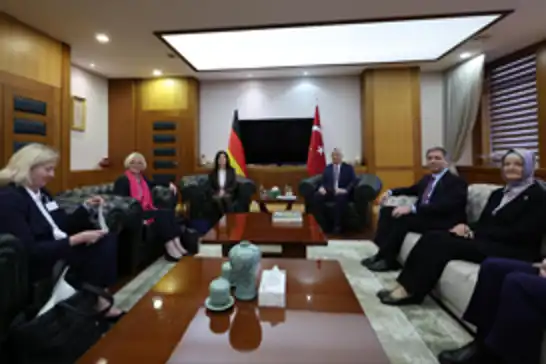
German Minister for Economic Affairs and Energy Katherina Reiche has arrived in Ankara for a two-day official visit aimed at deepening economic, trade, and energy cooperation between Germany and Türkiye, as both countries seek to expand strategic partnerships amid evolving regional and global challenges.
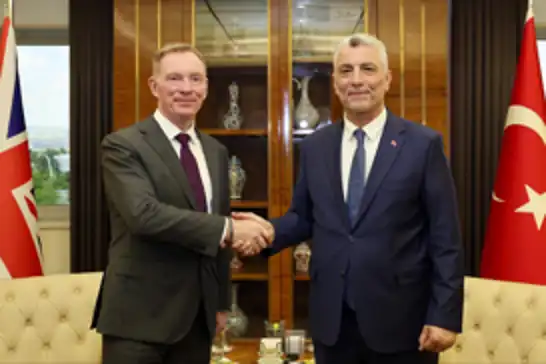
Türkiye and the United Kingdom have set a goal of increasing their bilateral trade volume to $40 billion, Turkish Trade Minister Ömer Bolat announced following talks with British Minister of State for Trade Chris Bryant in Ankara.
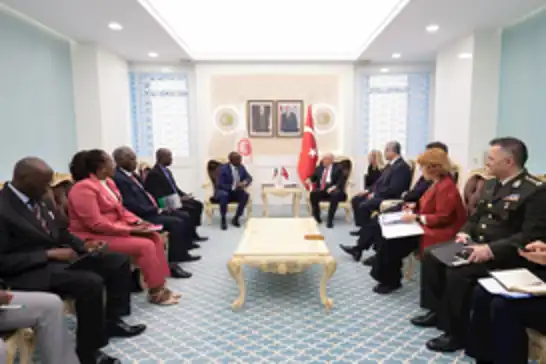
Türkiye and Burundi held the inaugural session of their Joint Economic Commission (KEK) in Ankara on June 16–17, 2026, marking a new step in efforts to expand bilateral economic and sectoral cooperation.