Türkiye enters new phase of PKK disarmament process as legal framework takes shape
 13 oC

Güneşli

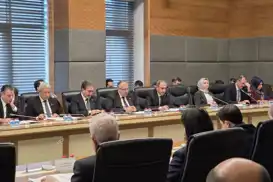
As Türkiye’s “Terror-Free” process enters a new phase, preparations are underway to establish a parliamentary Monitoring Commission tasked with overseeing the PKK’s disarmament and dissolution, monitoring the implementation of legal arrangements and ensuring greater transparency throughout the process.
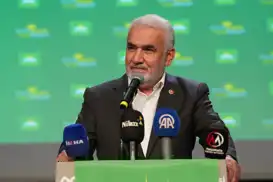
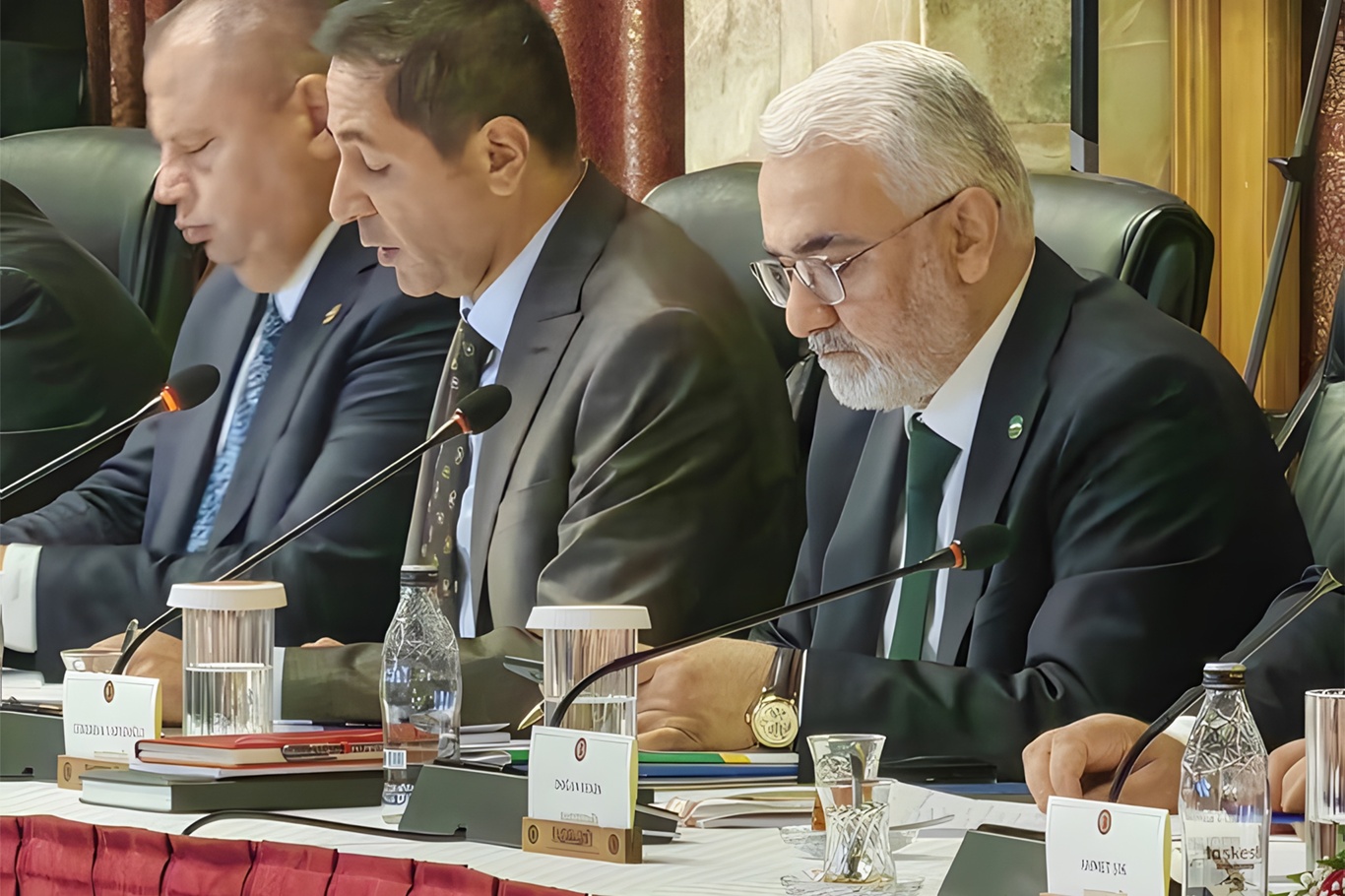
HÜDA PAR General President Zekeriya Yapıcıoğlu has called for the initiative to be conducted with sincerity, sensitivity and political responsibility, stressing that a process that began as a state project must evolve into a broader national undertaking with the participation and support of society.
The initiative gained momentum after PKK leader Abdullah Öcalan called on the organization to disarm and dissolve itself on February 27, 2025. Following the call, the PKK announced on May 12, 2025, that it had decided to dissolve and end its armed struggle against Türkiye.
A symbolic disarmament ceremony was held on July 11, 2025, in northern Iraq, where 30 PKK members, including female fighters, burned their weapons in a symbolic gesture marking the beginning of the disarmament process. However, the ceremony did not constitute a comprehensive handover of the organization's weapons, and Turkish authorities have continued to demand verifiable and complete disarmament.
The process subsequently entered a new legal phase with the work of the National Solidarity, Brotherhood and Democracy Commission established within the Turkish Grand National Assembly (TBMM).
The parliamentary commission's report laid the groundwork for the legal framework governing the next stage. On August 10, 2026, the Turkish Parliament adopted the Law on Strengthening National Solidarity and Social Integration, which was published in the Official Gazette on August 18.
The legislation establishes the legal framework for measures concerning PKK members, including the possible suspension of certain investigations, prosecutions and prison sentences, subject to the complete dissolution of the organization and the surrender of its weapons.
Under the law, security institutions must first establish that the PKK and its affiliated structures have ended their armed activities and surrendered all weapons and ammunition. The National Security Council (MGK) must then confirm this assessment through a decision published in the Official Gazette.
Parliament Speaker Numan Kurtulmuş has stressed that the legal provisions cannot be implemented unless the disarmament and dissolution requirements are fully met.
Monitoring disarmament and overseeing legal arrangements
The planned Monitoring Commission is expected to have three main responsibilities: overseeing the implementation of the law, monitoring the PKK's disarmament and dissolution, and identifying the need for additional legal arrangements.
It is also expected to work in coordination with the executive board chaired by Vice President Cevdet Yılmaz and other relevant state institutions.
The executive board held its first meeting on August 24, 2026, establishing a roadmap for implementing the legislation. Four working groups were subsequently assigned responsibilities covering legal matters, developments on the ground, social integration and coordination of the disarmament process.
The parliamentary Monitoring Commission is intended to complement these efforts by providing political oversight and ensuring that developments are followed on behalf of the nation.
The establishment of the commission marks an effort to move the process beyond political declarations and into a more concrete phase of implementation and parliamentary supervision.
One of the main questions surrounding this new phase is how the PKK's disarmament and dissolution will be verified.
While international observers or third-party organizations have played a role in some conflict-resolution efforts elsewhere, Türkiye has opted for a domestic mechanism based on its own institutions.
Rejecting the need for external supervision, Kurtulmuş said the Turkish Parliament would oversee the process on behalf of the nation.
“In what we call the 'Turkey model,' there will be no such thing. There is no need for a third eye. Both the third eye and the first eye will be the TBMM; it will be the political parties represented in the TBMM and the will of the nation,” he said.
However, the disarmament process remains a critical challenge. In September 2026, Foreign Minister Hakan Fidan called on the PKK to accelerate its disarmament, saying that more than a year had passed since its dissolution announcement without sufficient concrete progress in laying down weapons.
The government has maintained that the organization's complete dissolution and the surrender of all weapons must be verified before the relevant legal provisions can take effect.
Key details concerning the parliamentary commission's authority, access to information, working procedures and public reporting responsibilities have yet to be fully clarified. These arrangements will be crucial in determining how effectively it can carry out its duties.
Yapıcıoğlu: Commission will turn state project into national project
Speaking during a live broadcast on October 1, 2026, the opening day of the fifth legislative year of the 28th parliamentary term, HÜDA PAR leader Zekeriya Yapıcıoğlu welcomed the prospect of parliamentary oversight and broader public involvement in the process.
Emphasizing the need to turn the initiative into a shared national undertaking, Yapıcıoğlu said: “As our Speaker of the Assembly expressed, the ending of violence was a state project. The commission will turn this into the nation's project.”
His remarks underline the importance of ensuring that the process does not remain confined to coordination among state institutions but instead develops into an initiative with wider political and public ownership.
This, he argues, requires the participation of different political parties represented in parliament, regular updates on developments and greater public awareness of the steps being taken.
In this sense, the commission's role should extend beyond monitoring the laying down of arms. It should also help build public confidence and strengthen the broader social support needed to make the process sustainable.
Yapıcıoğlu warns political actors against undermining the process
Another key point in Yapıcıoğlu's assessment is the need for political actors to exercise caution in their public statements.
Drawing attention to the doubts and mistrust left by previous failed initiatives, he has stressed that those involved must avoid rhetoric that could damage the process or weaken public confidence.
“Sincerity alone is not enough; that sensitivity must also be observed. Someone may be well-intentioned. When they let something slip from their mouth that will harm the process, or when they utter a sentence that will steer public opinion in a negative direction, it can later be very difficult to repair. In order not to fall into such situations, everyone must carefully weigh what they say,” Yapıcıoğlu said.
His remarks highlight the importance of political responsibility, measured language and a shared commitment to protecting the process from unnecessary tensions.
Transparency and public confidence will be key to the next phase
Although the planned Monitoring Commission represents an important step towards institutional oversight, its establishment alone will not guarantee the success of the process.
Much will depend on how effectively it monitors developments on the ground, verifies the PKK's disarmament and dissolution, addresses implementation challenges and keeps the public informed.
Several issues will therefore be particularly important in the coming period.
First, the commission will need a transparent working framework, with clear procedures for assessing information, reporting progress and addressing possible setbacks.
Second, the legal framework must provide clear provisions and guarantees for the measures to be taken throughout the disarmament and dissolution process. The verification of the organization's complete dissolution and the surrender of its weapons will be particularly important in determining when these provisions can be implemented.
Third, a lasting settlement requires more than simply ending armed violence. The social, political and legal problems that have accumulated over years of conflict must also be addressed.
Finally, preserving political consensus will be essential. The process must remain open to different political perspectives and avoid being perceived as the initiative of a single party or political group.
Ultimately, the success of Türkiye's “Terror-Free” process will depend not only on whether the PKK lays down its weapons and dissolves its organizational structure but also on whether the underlying problems are addressed, public confidence is strengthened and lasting social reconciliation becomes possible.
The planned Monitoring Commission is expected to serve as a bridge between parliamentary oversight, the implementation of disarmament measures and the preservation of social consensus. As Yapıcıoğlu has emphasized, sincerity, transparency, political sensitivity and a commitment to the common will of the nation will be essential to ensuring that the process achieves its long-term objectives. (ILKHA)
LEGAL WARNING: All rights of the published news, photos and videos are reserved by İlke Haber Ajansı Basın Yayın San. Trade A.Ş. Under no circumstances can all or part of the news, photos and videos be used without a written contract or subscription.
Turkish President and Justice and Development (AK) Party Chairman Recep Tayyip Erdoğan has said preparations for a comprehensive reform of Türkiye’s local administration system are progressing across five main areas, with the aim of strengthening oversight, transparency and accountability in municipalities.
Forty-six civil society organizations have called for the immediate opening of humanitarian corridors to Gaza, urging the international community to ensure the unimpeded delivery of shelter, heating materials and other essential supplies as winter worsens the humanitarian crisis in the besieged enclave.
Sabahattin Alkan, who faced imprisonment and 15 years of exile over his Islamic activities in Türkiye, has passed away following a heart attack.