HÜDA PAR official urges Azerbaijan to end headscarf restrictions
 13 oC

Güneşli

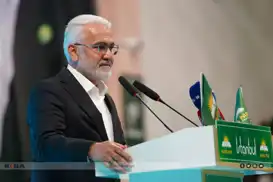
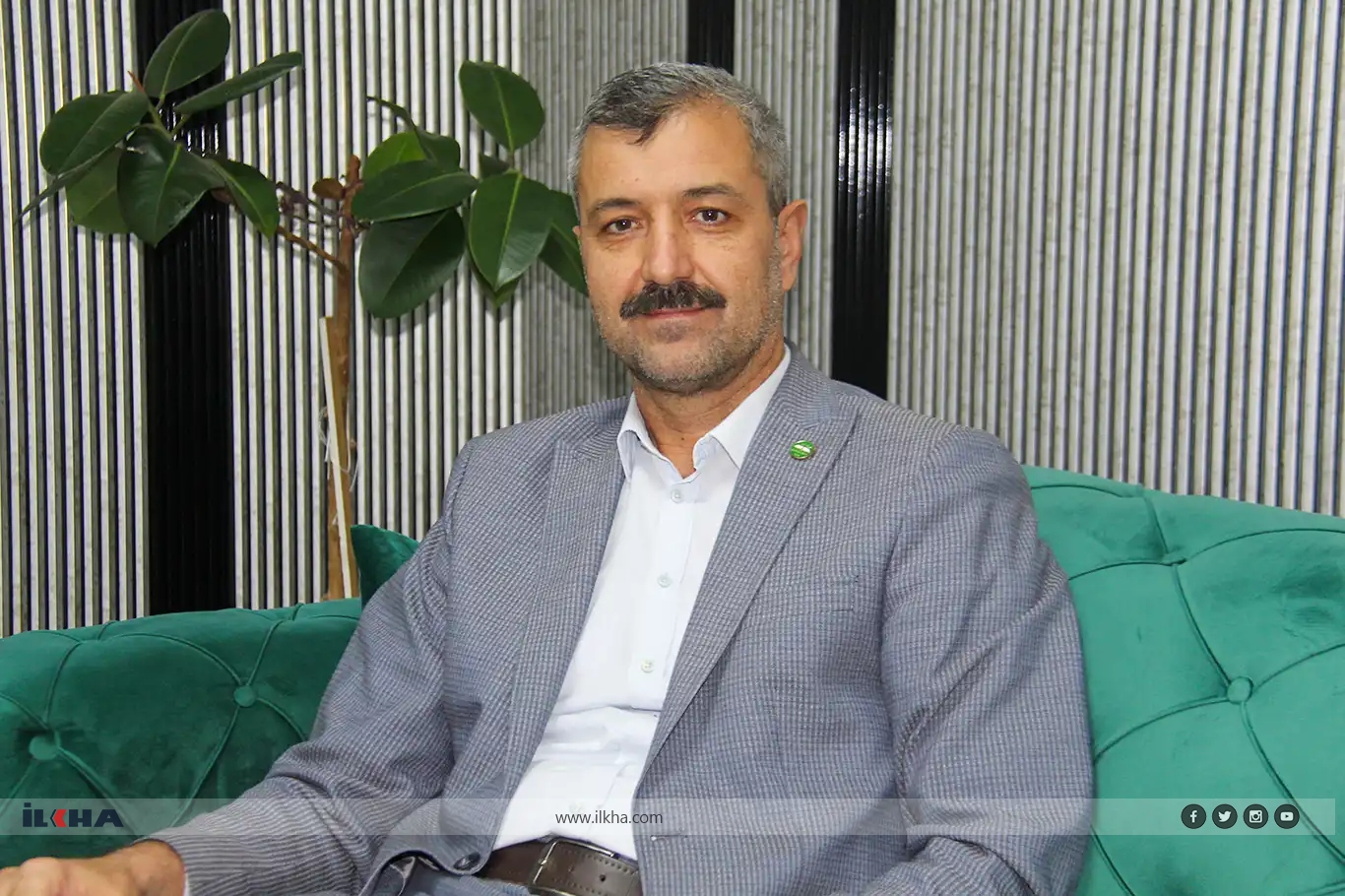
HÜDA PAR Deputy Chairman and Head of Education Affairs Yahya Oğraş has called on the Azerbaijani administration to abandon restrictions on Islamic attire in educational institutions, warning that such measures violate fundamental freedoms, undermine social harmony and risk deepening divisions within society.
Oğraş, one of 31 Turkish citizens reportedly banned from entering Azerbaijan after speaking out on the issue, said Muslim women must be free to observe their faith without discrimination, pressure or persecution.
Speaking amid growing controversy over restrictions on the Islamic headscarf in Azerbaijan's educational institutions, Oğraş stressed that freedom of belief is a fundamental right that must be respected regardless of a country's political system or level of development.
"Fundamental rights and freedoms in education and educational institutions are rights that are globally recognized across all international standards," he said, describing such rights as inalienable and inviolable.
He added that restrictive practices targeting these freedoms were unacceptable and that attempts to impose oppressive measures could not be justified.
"As HÜDA PAR, we consistently strive to express that fundamental rights and freedoms must be exercised in their most natural form—without being subjected to any pressure or tyranny," Oğraş said.
'There is no justification for restricting the headscarf'
Questioning why Islamic attire had become a contentious issue in Azerbaijan's educational institutions, Oğraş said the restrictions lacked any legitimate justification from a human, religious or moral perspective.
He noted that headscarves and Islamic clothing had not previously been treated as a problem in the country's educational institutions and questioned what had prompted the authorities to introduce the restrictions.
"We have stated—and continue to state—that we do not see this decision as right. This decision has no justification from a human, faith-based, or conscientious perspective," he said.
Oğraş emphasized that criticizing practices that violate fundamental rights did not amount to interference in another country's internal affairs. Rather, he said, defending human dignity and religious freedom was a moral responsibility that transcended national borders.
"When a matter concerns humanity and faith, we become a voice and strive to express our reaction in the strongest possible manner," he added.
Oğraş condemns entry bans on Turkish citizens
Oğraş also criticized the Azerbaijani administration's reported decision to bar 31 Turkish citizens from entering the country after they voiced opposition to the restrictions.
Describing the move as an authoritarian response to criticism, he urged the authorities to abandon practices he said bore the hallmarks of despotism and dictatorship.
He warned that silencing those who speak up for religious freedom would not resolve the underlying problem but could instead intensify public frustration.
"We say that such practices are not decisions that should be taken in the era we live in, which we refer to as contemporary civilization," Oğraş said, noting that similar restrictions had been imposed in Türkiye in the past.
He added that HÜDA PAR opposed repression wherever it occurred, regardless of the country involved.
'We will not accept the persecution of Muslim women who wear the hijab'
Oğraş said his criticism was not directed against Azerbaijan or its people, whom he described as brothers and sisters bound to Türkiye by shared religious and historical ties.
He invoked a hadith of Prophet Muhammad (peace and blessings be upon him) concerning the duty of Muslims to support one another, whether the person in question is oppressed or committing oppression.
Explaining the teaching, he said that helping an oppressor meant preventing them from continuing their wrongdoing.
"This is our stance," he said, stressing that speaking out against injustice was consistent with the Islamic responsibility to defend the oppressed and encourage justice.
"We do not accept the persecution suffered by our Muslim sisters there—our sisters who wear Islamic attire as a requirement of their faith. Whether it is Azerbaijan or any other country, we would say the exact same things," Oğraş said.
He added that people affected by the restrictions in Azerbaijan had been voicing their objections through protests and other public expressions of dissent.
According to Oğraş, HÜDA PAR sought to amplify their grievances and ensure that the difficulties faced by Muslim women were not ignored.
He also said that the entry bans would not deter him from continuing to defend their rights.
"We have heard of these bans, we react to them, and we strictly reject them. We will persistently maintain our statements, stance, and attitude on this matter, insha'Allah," he said.
Calls for unity under the principle of 'one nation, two states'
Addressing Türkiye and Azerbaijan's longstanding ties, Oğraş referred to the principle of "one nation, two states," saying that solidarity between the two countries should include listening to the grievances of people facing injustice.
He argued that genuine brotherhood required speaking out when members of society were subjected to discrimination, rather than remaining silent for the sake of political convenience.
"We share the understanding of 'one nation, two states.' Indeed, it is true; they are also our nation. We will naturally listen to the voice of that nation," he said.
Oğraş added that his position was also guided by his religious accountability, saying he wanted to be able to answer before Allah on the Day of Judgment for what he had done to defend those experiencing hardship.
He maintained that standing alongside Muslim women facing restrictions was a matter of conscience and faith, not hostility toward Azerbaijan.
Warns restrictions could deepen social divisions
Oğraş urged the Azerbaijani authorities to learn from Türkiye's February 28 process, a period associated with restrictions on religious expression and pressure on women wearing the headscarf in public institutions.
He said similar experiences should not be repeated in Azerbaijani society and warned that restrictions on Islamic attire could damage social cohesion and fuel polarization.
"The oppression we experienced in the Republic of Türkiye approximately 30 years ago should not be experienced in Azerbaijani society as well. They need to draw lessons from this," he said.
According to Oğraş, introducing restrictions on religious clothing where it had not previously been treated as a problem risked marginalizing sections of society and creating unnecessary tensions.
He called on the Azerbaijani administration to protect social peace, preserve brotherhood and abandon policies that could alienate Muslim citizens because of their religious convictions.
"We say: Let us abandon such practices, and let us not ruin the existing relations within society. Let us not break brotherhood, let us not disrupt peace, and let us not harm fraternity," he said.
Oğraş warned that such measures could have lasting consequences for the country's social fabric and called for the restrictions to be abandoned before further harm was done.
'We took the right step'
Responding to the entry ban imposed on him and other Turkish citizens, Oğraş said he stood firmly behind his statements in defense of Muslim women and religious freedom.
He rejected claims that his remarks were intended to undermine Azerbaijan, saying his objective was to defend the rights of people whose religious convictions were being restricted.
"We voiced the hardship experienced by our brothers and sisters due to their faith. We took a right step. The decision we made was right. Our statements were also spot on and accurate," he said.
Oğraş concluded that his intervention was intended to strengthen unity and justice, not damage relations between Türkiye and Azerbaijan.
He reiterated his call for the Azerbaijani administration to respect freedom of belief, end restrictions on Islamic attire in educational institutions and ensure that Muslim women could practice their faith without discrimination or persecution. (ILKHA)
LEGAL WARNING: All rights of the published news, photos and videos are reserved by İlke Haber Ajansı Basın Yayın San. Trade A.Ş. Under no circumstances can all or part of the news, photos and videos be used without a written contract or subscription.
Türkiye has formally submitted the bill approving the Mecca Joint Defence Agreement signed with Saudi Arabia and Pakistan to the Grand National Assembly of Türkiye (TBMM), marking the next step toward ratifying a trilateral security pact aimed at strengthening military and strategic cooperation among the three countries.

Hybrid threats and the European Union's security preparedness will be among the key issues discussed when EU leaders meet in Brussels on 15–16 October, amid growing concerns over attacks targeting critical infrastructure and border security.
HÜDA PAR Deputy Chairman and Gaziantep MP Şahzade Demir said the masterminds behind the October 6-8, 2014 violence and networks that enabled the bloodshed were never fully brought to light, arguing that the judicial process largely focused on those who carried out the attacks on the streets.