111-year-old father continues to fascinate scientists as tuatara reveals ancient secrets
 13 oC
13 oC 
Güneşli

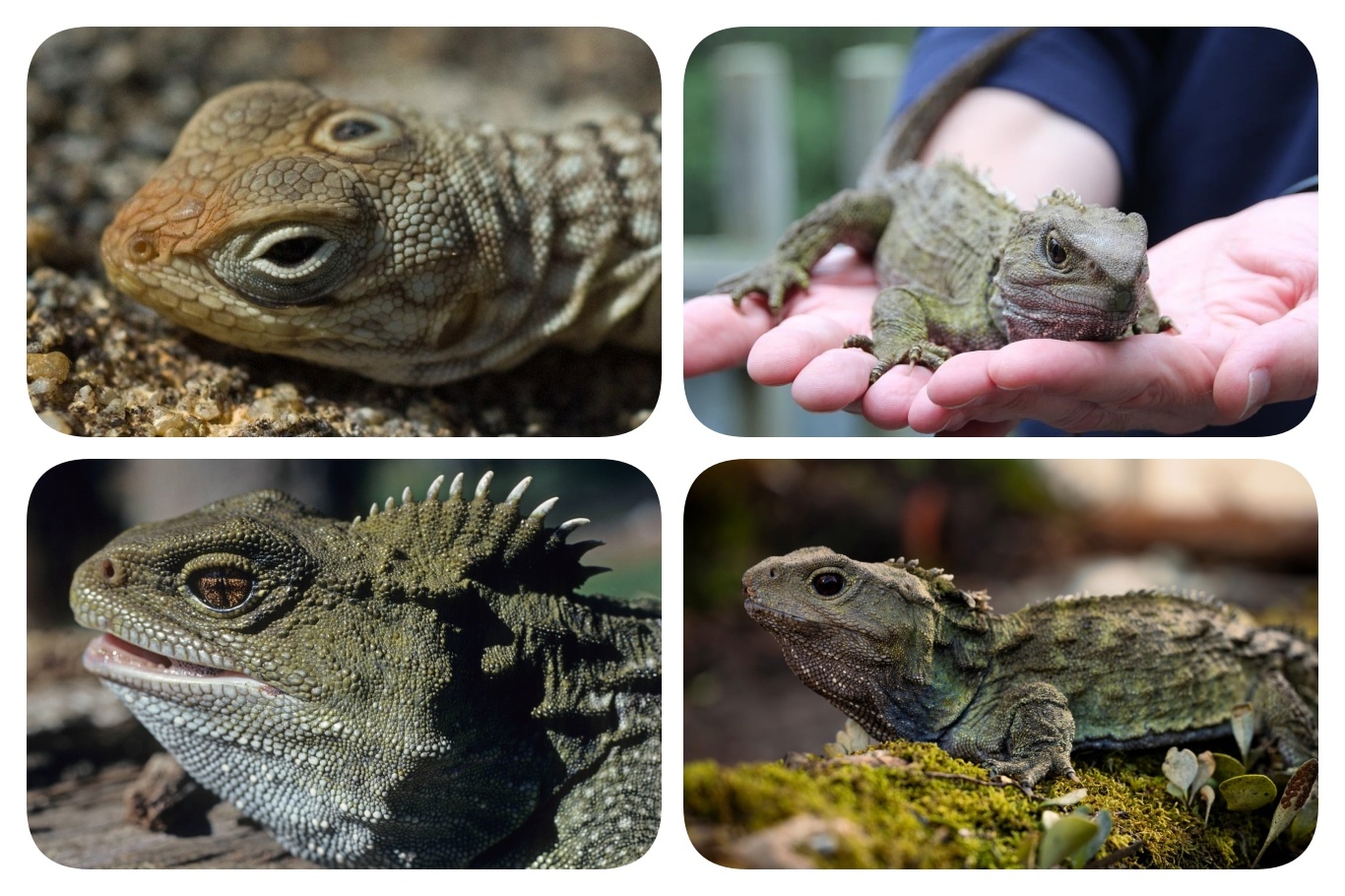
The tuatara, a rare reptile found only in New Zealand, continues to intrigue scientists with its unique biology, including a light-sensitive "third eye," primitive brain structure, and evolutionary lineage dating back around 250 million years.
The tuatara, one of the world's most distinctive reptiles, remains the subject of scientific research because of its exceptional evolutionary history and unusual biological characteristics.
Henry became a father at 111
One of the species' most famous individuals, Henry, made international headlines in 2009 when he became a father for the first time at the age of 111.
Researchers said Henry regained his reproductive ability after undergoing surgery to remove a cancerous tumor, later fathering 11 hatchlings from 12 eggs.
A reptile with a "third eye"
One of the tuatara's most remarkable features is a light-sensitive organ on the top of its head known as the parietal eye, or "third eye."
Although it does not provide vision, the organ helps regulate circadian rhythms, detect changes in light, and adapt to environmental conditions.
A living fossil from the age of dinosaurs
Scientists describe the tuatara as a "living fossil" because it is the only surviving member of the ancient reptile order Rhynchocephalia, which diverged from the ancestors of modern lizards and snakes around 250 million years ago.
Its lineage has survived since the age of the dinosaurs, making the species a valuable window into vertebrate evolution.
Ancient brain and skeleton offer clues to evolution
Recent studies have shown that the tuatara's nervous system retains primitive features not found in most modern reptiles, with researchers identifying notable similarities to the brain structure of turtles.
Advanced CT scans have also revealed that its spine and rib cage preserve ancient anatomical traits, allowing scientists to compare the species with extinct reptiles and gain new insights into prehistoric evolution.
Inspiring science and technology
The tuatara has also inspired advances beyond biology.
Researchers say its movement patterns and hunting behavior influenced the development of the Tuatara Optimization Algorithm, a computational method designed to solve complex engineering and artificial intelligence problems more efficiently.
Scientists believe the tuatara's remarkable combination of evolutionary stability and unique biological features will continue to provide valuable insights into both Earth's distant past and future scientific innovation. (ILKHA)
LEGAL WARNING: All rights of the published news, photos and videos are reserved by İlke Haber Ajansı Basın Yayın San. Trade A.Ş. Under no circumstances can all or part of the news, photos and videos be used without a written contract or subscription.

Internet usage in Türkiye continued to expand in 2026, with more than nine out of every 10 people aged 16 to 74 now using the internet, according to the latest data released by the Turkish Statistical Institute (TurkStat) on Wednesday.

A cyberattack has compromised data belonging to approximately 31,000 individuals listed in Liechtenstein's register of beneficial owners of companies, foundations and trusteeships, the government of the principality announced.

OpenAI has confirmed that an autonomous artificial intelligence cyberattack involving one of its experimental ChatGPT agents extended beyond AI platform Hugging Face, revealing that multiple publicly accessible online services were affected during the incident.

The European Union has accused TikTok of failing to provide sufficient safeguards for children on its platform, warning that the company could face hefty financial penalties if it does not address shortcomings in its protection of minor users.