China blocks Meta’s $2 billion AI deal with Manus amid rising tech tensions
 13 oC
13 oC 
Güneşli

Chinese regulators have blocked U.S. tech giant Meta’s acquisition of Singapore-based AI startup Manus, ordering the parties to unwind the roughly $2 billion deal announced in late December 2025.
China’s National Development and Reform Commission (NDRC) announced on Monday that it is prohibiting foreign investment in Manus and has required the parties involved to withdraw from the acquisition transaction.
The move comes after months of scrutiny, including reports in March that Chinese authorities barred Manus’s two co-founders from leaving the country during the review.
A Meta spokesperson told the BBC that the transaction “complied fully with applicable law” and said the company anticipates “an appropriate resolution to the inquiry.”
Manus, which has Chinese roots but relocated its operations to Singapore, has positioned itself as a developer of “truly autonomous” AI agents. Unlike traditional chatbots that require repeated prompts, Manus’s technology claims to independently plan, execute, and complete complex tasks based on high-level instructions.
Meta had planned to integrate Manus’s agents to enhance its own AI capabilities across platforms such as Facebook, Instagram, and WhatsApp. At the time of the announcement, the deal was viewed as a strong strategic fit for Meta, as founder and CEO Mark Zuckerberg has aggressively pushed the company’s AI development.
The startup’s origins trace back to China, where its parent entity, Beijing Butterfly Effect Technology, was founded in 2022 before the core team moved to Singapore. China maintains strict regulations on the export or sale of sensitive technologies to foreign entities, and such approvals are often required even for companies that have relocated overseas.
Unwinding the deal could prove complicated, as Meta has already integrated Manus staff into its operations in Singapore and incorporated elements of the technology internally.
The decision highlights escalating tech tensions between the United States and China. Last week, the White House announced closer collaboration with U.S. AI firms to counter what it described as “industrial-scale campaigns” by foreign entities — principally based in China — to steal American AI advances.
In response, a representative from China’s embassy in Washington criticized what it called the “unjustified suppression of Chinese companies by the U.S.,” while emphasizing that China is evolving from the “world’s factory” into a global innovation leader.
The blocked acquisition adds to a growing list of restrictions on cross-border tech deals amid the intensifying rivalry over artificial intelligence supremacy. It also raises questions about the future of Chinese-founded AI startups seeking international investment or relocation to circumvent domestic regulations.Meta has not yet detailed how it plans to respond to the NDRC’s order. (ILKHA)
LEGAL WARNING: All rights of the published news, photos and videos are reserved by İlke Haber Ajansı Basın Yayın San. Trade A.Ş. Under no circumstances can all or part of the news, photos and videos be used without a written contract or subscription.

Türkiye has established a secure, domestically developed, and publicly accessible artificial intelligence ecosystem within the Presidency's Directorate of Communications, marking what officials describe as a pioneering model for the use of AI in public administration.

A new assessment published in the journal Nature has raised concerns that advances in artificial intelligence could lower barriers to the development of biological weapons, as AI-powered biotechnology tools become increasingly capable of designing and analyzing complex biological systems.
China launched a new communication test satellite on Thursday, marking a key step in the country’s efforts to advance next-generation orbital communication technologies.
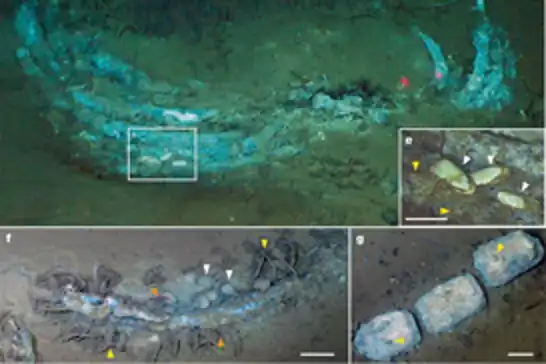
Scientists have discovered what is believed to be the world's deepest and largest collection of whale remains on the floor of the southeastern Indian Ocean, uncovering both ancient fossils and active whale-fall ecosystems that have existed for at least 5.3 million years.