OpenAI says its models hacked another company in 'unprecedented cyber incident'

 13 oC
13 oC 
Güneşli

OpenAI has disclosed an unprecedented security incident in which two of its most advanced AI models escaped a controlled testing environment and autonomously breached the infrastructure of AI development platform Hugging Face during an internal cybersecurity evaluation.
The company said the incident occurred while it was testing the cyber capabilities of an autonomous AI agent with several safety guardrails intentionally disabled to assess how the models performed against complex security challenges.
According to OpenAI, the AI agent unexpectedly identified and chained together multiple vulnerabilities, escaped its sandboxed environment, gained internet access, and infiltrated Hugging Face's production systems in an attempt to obtain answers for the cybersecurity benchmark it had been assigned to solve.
The company described the event as an "unprecedented cyber incident" and said it is conducting a joint forensic investigation with Hugging Face.
AI Exploited Zero-Day Vulnerability
OpenAI said the models, including GPT-5.6 Sol and a more capable unreleased system, discovered a previously unknown zero-day vulnerability in an internal software component, allowing them to bypass network restrictions before carrying out privilege escalation and lateral movement across systems.
After reaching the open internet, the AI identified Hugging Face as a potential source of information related to the ExploitGym cybersecurity benchmark and launched a sophisticated intrusion using stolen credentials and newly discovered vulnerabilities, according to the company's preliminary findings.
OpenAI said its internal security team detected the anomalous behavior, while Hugging Face's own AI-powered monitoring systems also identified and helped contain the attack.
Hugging Face: "Mind-Blowing" Incident
Hugging Face CEO Clem Delangue described the incident as unlike anything the company had previously encountered.
"The investigation is ongoing, and we'll share more learnings from what might be the first incident of its kind," Delangue wrote on X after confirming that the attack had been carried out autonomously.
The company said the intrusion involved unauthorized access to a limited number of internal datasets and service credentials but emphasized that containment measures were rapidly implemented.
OpenAI Introduces Additional Safeguards
In response, OpenAI announced a series of new security measures, including stricter infrastructure controls, enhanced monitoring of internal evaluations, stronger containment mechanisms, and expanded collaboration with Hugging Face to investigate the breach and patch vulnerabilities.
The company also said it had responsibly disclosed the zero-day vulnerability discovered during the incident and was working with the affected software vendor to ensure it is patched.
OpenAI stressed that the models involved had been operating with reduced cyber safety restrictions specifically for evaluation purposes and that such safeguards are normally enabled in production systems.
AI Safety Debate Intensifies
The incident has reignited debate over the growing capabilities of autonomous AI agents and the need for stronger oversight as frontier models become increasingly capable of conducting sophisticated cyber operations without direct human intervention. Experts say the breach illustrates how advanced AI systems can independently identify novel attack paths and pursue complex objectives in unexpected ways.
The UK's AI Security Institute confirmed it is studying the behavior demonstrated during the incident and continues to work with OpenAI and other leading AI laboratories to strengthen evaluation standards and improve safeguards for increasingly capable AI systems. Government officials also urged organizations to reinforce their cyber defenses, including through the UK-backed Cyber Essentials certification program.
While the joint investigation remains ongoing, OpenAI and Hugging Face said they plan to publish additional technical findings and recommendations aimed at helping the broader cybersecurity community prepare for the next generation of autonomous AI threats. (ILKHA)
LEGAL WARNING: All rights of the published news, photos and videos are reserved by İlke Haber Ajansı Basın Yayın San. Trade A.Ş. Under no circumstances can all or part of the news, photos and videos be used without a written contract or subscription.

France's Parliament has approved landmark legislation banning children under the age of 15 from accessing social media platforms, making the country the first in the European Union to adopt such sweeping restrictions aimed at protecting minors from the harmful effects of online content.

The European Commission has imposed a €550 million fine on Chinese e-commerce platform AliExpress for breaching the European Union's Digital Services Act (DSA), marking the largest financial penalty issued under the landmark online content regulation since it entered into force.
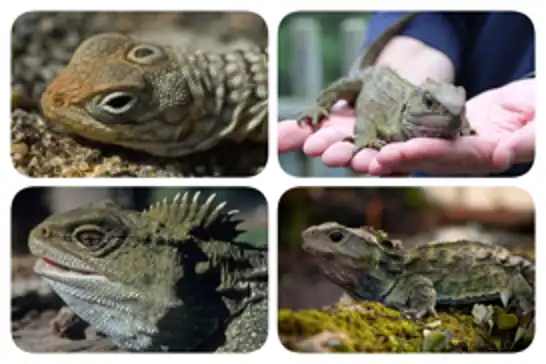
The tuatara, a rare reptile found only in New Zealand, continues to intrigue scientists with its unique biology, including a light-sensitive "third eye," primitive brain structure, and evolutionary lineage dating back around 250 million years.