XPENG launches world’s first intelligent flying car factory in China
 13 oC
13 oC 
Güneşli

Chinese electric vehicle manufacturer XPENG has reached a major milestone in the future of urban air mobility, as its subsidiary XPENG AEROHT officially launched trial production at what is being described as the world’s first intelligent flying car factory.
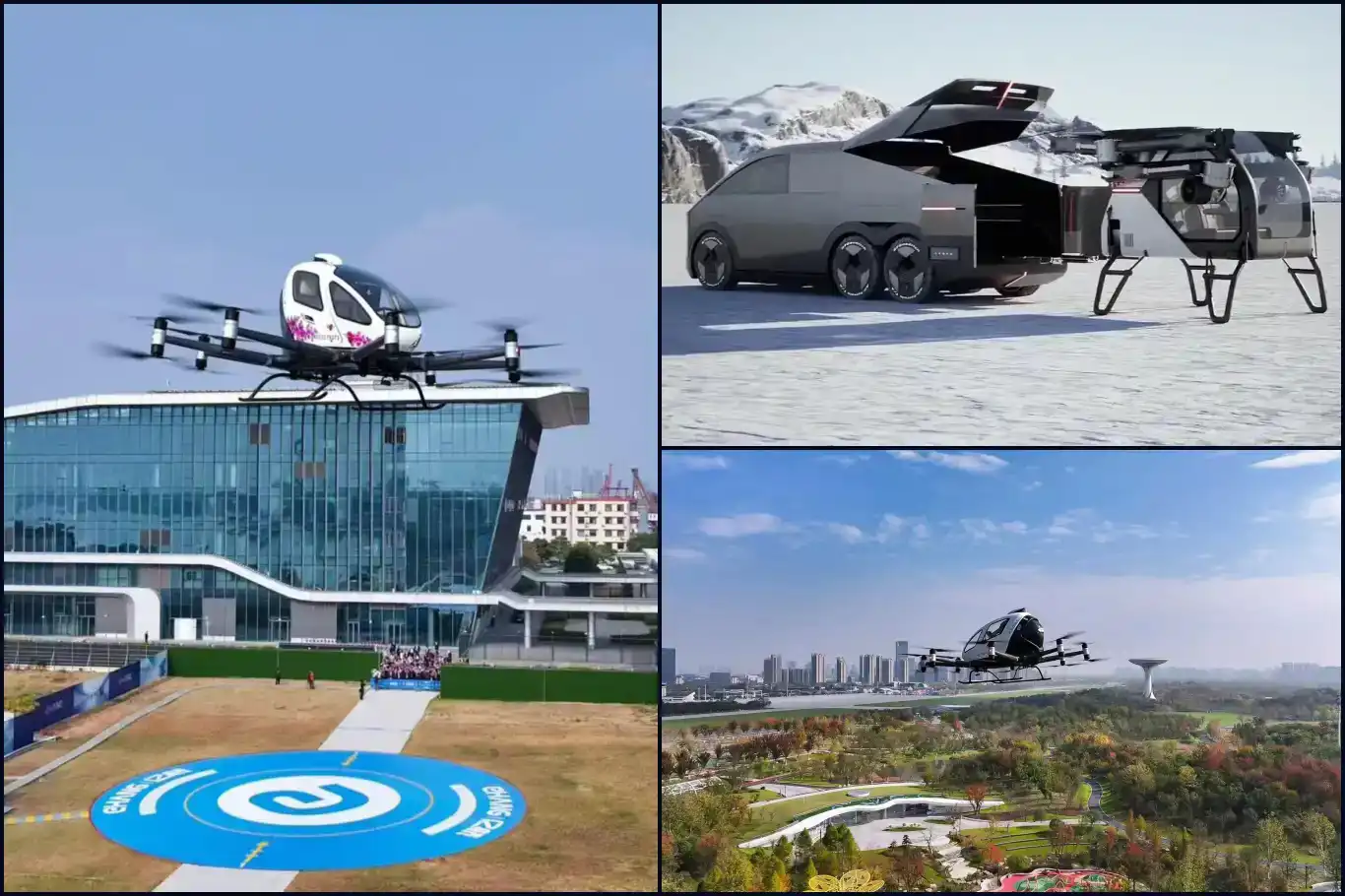
Located in Guangzhou’s Huangpu district, the 120,000-square-meter facility has successfully completed the first prototype of a detachable electric flying vehicle under its modular “Land Aircraft Carrier” project. The facility is designed to eventually produce up to 10,000 flying modules per year, with full-capacity operations enabling the assembly of one vehicle every 30 minutes. The current trial phase focuses on process validation, equipment testing, and airworthiness certification for the prototype units.
The “Land Aircraft Carrier” concept integrates a six-wheel ground vehicle, or “mothership,” with a detachable electric vertical take-off and landing (eVTOL) aircraft. The aerial unit is capable of both manual and autonomous flight, featuring smart route planning and one-touch take-off and landing. Measuring approximately 5.5 meters in length, the vehicle is street-legal, compatible with standard driver’s licenses, and designed to fit in conventional parking spaces.
XPENG AEROHT revealed that it has already received around 5,000 pre-orders, with mass production and customer deliveries expected to begin in 2026.
Industry experts say the project reflects China’s strategic push to dominate the global flying car market, as the government increasingly supports low-altitude transportation technologies. While challenges remain — including airspace regulation, safety certification, and integration with existing traffic systems — the launch of the Guangzhou factory demonstrates that flying cars are moving closer to becoming a practical reality for consumers.
“This represents a new era in personal mobility, combining road and air transportation in a single vehicle,” said a company spokesperson.
With the successful trial production underway, XPENG is positioning itself at the forefront of the rapidly evolving urban air mobility sector, signaling that the dream of everyday flying cars may soon be within reach. (ILKHA)
LEGAL WARNING: All rights of the published news, photos and videos are reserved by İlke Haber Ajansı Basın Yayın San. Trade A.Ş. Under no circumstances can all or part of the news, photos and videos be used without a written contract or subscription.

An Israeli digital advertising company used an extensive network of online advertisements to track internet users and help facilitate spyware attacks, including against Arab journalists, according to research by Citizen Lab and advertising security firm Confiant.
Tesla is preparing to unveil its next-generation Roadster nearly nine years after first presenting the electric sports car, with attention focused on its promised acceleration, potential rocket-assisted technology and the timeline for production.

Turkish Communications Director Burhanettin Duran warns of AI-related risks, disinformation and digital platform dominance, stressing the need for a human-centred and fair communications order.

Artificial intelligence-powered malware capable of copying itself and spreading across internet-connected devices could become a major cybersecurity threat in the near future, according to new research by AI company Anthropic.