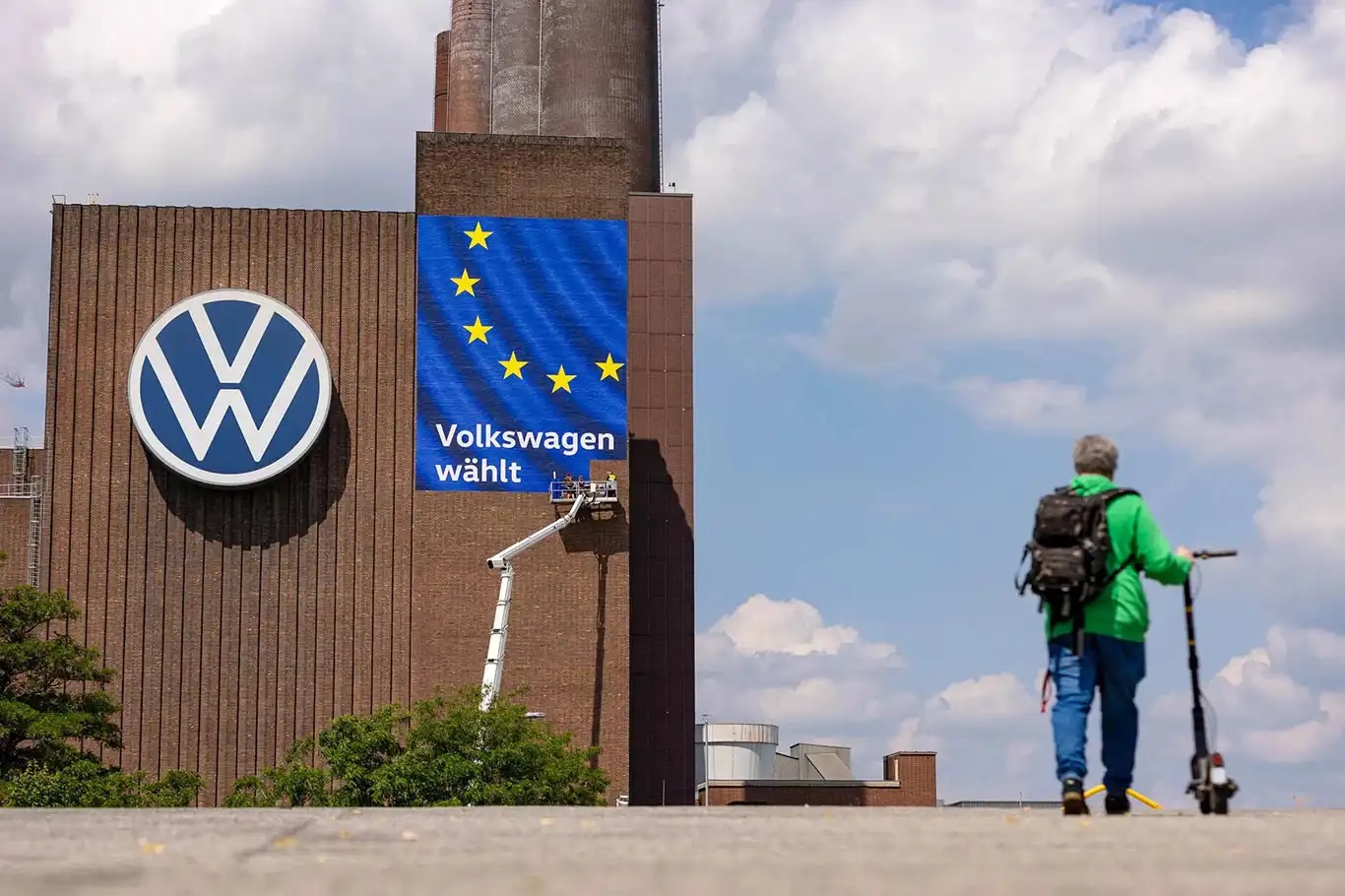
Volkswagen car plant to produce weapons for Israeli army
 13 oC
13 oC 
Güneşli

Volkswagen is preparing to transform its Osnabrück factory from an automobile production site into a defense and security facility involving Israeli weapons manufacturer Rafael Advanced Defense Systems, raising fresh questions over Germany’s expanding military cooperation with Israel as the humanitarian catastrophe in Gaza continues.
Volkswagen announced on September 7 that it had reached a preliminary agreement with Israeli investment company Aurelius Capital and the German state of Lower Saxony over the future of the Osnabrück plant.
Under the proposed arrangement, vehicle production at the factory is expected to end in 2027. The site would subsequently be developed into a center for security and defense technologies, with Aurelius and Lower Saxony planning to cooperate with Rafael Advanced Defense Systems on an initial project involving air-defense systems and components.
Volkswagen has defended the agreement as a way of securing the future of the plant and protecting jobs. Around 1,400 of the facility’s approximately 1,800 workers could retain employment under the plan.
Volkswagen CEO Oliver Blume described the agreement as an important step toward creating a new industrial future for Osnabrück and said the company remained committed to its responsibility toward the site and its workforce.
But for Palestinian rights advocates, the proposed transformation carries a far more troubling significance.
The involvement of Rafael has placed the Volkswagen deal under particular scrutiny.
Rafael is one of Israel’s major state-owned defense companies and is closely involved in the development and production of Israeli air-defense systems. Although the companies have indicated that the initial Osnabrück project is intended to serve Germany and the European market, the partnership further connects German industrial capacity with Israel’s defense industry.
That connection comes at a deeply controversial moment.
For nearly three years, Palestinians in Gaza have endured mass displacement, widespread destruction and a devastating humanitarian crisis amid Israel’s military campaign. Rights organizations and international bodies have repeatedly raised concerns over alleged violations of international humanitarian law.
Against this backdrop, Palestinian advocates argue that converting a major German industrial facility into a defense production center involving an Israeli weapons company sends a deeply troubling message.
They say that while Palestinians continue to face the consequences of war, European governments and corporations are increasingly investing in military production rather than using their economic leverage to demand an end to the bloodshed and ensure accountability.
The Volkswagen-Rafael agreement also comes as Germany’s military relationship with Israel faces mounting criticism.
German government figures show that Berlin approved military export licenses worth approximately €799 million ($930 million) to Israel during the first six months of 2026.
The figure represents a dramatic increase compared with the previous year and has intensified criticism from Palestinian rights groups, legal organizations and activists who accuse Germany of failing to adequately account for the potential use of German-supplied military equipment in Gaza.
Berlin has repeatedly defended its support for Israel, pointing to Germany’s historical responsibility and its commitment to Israel’s security.
Critics, however, argue that Germany’s historical responsibility should also mean defending international law and protecting civilian life, including Palestinian lives.
The controversy surrounding German arms exports has also reached the International Court of Justice (ICJ).
On September 7, Germany asked the UN’s top court to dismiss a case brought by Nicaragua challenging Berlin’s arms exports to Israel.
Nicaragua argues that Germany has failed to meet its obligations under international law by continuing to provide military equipment to Israel amid the catastrophic situation in Gaza. Germany has rejected the allegations and urged the court to dismiss the proceedings on jurisdictional and procedural grounds.
The case has nevertheless placed Berlin’s military relationship with Israel under intense international scrutiny.
For Palestinian advocates, the legal proceedings raise a fundamental question: Can governments continue supplying military equipment to a state accused of serious violations of international law while claiming that their support is compatible with their humanitarian obligations?
Volkswagen’s Osnabrück factory was built around civilian manufacturing and has long been an important source of employment in the region. Its proposed transformation into a defense production site represents a dramatic change in the facility’s purpose.
While Volkswagen and German officials emphasize jobs, investment and the economic future of Osnabrück, Palestinian rights advocates are focusing on another aspect of the agreement: the growing intersection between German industrial capacity, European rearmament and Israel’s defense industry.
For Palestinians, the timing could hardly be more painful.
As Gaza continues to bear the devastating human cost of war, Germany is not only maintaining substantial military ties with Israel but is now preparing to expand defense-industrial cooperation involving one of Israel’s leading weapons manufacturers.
The Osnabrück deal therefore goes beyond the fate of a single Volkswagen factory. It has become a symbol of a wider European shift toward military production—and of Germany’s continuing willingness to deepen its defense relationship with Israel despite mounting international pressure over the suffering of the Palestinian people. (ILKHA)
LEGAL WARNING: All rights of the published news, photos and videos are reserved by İlke Haber Ajansı Basın Yayın San. Trade A.Ş. Under no circumstances can all or part of the news, photos and videos be used without a written contract or subscription.

The European Union has expressed deep concern over the escalating violence carried out by Israeli settlers against Palestinians in the occupied West Bank, renewing calls for an end to settlement expansion and attacks on Palestinian communities.
Afghanistan and Russia have discussed ways to expand bilateral trade, promote joint investment and strengthen economic cooperation during a meeting between Afghan business officials and the Russian ambassador in Kabul.

British Prime Minister Andy Burnham has defended his government’s new measures against Israeli settlement activity, saying Britain waited too long to act over concerns that criticism of the Israeli government could be portrayed as anti-Israel.