Afghan scholars confer title of Sheikh-ul-Islam on Islamic Emirate leader
 13 oC

Güneşli

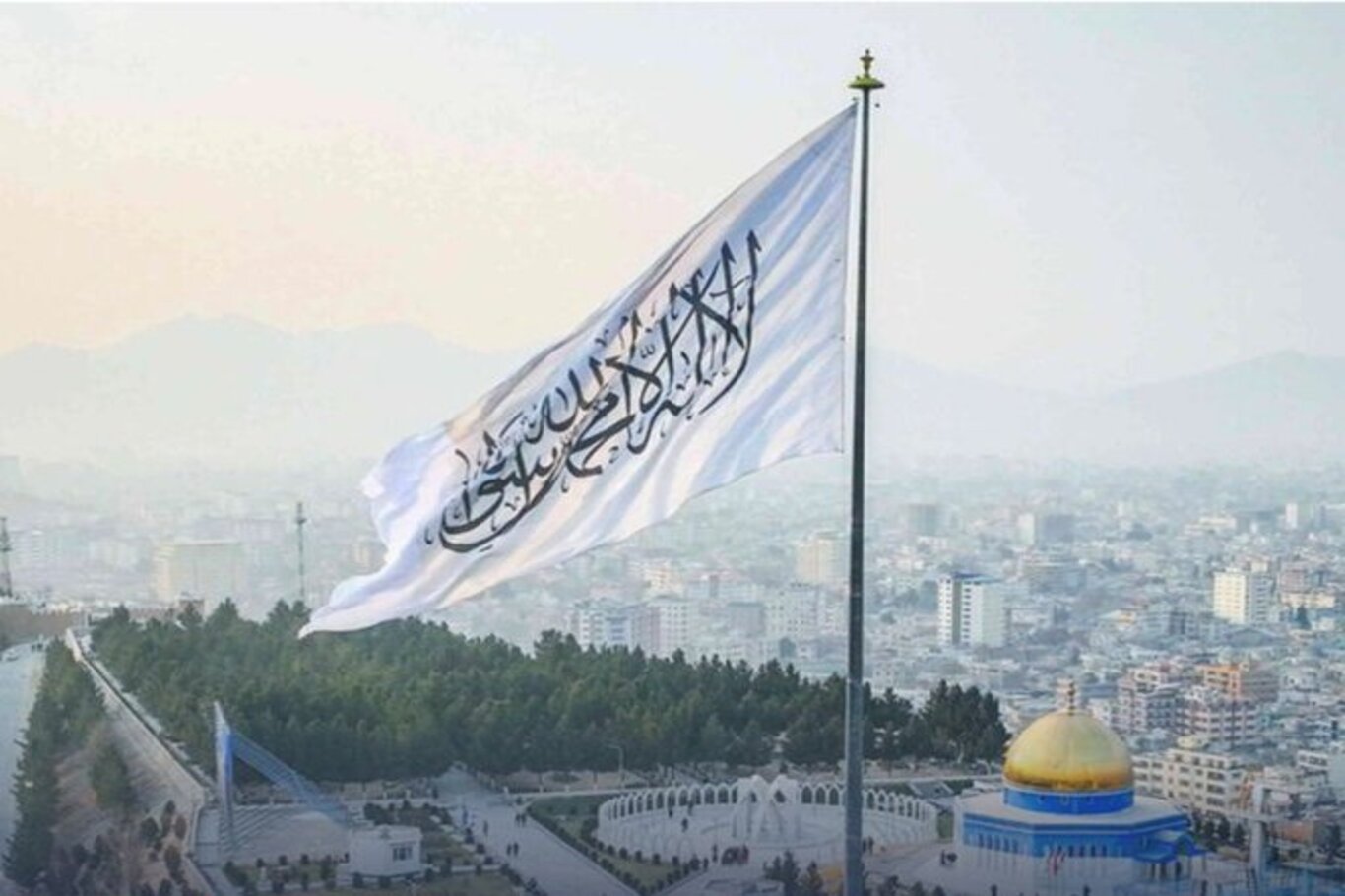
Afghan religious scholars and participants at a scientific conference in Kabul have conferred the title of “Sheikh-ul-Islam” on Sheikh Hibatullah Akhundzada, leader of the Islamic Emirate of Afghanistan, as he addressed the gathering on unity, Islamic governance and national stability.
Akhundzada arrived in Kabul on the second day of the four-day conference, which is examining the religious, political, social, economic and cultural implications of his decrees.
Addressing the participants, the Islamic Emirate leader stressed the importance of unity and solidarity among Afghans, saying that the presence of an Amir was essential to ensuring the implementation of Islamic Sharia.
He also called on religious scholars to educate the public about the responsibilities of Islamic leadership and the mutual rights and obligations of the ruler and the Muslim community.
“What are the duties of the Amir al-Mu'minin, the Imam of Muslims, the Caliph of Islam, or the Sultan? What are the rights of the Amir al-Mu'minin over Muslims, and what are the rights of Muslims over the Amir al-Mu'minin? It is the responsibility of religious scholars to raise awareness about these matters,” Akhundzada said.
He further stated that no part of Afghanistan's territory remained under foreign control and described the establishment of the Islamic Emirate as the outcome of ending what he called a period of sedition.
Akhundzada also urged Afghans living abroad to return home, assuring those who had opposed the government that the door remained open for them to resume their lives and contribute to the country.
“They are still granted amnesty. Come back and continue your lives. If you want a position in the government, a seat, or anything else, it depends on your abilities. If you have the necessary qualifications, we will give it to you,” he said.
Other participants stressed the importance of applying laws consistently across society, arguing that the legitimacy and success of the governing system depended on securing both public satisfaction and the pleasure of Allah.
Noor Ahmad Islamjar, governor of Herat, said international recognition alone could not give a government genuine credibility if it failed to uphold these principles.
“If we lose these two forms of satisfaction, even if the entire world recognizes us, we will not truly enjoy genuine recognition and credibility,” Islamjar said.
Noorul Haq Anwar, director general of administrative affairs, also outlined what he described as the Islamic Emirate's achievements, including preventing internal divisions, establishing a centralized administration and creating military courts to address oppression and injustice.
He further highlighted measures taken by the government concerning women's rights under Islamic Sharia.
“I recall what the situation was like here before the Islamic Emirate came to power, because only those who have experienced hardship truly appreciate a blessing,” Anwar said.
The four-day conference brings together religious scholars and officials to examine the various dimensions of the Islamic Emirate leader's decrees and their implications for Afghanistan's religious, political, social, economic and cultural life. (ILKHA)
LEGAL WARNING: All rights of the published news, photos and videos are reserved by İlke Haber Ajansı Basın Yayın San. Trade A.Ş. Under no circumstances can all or part of the news, photos and videos be used without a written contract or subscription.

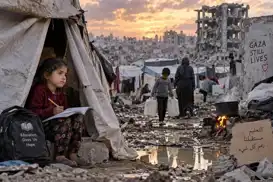
Millions of children worldwide face a future marked by conflict, hunger, displacement and preventable deaths, with more than 200 million expected to need humanitarian assistance this year alone, Save the Children has warned.
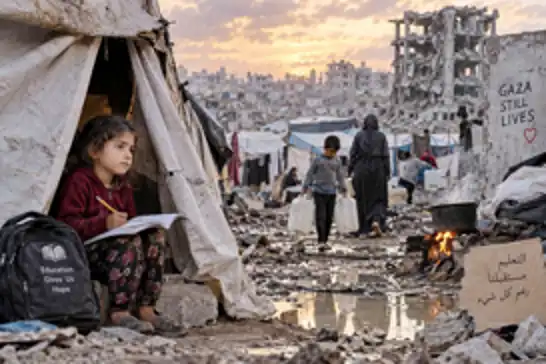
The number of verified cases in which children were denied access to life-saving humanitarian assistance in conflict zones has increased sixteenfold over the past decade, according to a new Save the Children analysis based on United Nations-verified data. Nearly 6,000 of last year's recorded incidents occurred in the Occupied Palestinian Territory, with around 90 per cent of the violations in Gaza attributed to the occupation regime authorities.

An Irish anti-war activist has been charged with allegedly causing extensive damage to a US military aircraft at Shannon Airport, drawing renewed attention to the controversial use of Irish airport facilities by American military forces.