Al-Aqsa Flood exposes many masks, brings Palestine back to global agenda
 13 oC
13 oC 
Güneşli

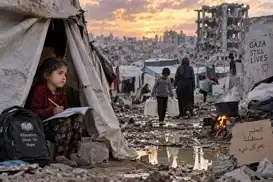
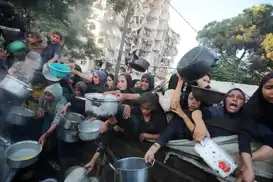
As the third anniversary of the Al-Aqsa Flood operation is commemorated, a Turkish theology scholar and university students have reflected on how October 7 reshaped global awareness of Palestine and Jerusalem, saying the developments exposed double standards, revived international attention to the Palestinian cause and made Gaza a central issue of worldwide public debate.
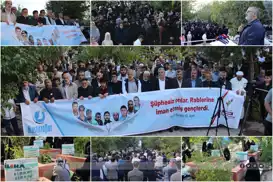
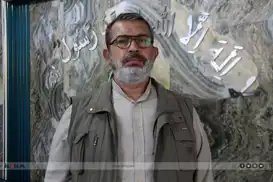
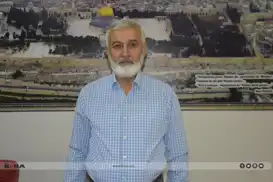
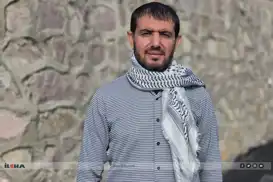
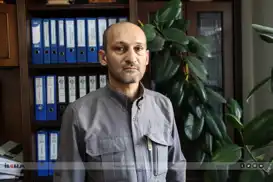
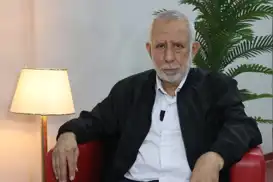
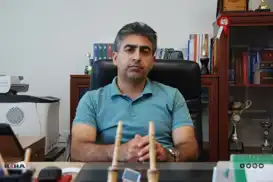
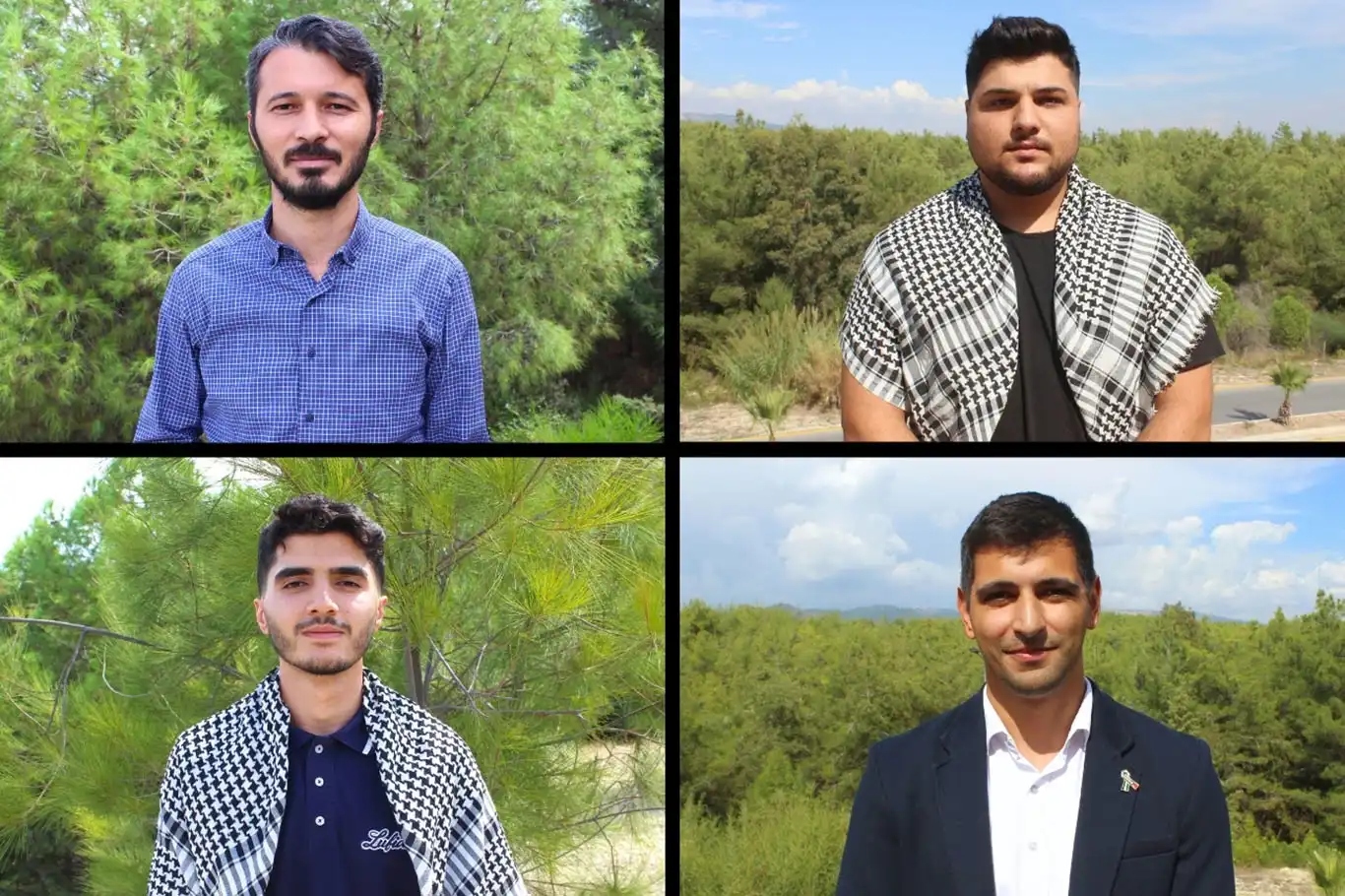
Muzaffer İnneci, a faculty member at Mersin University's Faculty of Theology, together with several of his students, shared their assessments of the developments following the October 7, 2023 Al-Aqsa Flood operation, discussing the significance of the Palestinian struggle, the status of Jerusalem and Al-Aqsa Mosque, and the changing perception of the issue across the world.
"October 7 was a new phase, not a new beginning"
İnneci stressed that the Palestinian cause did not begin on October 7, describing it as a struggle spanning nearly 120 years.
He said Palestinians had spent decades trying to make their voices heard through conferences, seminars and international programs, while representatives of HAMAS and other Palestinian organizations had continuously informed audiences around the world about Jerusalem, the political status of Al-Aqsa Mosque and the realities on the ground.
According to İnneci, the Palestinian struggle has never been limited to intellectual or political efforts but has also continued on the ground.
"This cannot be described as a war between two equal armies," he said.
"This is a genocide. It is not a war between two equal armies. Yet despite everything, Palestinians defended their homeland with their hands, their words, their lives, their bodies and their weapons."
İnneci argued that before October 7, the Palestinian cause had gradually begun to fade from the agenda of the Muslim world, while several countries in the Middle East were moving toward normalization with the Israel regime.
He said HAMAS and the Palestinian resistance launched the October 7 operation to prevent the Palestinian cause from disappearing from the agenda of Muslims.
"Nothing actually began on October 7. Al-Aqsa Flood was not a new jihad or a new war. It was simply a new phase of an ongoing struggle."
"The issue is far beyond a territorial dispute"
İnneci said the Palestinian struggle should not be viewed merely as a dispute over land.
He argued that even if the Israel regime were to occupy all Palestinian territories, its expansionist ambitions would not end there.
According to İnneci, the ideology of the so-called "Promised Land" extends beyond Palestine and includes neighboring countries such as Jordan, Lebanon and Syria, while also encompassing parts of Türkiye, including the Mersin, Adana and Çukurova regions.
"For us, Al-Aqsa Flood is not merely a local struggle or simply the defense of a piece of land," he said.
"The struggle being carried out today by the mujahideen is an Islamic struggle. It is a struggle to preserve the honor of Islam, the dignity of the Ummah and to ensure that the banner of Islam never falls."
"Al-Aqsa Flood exposed many masks"
İnneci said the events of October 7 revealed the true positions of many individuals, governments and political actors regarding Palestine.
According to him, while some demonstrated sincere support for the Palestinian cause, others merely exploited it for political purposes.
He pointed in particular to contradictions between the public statements of some Middle Eastern governments and their political, diplomatic, economic and bureaucratic relations with the Israel regime.
At the same time, İnneci noted that new civil movements had emerged across Europe in support of Palestine.
He said many people no longer accepted that their tax money was being used to provide financial support for the Israel regime, adding that the Palestinian cause had ceased to be an issue followed only by Muslims.
He also observed that attitudes among many Christians had changed and argued that October 7 challenged long-standing Islamophobic narratives in Western societies.
According to İnneci, years of negative perceptions created through Hollywood films, social media algorithms and political discourse began to weaken as millions of people witnessed events in Gaza directly through digital platforms.
"As people began to see the reality with their own eyes, perceptions also began to change," he said.
"Islam may rise again from the West"
İnneci said that although the Muslim world today appears divided and fragmented, it still possesses enormous potential.
Referring to Surah An-Nasr in the Holy Qur'an, he said no one can predict through which people or region Islam will regain strength.
"I believe Islam may rise again from the West. The sun of Islam may once again rise from the West."
Explaining his view through the concept of potential energy in physics, İnneci compared the Muslim Ummah to water stored behind a dam.
He said that just as stored water is transformed into kinetic energy once it begins to move, the Muslim Ummah also possesses tremendous potential waiting to be activated.
"Although it may seem as if the Muslim Ummah is covered by a layer of lifelessness today, I believe it possesses tremendous potential energy. What is needed is for that potential energy to become kinetic energy. For that to happen, a movement must begin."
İnneci added that he could not predict when such a movement would begin or who would lead it, but expressed confidence that once the Muslim Ummah's potential is activated, its strength would become visible to the entire world.
"The world awakened to Palestine after October 7"
Faculty of Theology student Harun Oruç also emphasized that the Palestinian issue did not begin on October 7.
He said Al-Aqsa Flood brought renewed international attention to developments that had long been overlooked.
According to Oruç, the events cannot be described as a conventional war.
"The war started long before October 7. In fact, it is not even a war. A war requires two equal sides. What we have witnessed is one side being bombed, one side being killed and one side being massacred without mercy. This is genocide."
Oruç said that even before October 7, Gaza had been subjected to attacks from the air, land and sea while remaining under blockade, with restrictions imposed on food, water and other essential supplies.
He argued that the operation served as a wake-up call that brought the Palestinian issue onto the agenda of a much broader international audience.
"Before October 7, massacres and genocide were discussed only briefly. Afterwards, Palestine became a matter debated throughout the world."
"Jerusalem is not merely a land issue"
Oruç stressed that Jerusalem and Al-Aqsa Mosque hold profound significance for Muslims because they are the site of Al-Isra and Al-Mi'raj and Islam's first qiblah.
"This is not merely a matter of territory. It is a matter of honor, dignity and religion. This is what Jerusalem, Al-Aqsa Mosque and Palestine represent."
"We witnessed what was happening in Jerusalem with our own eyes"
Another theology student, Aydın Alp, said the developments after October 7 demonstrated that Palestine is not only an issue for Muslims but for all humanity.
He noted that demonstrations in support of Palestine had taken place across Europe, North America and many other parts of the world, helping transform Palestine into a central international issue.
Alp said he had visited Jerusalem approximately one month earlier and witnessed conditions firsthand after following events through television and social media for many years.
Describing his experience at the border, he said he and his companions were held for two to three hours, their mobile phones were examined and they were subjected to repeated questioning.
He added that they also encountered difficulties while attempting to enter Al-Aqsa Mosque.
"The delays at the border, the inspection of our phones and the repeated interrogations were exhausting. Even after crossing the border, we faced further obstacles while trying to enter Al-Aqsa Mosque. Simply because we were Turkish—and because we were not Jewish—we were treated with hostility. It was a deeply distressing experience."
Alp said he also met with Palestinians during his visit and listened directly to their experiences.
"We had seen their suffering on television for years, but hearing their stories directly from them was completely different. We became living witnesses."
"October 7 became a turning point"
Alp said the Palestinian issue did not begin on October 7, noting that the conflict stretches back decades.
He described October 7 as a historic turning point that transformed Palestine from a regional issue into one discussed around the world.
"The massacres and killings reached an unprecedented level. It was an explosion of accumulated anger. From that perspective, October 7 truly became a turning point for the Palestinian people."
According to Alp, Palestine has since become a subject of lengthy international discussions rather than brief references in political meetings and media coverage.
He stressed that Muslims should respond to the developments with greater unity and solidarity.
Alp also encouraged people not to underestimate individual efforts such as participating in boycotts or sharing information on social media.
Drawing on the well-known example of the ant carrying water to Prophet Ibrahim's fire, he said every individual has a responsibility to contribute according to his or her ability.
"Social media carried Gaza's reality to the world"
Faculty of Theology student Abdulvalid, who said he came to Türkiye from Russia's Republic of Dagestan, explained that before October 7 the situation in Gaza received very limited coverage on Russian television.
He said social media dramatically changed that reality.
According to Abdulvalid, images of bombings, destruction and civilian casualties reached millions of people across the world through digital platforms, allowing many to witness events directly rather than relying solely on traditional media.
He said he knew relatively little about Gaza before arriving in Türkiye but gradually became more informed through friends and social media.
"We have to explain these events better. Everyone should know. Everyone should hear. People should learn what is happening. Never think that a single post makes no difference."
Abdulvalid added that as more people around the world saw images from Gaza and learned about civilian suffering, public attitudes toward the Palestinian cause began to change.
Global awareness has expanded since October 7
The participants agreed that October 7 did not mark the beginning of the Palestinian issue but represented a major turning point in the way it has been perceived internationally.
They said the developments brought Palestine and Jerusalem back to the forefront of global public debate, exposed what they described as double standards in international politics and media, and encouraged broader public engagement through social media, public demonstrations and civil initiatives.
While emphasizing that the humanitarian situation in Gaza remains one of the defining issues of the contemporary world, they called for greater awareness, solidarity and continued efforts to keep the Palestinian cause on the international agenda.(ILKHA)
LEGAL WARNING: All rights of the published news, photos and videos are reserved by İlke Haber Ajansı Basın Yayın San. Trade A.Ş. Under no circumstances can all or part of the news, photos and videos be used without a written contract or subscription.
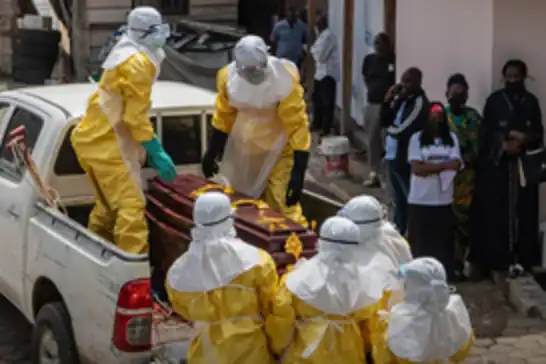
The United Nations Children's Fund (UNICEF) has warned about the devastating impact of the ongoing Ebola outbreak in the Democratic Republic of the Congo (DRC), reporting that 1,162 children have died from the virus since the outbreak was declared in May.
Al-Awda Health and Community Complex in Nuseirat has suspended nearly all of its healthcare services after repeated generator failures left the facility unable to operate vital medical departments and equipment, further deepening the humanitarian crisis confronting Palestinians across the Gaza Strip.
Palestinian prisoners' organizations have warned that Israel's detention system has become a central instrument of repression against Palestinians, documenting the deaths of 92 identified prisoners in Israeli prisons and detention camps.
French Prime Minister Sebastien Lecornu announced that classes at high schools across the country would be suspended until the weekend due to student protests demanding improved education conditions, during which some violent incidents occurred.