Drone strike on Sudan market kills dozens, injures more than 150
 13 oC

Güneşli

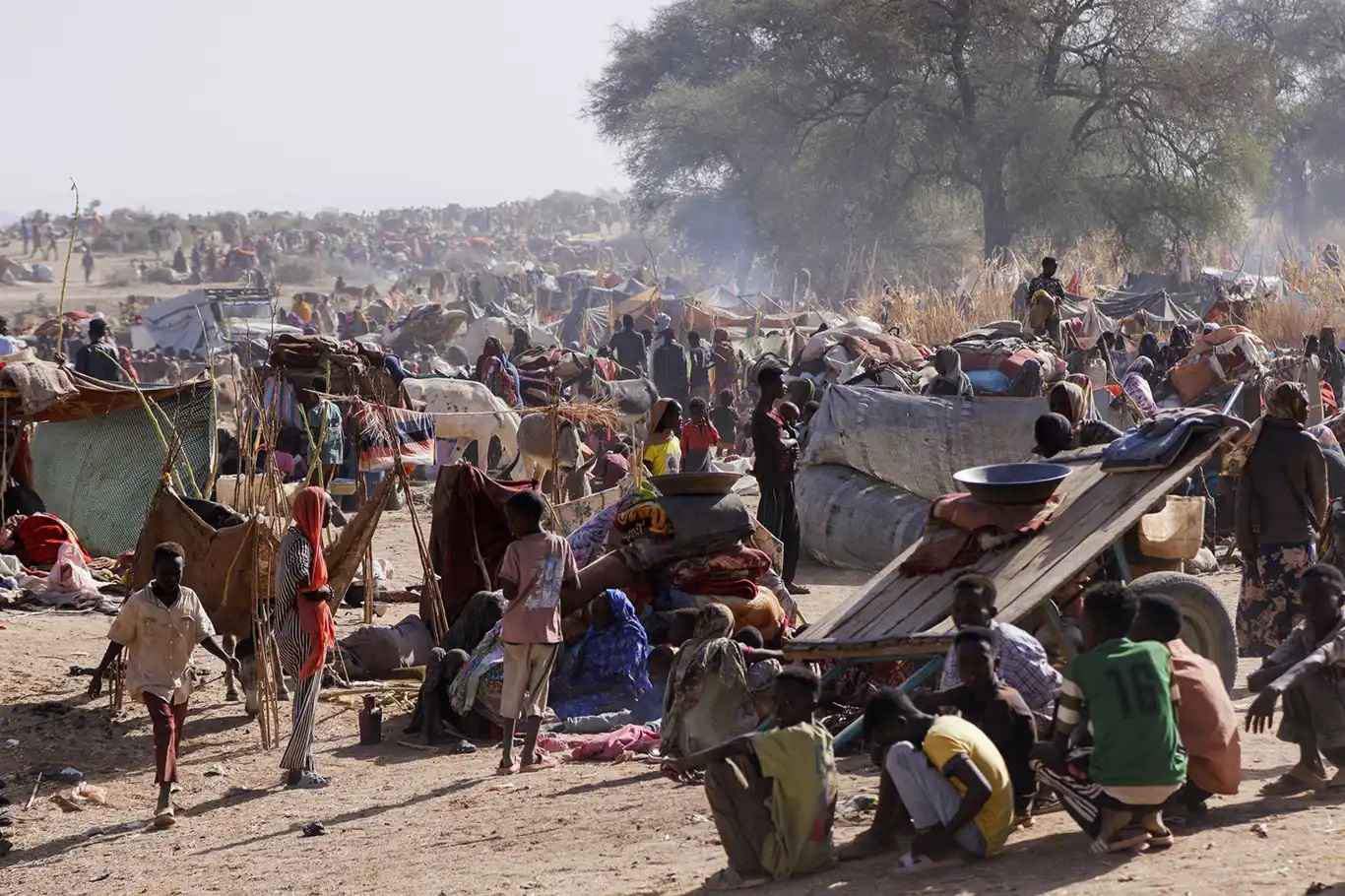
More than 100 people were reportedly killed in a drone strike on a crowded market in Sudan’s Darfur region, according to a local rights group, as the country’s escalating civil war continues to devastate civilian communities and deepen one of the world’s worst humanitarian crises.
The strike hit Tanqong Market in the Dumaya neighbourhood of Nyala, the capital of South Darfur, at around 8 p.m. on Monday, October 26, according to local reports. The Sudanese Armed Forces (SAF) were accused of carrying out the attack, which also injured scores of people.
The international medical organisation Doctors Without Borders, known by its French acronym MSF, confirmed that its teams at Nyala Teaching Hospital had received the bodies of 36 people by Tuesday, including 21 wearing civilian clothing. More than 150 injured people had been treated in the hospital’s emergency department.
The casualty figures reported by different sources varied considerably. The RSF-aligned administration in South Darfur reported 102 people killed and 113 injured, while the rights group Emergency Lawyers also reported more than 100 deaths. The figures could not be independently verified, and the discrepancy between the reported death tolls and hospital figures remained unexplained.
MSF said a second drone strike hit a residential neighbourhood, further exposing civilians to the violence.
Dale Koninckx, MSF’s project coordinator in Nyala, said medical personnel had treated patients suffering from shrapnel wounds and severe burns, with some victims transported to the hospital in tuk-tuks and donkey carts.
Women and children were among the wounded, according to the organisation.
“Markets, homes, and key civilian infrastructure are not targets,” MSF said, urging all parties to the conflict to protect civilians and refrain from attacks that threaten civilian lives.
The Sudanese Armed Forces had not publicly commented on the latest strike at the time of reporting.
Repeated attacks on civilian gathering places
The latest attack comes amid a series of deadly strikes on markets and other civilian locations across Sudan.
On October 16, a drone strike on Al-Mawashi market in Nyala killed at least four people and injured several others, according to MSF. Another attack on a market in the Abyei region, near the border with South Sudan, reportedly killed at least 80 people.
Drone attacks have also targeted locations in and around the capital, Khartoum, as well as parts of West Darfur, South Darfur and North Kordofan.
In a further sign of the growing threat to essential infrastructure, a drone strike on an electricity substation in Omdurman recently caused widespread power outages across parts of the greater Khartoum area. The disruption affected essential services, including hospitals, bakeries and water supplies, according to reports.
The increasing use of drones by both sides has expanded the geographical reach of the conflict and heightened the risks facing civilians far from conventional front lines.
According to the United Nations Human Rights Office, drone strikes killed at least 880 civilians between January and April 2026, accounting for more than 80 percent of conflict-related civilian deaths recorded during that period.
The UN warned in May that armed drones had become the leading cause of civilian deaths in Sudan, raising concerns about the impact of increasingly intensive aerial warfare on populated areas.
El Fasher atrocities fuel international condemnation
The latest violence in Nyala comes as Sudan faces renewed scrutiny over alleged atrocities in Darfur, particularly following the Rapid Support Forces’ (RSF) capture of El Fasher, the capital of North Darfur, in October 2025.
The paramilitary group seized the city on October 26, 2025, after approximately 18 months of fighting and a prolonged siege that severely restricted residents’ access to food, medical supplies and humanitarian assistance.
The UN Human Rights Office reported in February 2026 that more than 6,000 people had been killed during the first three days of the RSF’s final offensive on El Fasher. Based on interviews with more than 140 victims and witnesses, the report documented mass killings, summary executions, sexual violence, torture, abductions and other serious abuses.
The UN said the documented violations included acts that could constitute war crimes and crimes against humanity, calling for credible and impartial investigations and accountability for those responsible.
Human Rights Watch, in a report published on October 26, 2026, marking one year since the city’s fall, said the RSF’s takeover had been accompanied by widespread abuses and that the international response had failed to prevent the atrocities.
The organisation urged governments to strengthen efforts to protect civilians, support investigations and ensure accountability.
Sudan’s Ambassador to Türkiye, Nadir Yousif Eltayeb, has also accused the international community of failing to respond adequately to the suffering of civilians in Darfur.
Speaking at a meeting on Sudan organised by the Foundation for Political, Economic and Social Research (SETA) in Ankara on Tuesday, Eltayeb said El Fasher had endured a complete siege for approximately 30 months, leaving residents dependent on limited humanitarian deliveries.
He said around one million people had been surviving on aid delivered by air by Sudanese government forces, while severe food shortages had forced residents to resort to eating tree bark.
Eltayeb said government forces had made more than 200 attempts to break the siege but had failed to restore access to the city.
“The international community has taken a biased approach to this issue, preventing it from being resolved,” he said.
The ambassador described the events in El Fasher as genocide and accused foreign countries of providing support to the RSF, arguing that external assistance had helped the group advance across Darfur.
He also alleged that particular tribes had been deliberately targeted during the violence.
Eltayeb further accused the United Arab Emirates of supporting armed groups involved in the conflict and alleged that pressure from Abu Dhabi had prevented Sudan from submitting reports on the killings to the UN Security Council.
These allegations have not been independently established. The UAE has repeatedly denied accusations that it supports the RSF.
“We are seeking justice for Sudan,” Eltayeb said, thanking Türkiye for its support.
Displacement and hunger worsen across Darfur
The fall of El Fasher marked a major shift in Sudan’s war, but its consequences continue to reverberate across Darfur, where displacement, food shortages and insecurity have devastated civilian life.
According to figures cited in humanitarian assessments, approximately 138,200 people were displaced from El Fasher and surrounding settlements between October 26, 2025, and March 1, 2026.
Before the war, El Fasher had a population of more than one million. Estimates cited in the assessments suggest that fewer than 70,000 people remain in the city.
Those who remain face severe restrictions on access to food, healthcare, clean water and other essential services. The mass displacement has also placed additional pressure on humanitarian operations in neighbouring areas.
In July 2026, Amnesty International concluded that RSF forces had committed crimes against humanity and ethnic cleansing during their campaign to seize El Fasher, citing evidence of killings, torture, sexual violence, detention and other abuses against civilians.
The organisation called for an immediate ceasefire and stronger international measures to protect civilians.
The latest attack on Nyala underscores the continuing danger facing people across Darfur, where markets and other civilian gathering places have increasingly become sites of deadly violence.
A war with devastating humanitarian consequences
Sudan’s conflict erupted in April 2023 following a power struggle between the Sudanese Armed Forces, led by General Abdel Fattah al-Burhan, and the RSF, commanded by Mohamed Hamdan Dagalo, also known as Hemedti.
The fighting has devastated major urban centres, destroyed essential infrastructure and triggered mass displacement across the country.
The war has also severely disrupted agricultural production, commercial activity and humanitarian supply routes, worsening hunger in regions already affected by poverty and limited access to basic services.
Millions of people have been forced to flee their homes, while aid organisations face serious obstacles in reaching communities trapped by fighting or living under the control of armed groups.
The UN has repeatedly warned that attacks on civilians and critical infrastructure, combined with restrictions on humanitarian access, are aggravating the crisis.
The latest drone strike in Nyala has renewed calls for the warring parties to respect international humanitarian law, protect civilian infrastructure and ensure that medical personnel can treat the wounded without interference.
Humanitarian organisations have warned that continued attacks on markets and residential areas threaten not only civilian lives but also access to food and other essential supplies at a time when malnutrition is already a growing concern.
With no lasting ceasefire in place, civilians across Darfur remain exposed to the consequences of a conflict that has repeatedly demonstrated the devastating cost of impunity and the failure to protect those caught in the fighting. (ILKHA)
LEGAL WARNING: All rights of the published news, photos and videos are reserved by İlke Haber Ajansı Basın Yayın San. Trade A.Ş. Under no circumstances can all or part of the news, photos and videos be used without a written contract or subscription.
The World Health Organization (WHO) has cancelled events scheduled for Wednesday at the Global Obesity Summit in Madrid following a deadly train crash in Spain.

A US-based residential cruise ship that promised passengers permanent life at sea has suspended its global voyage in Cambodia due to soaring fuel costs, forcing hundreds of passengers who invested in the project to leave the vessel while the company seeks solutions for the ship’s future.
Israeli occupation forces have forcibly displaced 4,969 Palestinians from the Deir Bahha and al-Jalda neighborhoods of al-Khalil in the southern occupied West Bank, as a sweeping military siege entered its fifth consecutive day, worsening an already deteriorating humanitarian situation.