Germany accuses Russia of cyber espionage campaign targeting officials
 13 oC
13 oC 
Güneşli

German authorities have formally accused Russia of being behind a sophisticated series of cyberattacks that targeted members of parliament, senior government officials, diplomats, and journalists through the secure messaging app Signal.
A government source told Agence France-Presse on Saturday that the federal government believes the phishing campaign was most likely orchestrated from Russia. Technical authorities were able to detect, contain, and ultimately stop the attacks before further damage could occur.
The cyberattacks involved sending deceptive messages that impersonated Signal’s technical support service. Victims were tricked into revealing sensitive information, such as their PIN codes, allowing attackers to gain access to private conversations, group chats, and potentially sensitive government communications.
German federal prosecutors opened a formal investigation last Friday into the incidents on suspicion of espionage. The probe targets attacks that hit lawmakers from multiple political parties, including Bundestag President Julia Klöckner and a senior member of Chancellor Friedrich Merz’s Christian Democratic Union (CDU), as well as civil servants, diplomats, and journalists. Reports indicate that at least 300 accounts belonging to political figures were compromised, with some sources suggesting the number of affected users in Germany could run into the hundreds.
Among the high-profile victims was parliamentary speaker Julia Klöckner, whose Signal account was successfully compromised. There were also unsuccessful attempts to target other senior figures, including individuals close to Chancellor Merz. The attacks raised serious concerns about the security of communications among Germany’s political elite, with one CDU lawmaker describing the incident as a “wake-up call” for the country’s intelligence and cybersecurity apparatus.
This latest wave forms part of a broader increase in cyberattacks and espionage attempts against Germany since Russia’s full-scale invasion of Ukraine in 2022. German intelligence agencies (BfV and BSI) had previously issued warnings about similar phishing campaigns targeting high-value individuals via messaging platforms like Signal and WhatsApp.
Moscow has strongly denied any involvement, stating that the accusations lack conclusive technical evidence and amount to politically motivated claims without proof.
The incidents have sparked renewed debate in Berlin about strengthening cybersecurity measures for government officials and improving awareness of social engineering tactics. Security experts note that Signal was previously considered one of the more secure messaging options, making the successful breaches particularly alarming.
As the federal prosecutor’s investigation continues, German officials have emphasized that the attacks were stopped in time and that no widespread leak of classified information has been confirmed so far. However, the scale and targeting of the campaign have underscored ongoing hybrid threats facing European nations amid heightened geopolitical tensions.
Authorities continue to urge politicians and public figures to remain vigilant against phishing attempts and to follow strict verification protocols when dealing with any unsolicited messages, even those appearing to come from trusted services. (ILKHA)
LEGAL WARNING: All rights of the published news, photos and videos are reserved by İlke Haber Ajansı Basın Yayın San. Trade A.Ş. Under no circumstances can all or part of the news, photos and videos be used without a written contract or subscription.
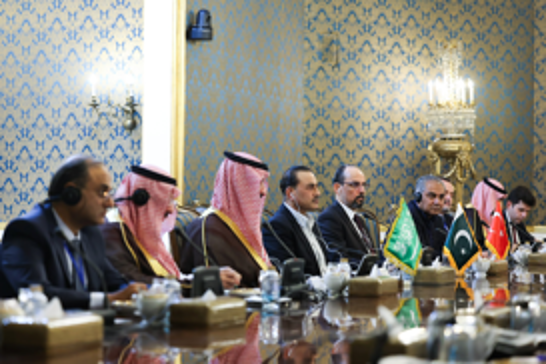
Senior officials from Iran, Türkiye, Pakistan and Saudi Arabia held talks in Tehran on Monday to discuss regional security, the consequences of military aggression and efforts to strengthen cooperation among Muslim-majority countries, Iranian media reported.

The number of Palestinian families affected by the ongoing Israeli occupation assault in the occupied West Bank city of Al-Khalil has risen to 488, while humanitarian assistance has begun reaching thousands of residents forced from their homes, according to local authorities.

US President Donald Trump has once again expressed support for Israeli Prime Minister Benjamin Netanyahu ahead of the 27 October elections, urging voters in the occupation regime to vote for Netanyahu and saying the two leaders should complete the process they started together.

Israel regime’s extremist National Security Minister Itamar Ben-Gvir has turned restrictions imposed on Palestinian prisoners into a political campaign issue ahead of elections, openly promoting harsh prison measures while rights groups continue to raise concerns over conditions in occupation prisons.