How Trump’s failed Iran policy backfired on Washington
 13 oC
13 oC 
Güneşli

A confrontational campaign designed to force a swift Iranian capitulation has instead delivered a historic strategic blow to the United States, fracturing Western alliances and leaving the israeli regime deeply vulnerable, according to a sweeping assessment in the British press.
The geopolitical landscape emerging in the aftermath of Donald Trump's offensive against Iran has not only disrupted the Middle East but has fundamentally reshaped global power dynamics.
The British daily The Telegraph described the outcome as "the error that changed the world," emphasizing that the heaviest strategic price was paid not by Tehran, but by Washington itself. Evaluating Trump’s Iran policy as "the greatest foreign policy failure of two presidential terms," the newspaper noted that the confrontation severely fractured ties with Western allies, significantly empowered China, and left the Zionist regime in a far more vulnerable position.
The White House briefing that triggered the crisis
According to the analysis, the critical turning point of the entire process occurred during a meeting on February 11 in the White House Situation Room, where Benjamin Netanyahu delivered a comprehensive presentation.
During the hour-long briefing, Netanyahu argued that the US and the Zionist regime must act jointly to launch a decisive campaign against Iran. He claimed that if the Iranian government were overthrown, it would be replaced by a pro-Western administration. To convince President Trump, Netanyahu reportedly utilized audio recordings, video footage, and various visual materials. Following this presentation, Trump ordered his top military commanders to draft an operational war plan against Iran.
However, the military campaign failed to deliver the anticipated outcomes. The strategy designed to force Iran into an "unconditional surrender" rapidly deteriorated into a strategic stalemate, sending shockwaves through the global economy due to the ensuing crisis in the Strait of Hormuz.
Although both sides eventually moved toward a ceasefire, the resulting agreement has been fiercely criticized by certain political circles in Washington as "one of the worst deals in history." Speaking to The Telegraph, former US officials admitted that none of the initial strategic objectives were met, concluding that no nation suffered greater damage from this conflict than the United States.
China gains the upper hand amid Western fractures
According to The Telegraph, one of the most significant consequences of the conflict has been the geopolitical rise of China.
"The nation that probably emerged strongest from this entire process is China," stated Kurt Campbell, former US Assistant Secretary of State. Campbell noted that numerous countries have begun to openly question Washington's strategic judgment, adding that the conflict will leave long-lasting scars on the global economy, geopolitical balances, and international trade routes.
The analysis further underscored that because the United States was forced to overextend its military and diplomatic focus on Iran, its strategic pivot to the Asia-Pacific region was severely weakened, handing Beijing a massive structural advantage.
Fractured alliances and growing isolation of the Zionist regime
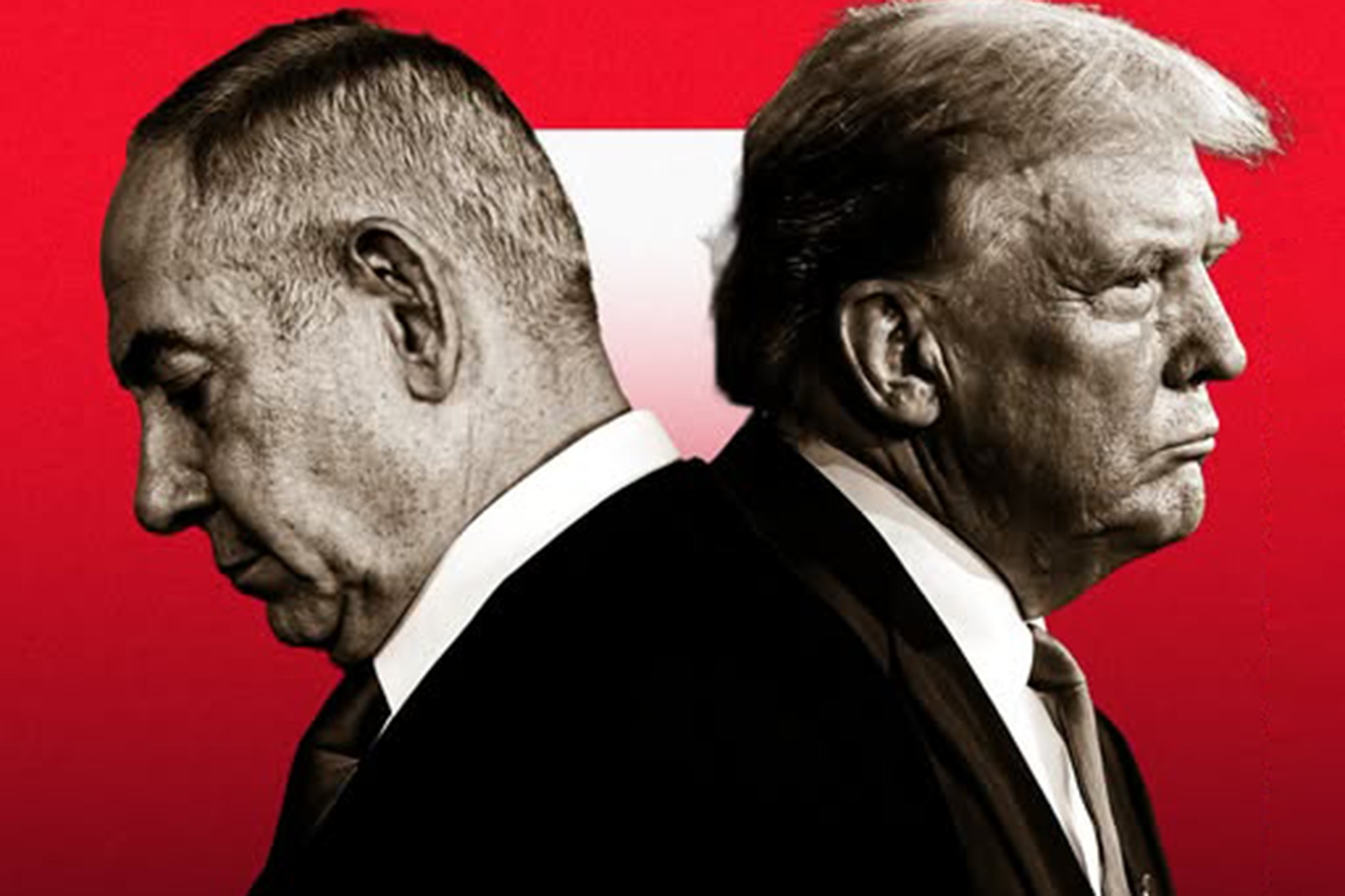
In the wake of the failed strategy, relations between Donald Trump and Netanyahu have reportedly faced severe strains. Trump has recently launched sharp criticisms against Netanyahu's decisions, expressing particular anger over the military strikes targeting Lebanon.
Recalling his remarks to Axios, the US President stated: "Why did Bibi have to launch such an attack? I was very angry. I told him. He has no judgment." This stands in stark contrast to just a few months prior, when the bilateral relationship appeared exceptionally strong during Netanyahu’s politically triumphant visit to Washington.
Concurrently, public backlash against Trump has intensified within the Zionist public opinion. Previously likened by certain religious and political circles to King Cyrus the Great—the Persian monarch who liberated the Jews from the Babylonian exile—Trump is now facing heavy criticism for ending the war without toppling the Iranian administration. Critics point out that the agreement accepted by Trump failed to dismantle Iran's enriched uranium stockpiles, its ballistic missile capacity, or its regional resistance front.
Furthermore, The Telegraph highlighted a sharp decline in public support for the Zionist regime within the United States. According to data compiled by the Pew Research Center, approximately 60 percent of Americans now view the Zionist regime negatively—marking a staggering 20-percentage-point increase compared to 2022 data.
On the diplomatic front, Trump chose not to consult European allies prior to launching the initial strikes against Iran. As the conflict escalated, several European nations placed strict restrictions on the US military's use of local bases, leading to severe diplomatic friction between Washington and major European capitals.
Ivo Daalder, former US Ambassador to NATO, categorized the conflict as "the worst strategic blunder since Vietnam, and perhaps even since World War II." Daalder emphasized: "We have done permanent damage to our relationships with our allies. America's greatest geostrategic advantage is its alliances, and that advantage has been severely undermined."
Following the cessation of hostilities, the security of the Strait of Hormuz remains a primary anxiety for international markets. With Iran firmly maintaining its operational influence over the vital maritime choke point, international confidence in US global leadership—which was already waning prior to the conflict—has been shattered to its foundations. (ILKHA)
LEGAL WARNING: All rights of the published news, photos and videos are reserved by İlke Haber Ajansı Basın Yayın San. Trade A.Ş. Under no circumstances can all or part of the news, photos and videos be used without a written contract or subscription.
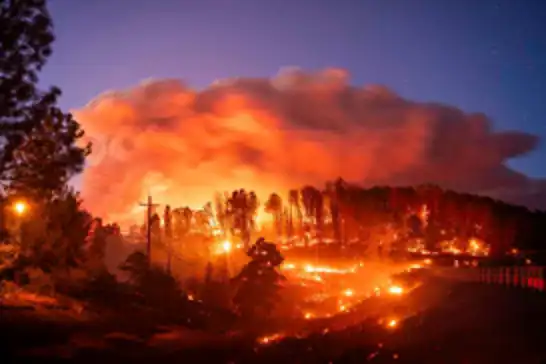
A fast-moving wildfire in the US state of Utah has rapidly expanded across thousands of hectares, triggering mandatory evacuations and forcing authorities to shut down critical transport routes as emergency crews battle to protect residential areas.

A severe and intensifying heatwave sweeping across France has resulted in multiple casualties, prompting authorities to declare the highest level of weather alerts across a vast portion of the country.
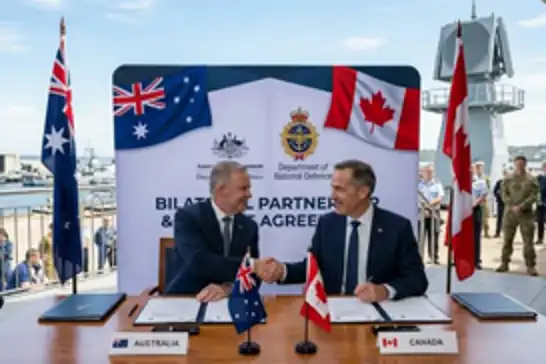
Australia has secured its largest-ever defense export contract, finalizing a landmark deal worth 2.5 billion Australian dollars (AUD) to supply Canada with a state-of-the-art over-the-horizon radar (OTHR) system.