Hungarian parliament set to vote on constitutional changes to remove President Sulyok
 13 oC
13 oC 
Güneşli

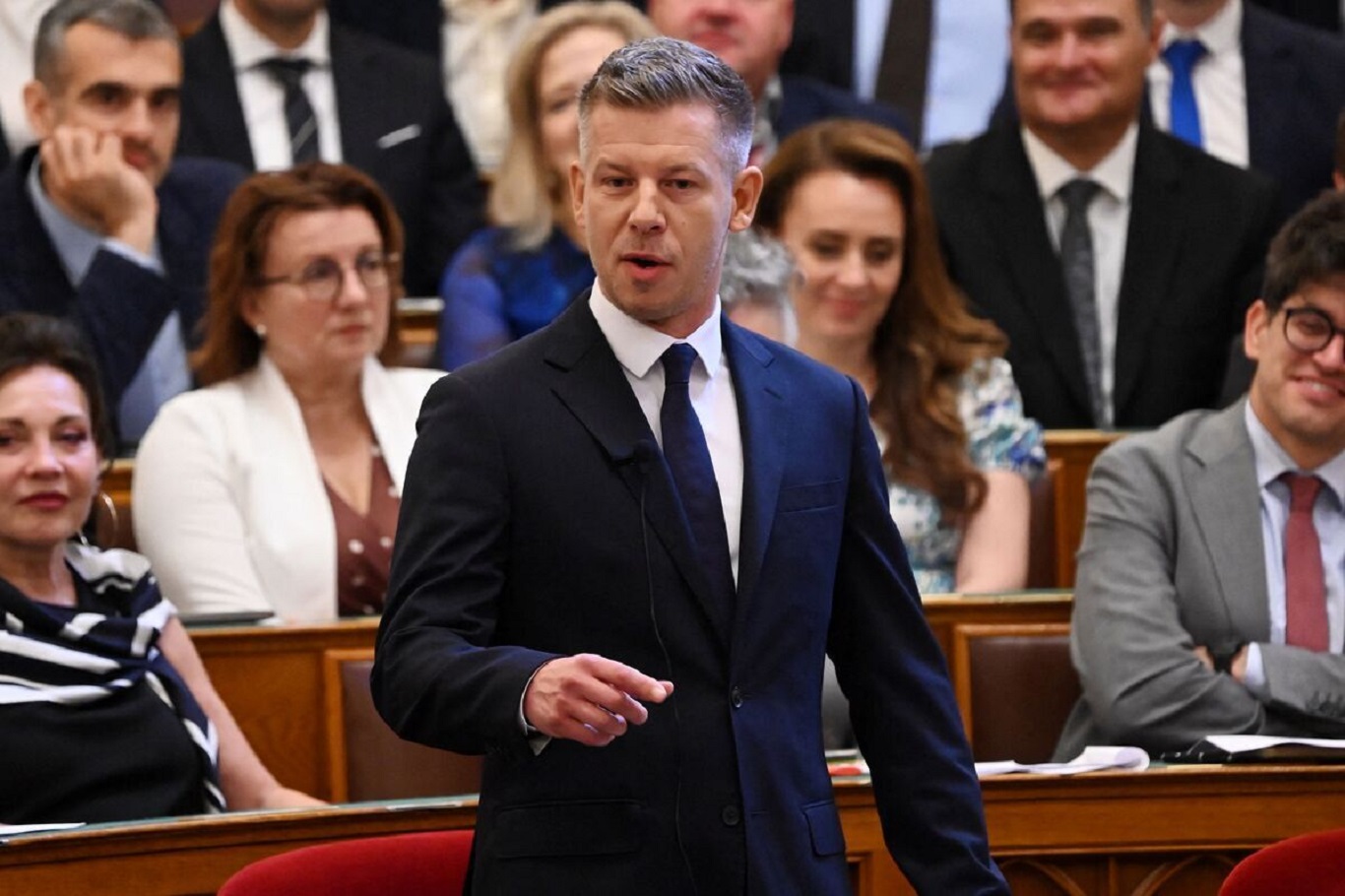
Hungary's parliament is set to vote on a constitutional amendment on Monday that could pave the way for the removal of President Tamás Sulyok, marking a significant step in Prime Minister Péter Magyar's efforts to reshape the country's political system following his election victory earlier this year.
The proposed constitutional changes form part of a broader reform agenda launched by Magyar after his Tisza Party secured a two-thirds parliamentary majority in April on a platform promising sweeping institutional reforms following the 16-year rule of former Prime Minister Viktor Orbán.
Magyar has repeatedly accused Sulyok and several senior state officials of remaining loyal to Orbán's political network, describing them as "puppets" of the former administration.
The prime minister has urged the 70-year-old president to resign voluntarily, arguing that he failed to defend democratic institutions and the rule of law during Orbán's tenure.
According to the parliamentary schedule, lawmakers are expected to vote on the constitutional amendment at 6:15 p.m. local time, barring procedural delays.
If approved, the legislation would provide the legal framework for Sulyok's removal. Should the president refuse to sign the amendment, Magyar has said his government would initiate impeachment proceedings in parliament.
Although Hungary's president performs primarily ceremonial duties, the office retains the authority to return legislation to parliament or refer laws to the Constitutional Court for review.
The proposed constitutional changes have generated debate both within Hungary and internationally.
Orbán's Fidesz Party has criticized the reforms, describing the package as undemocratic and accusing the government of abusing its parliamentary supermajority.
Human rights organizations have also voiced concerns.
Amnesty International said President Sulyok should be afforded due process, while Human Rights Watch argued that the proposed constitutional changes resemble practices seen during the previous administration.
However, former Hungarian Supreme Court President András Baka defended the reforms, arguing that exceptional measures may be necessary to restore democratic institutions after years of political centralization.
Baka, whose own judicial mandate ended prematurely following legislative changes introduced under Orbán in 2011, said key state institutions had been structured to preserve the former government's influence even after an electoral defeat.
According to a May survey conducted by the 21 Research Centre, approximately 67% of Hungarian voters support removing Sulyok from office.
The president, who previously served as head of Hungary's Constitutional Court, assumed office in 2024 after being elected by parliament to a five-year term.
He succeeded Katalin Novák, who resigned following public backlash over her decision to pardon a man convicted in a child abuse case.
Sulyok has rejected calls to resign, arguing that the government's proposals are unconstitutional and undermine the principles of democracy, the rule of law, and the separation of powers.
Beyond the presidency, the amendment package includes several structural reforms aimed at reshaping Hungary's political and judicial institutions.
The proposals would introduce a maximum of three parliamentary terms, or 12 years, for lawmakers, potentially preventing several long-serving politicians from seeking re-election after 2030.
The reforms would also restore the Constitutional Court's authority to review budget-related legislation and reinstate a mandatory retirement age of 70 for constitutional judges, reversing changes introduced during Orbán's administration.
If adopted, the retirement provision would require four members of the 15-member Constitutional Court—including its president, Péter Polt—to step down.
In addition, the legislation would establish a National Asset Recovery and Protection Office with broad powers to investigate corruption and recover public assets, reflecting the new government's pledge to strengthen transparency and accountability following years of criticism over governance under the previous administration.
The outcome of Monday's parliamentary vote is expected to mark a pivotal moment in Hungary's post-Orbán political transition, as the new government seeks to implement wide-ranging institutional reforms. (ILKHA)
LEGAL WARNING: All rights of the published news, photos and videos are reserved by İlke Haber Ajansı Basın Yayın San. Trade A.Ş. Under no circumstances can all or part of the news, photos and videos be used without a written contract or subscription.
The death toll from Israel's ongoing genocidal war on the Gaza Strip has risen to 73,231 martyrs since October 7, 2023, according to figures released by Gaza's Health Ministry on Monday.

Torrential rains triggered widespread flooding in northern China, leaving thousands stranded, disrupting transportation, and prompting authorities to issue the highest-level weather alerts in several regions.
Former South Korean President Yoon Suk-yeol has been sentenced to two years in prison for violating the Political Funds Act by receiving illegal polling services during his 2022 presidential campaign.