Ice Memory Sanctuary inaugurated in Antarctica to preserve climate records for future generations

 13 oC
13 oC 
Güneşli

The Ice Memory Foundation has inaugurated a pioneering Ice Memory Sanctuary on Antarctica’s frozen High Plateau, aimed at safeguarding vital environmental and climate information preserved in glaciers for future generations.
The official ceremony took place on January 14 at the Concordia Research Station, with World Meteorological Organization (WMO) Secretary-General Celeste Saulo participating remotely. The inauguration marked the culmination of an extensive international mission to transport ice cores from mountain glaciers in France and Switzerland to Antarctica aboard Italian research vessels.
The sanctuary takes the form of a cave carved into the Antarctic snow, where the ice cores will be stored at a naturally stable temperature of minus 50 degrees Celsius. This unique storage system requires no energy for refrigeration, ensuring long-term preservation while eliminating risks associated with power failures, technical malfunctions, human error, economic crises, or conflict.
Concordia Station, jointly managed by the Italian National Antarctic Research Program and the French Polar Institute, is expected to preserve the ice cores for centuries. Scientists will be able to analyze the samples in the distant future, particularly as many European glaciers are projected to disappear due to rising global temperatures.
Prince Albert II of Monaco, Honorary President of the Ice Memory Foundation, described the initiative as a global responsibility. “What happens here concerns us all, far beyond the Polar regions,” he said. “Glaciers are not only ice; they are pillars of the Earth system. They support millions of people and are archives of our climate’s memory.” He added that safeguarding the planet’s memory is a shared duty for humanity.
Boost to Cryospheric Science Efforts
The Ice Memory Sanctuary was approved by the Antarctic Treaty System in 2024 and funded by the Prince Albert II Foundation. The project represents a major contribution to the United Nations International Decade of Action for Cryospheric Sciences (2025–2034), supported by the WMO.
The cryosphere is a key priority for the WMO, which also played a role in organizing the International Year of Glaciers’ Preservation 2025.
In her address to the ceremony, WMO Secretary-General Saulo highlighted the importance of international scientific cooperation in Antarctica, recalling her own visit to the continent while serving as head of Argentina’s national meteorological services.
“The inauguration of the Ice Memory Sanctuary is more than a scientific milestone,” Saulo said. “By preserving glacier ice, we extend climate records far beyond the period of instrumental observations and strengthen the scientific foundations of global climate monitoring.”
She noted that such initiatives complement WMO’s global observing systems and ensure that critical knowledge of the planet’s past remains accessible to future generations.
Alarming Glacier Loss
Saulo warned that glaciers worldwide are melting at an unprecedented rate. Since 1975, glaciers have lost more than 9,000 billion tonnes of ice—equivalent to an ice block the size of Germany and 25 meters thick. Each year, an estimated 273 billion tonnes of ice disappear, an amount comparable to 30 years of global human water consumption.
This loss, she said, disrupts river systems, food production, ecosystems, and cultural heritage, while posing a growing threat to human security. Even under optimistic climate scenarios, nearly half of the world’s glaciers could vanish by the end of the century, erasing irreplaceable records of Earth’s climate history.
Saulo emphasized that observation alone is insufficient, calling for concrete action to preserve cryospheric data. She outlined two key priorities: strengthening cooperation between scientists and policymakers, and investing in observation systems while protecting open and reliable climate and cryosphere data.
Journey of the Ice Cores
The ice cores stored in the sanctuary were drilled between 2016 and 2023 from the Col du Dôme on Mont Blanc in France and the Grand Combin glacier in Switzerland. In mid-October, the cores were shipped from the Italian port of Trieste aboard the Italian research icebreaker RV Laura Bassi. After crossing the Atlantic and stopping in Christchurch, New Zealand, the samples reached the Italian Antarctic station Mario Zucchelli in early December before being flown to Concordia Station.
The Ice Memory Sanctuary now stands as a unique scientific archive, preserving humanity’s climate memory in one of the coldest and most stable environments on Earth. (ILKHA)
LEGAL WARNING: All rights of the published news, photos and videos are reserved by İlke Haber Ajansı Basın Yayın San. Trade A.Ş. Under no circumstances can all or part of the news, photos and videos be used without a written contract or subscription.

Sensitive components from the F-35 stealth fighter were unexpectedly diverted to Hong Kong while being shipped from Australia to the United States for repairs, with some of the parts subsequently reported missing, raising concerns in Washington over the possible exposure of highly sensitive military technology.
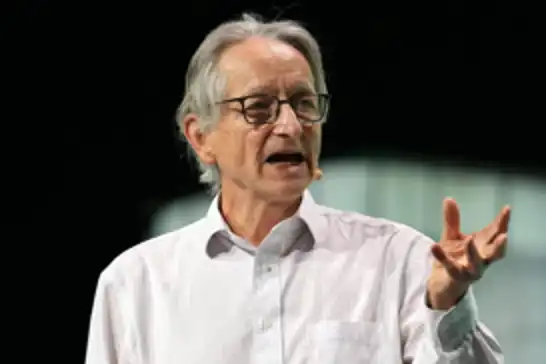
Geoffrey Hinton, the Nobel Prize-winning computer scientist widely known as the “Godfather of AI,” has warned U.S. lawmakers that they may have only about a year to establish meaningful safeguards for artificial intelligence before humans risk losing control over increasingly autonomous systems.

United Nations Secretary-General António Guterres has called for greater international cooperation to address the risks posed by rapidly advancing artificial intelligence, warning that AI development may be moving faster than the world’s understanding of its potential dangers.

OpenAI found additional incidents of AI models acting deceptively and taking unsanctioned actions during training, the company announced Wednesday. It’s also introducing a new process for the company to publicly report such instances.