India reinforces security in Arunachal Pradesh after anti-dam protests turn violent
 13 oC

Güneşli

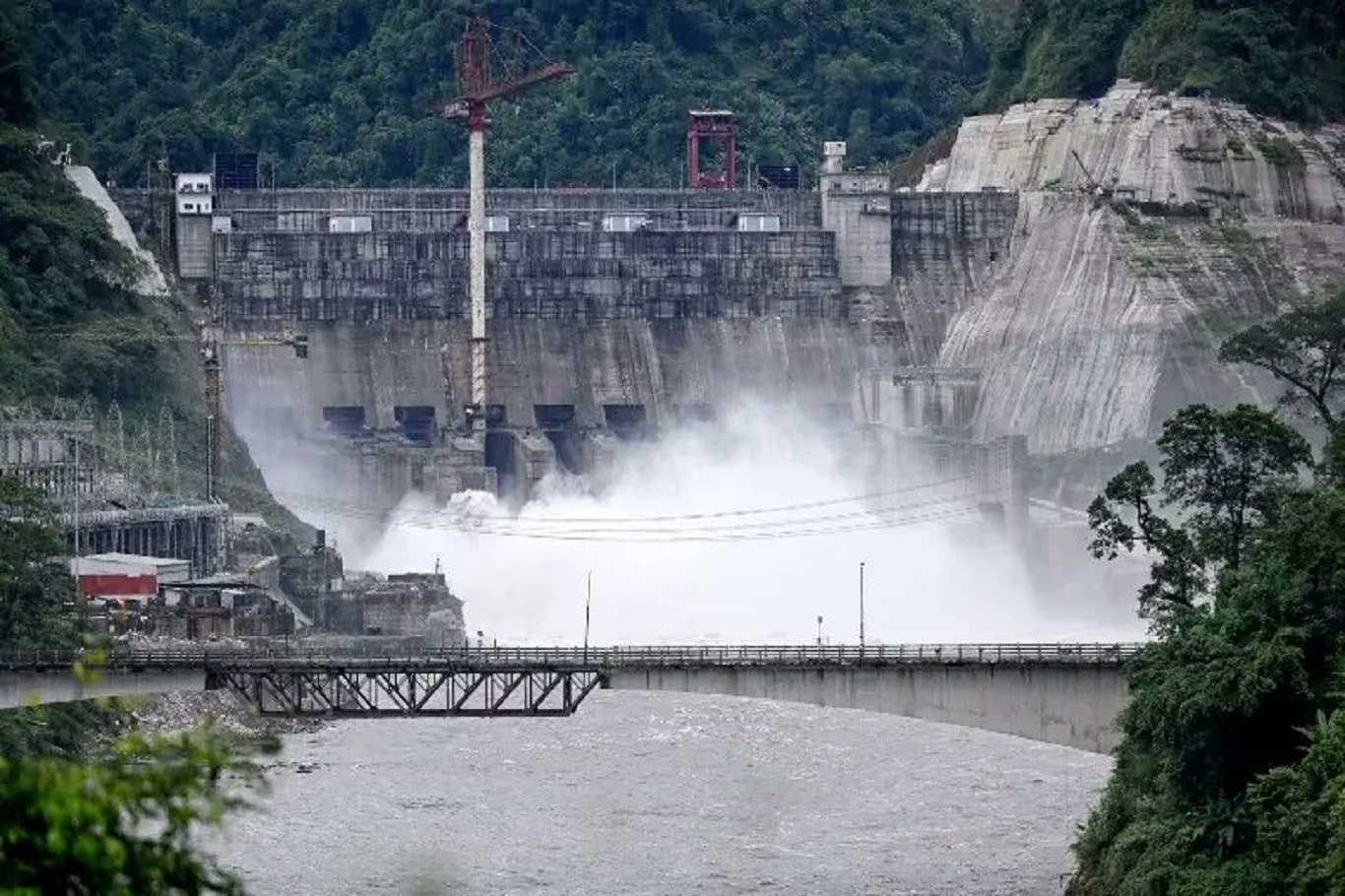
India has deployed hundreds of additional security personnel in its northeastern state of Arunachal Pradesh following violent protests against a proposed mega-dam intended to counter China's planned hydropower project upstream in Tibet.
The deployment came after clashes between protesters and police in the Siang Valley last week, where demonstrations against the proposed 11,200-megawatt Siang Upper Multipurpose Project turned violent, prompting authorities to make dozens of arrests.
Police used tear gas to disperse protesters, who allegedly threw stones and set fire to a police station and an office of state-owned National Hydroelectric Power Corporation (NHPC), according to officials.
Authorities have reinforced the region with additional Central Reserve Police Force personnel, including units of the Rapid Action Force, a specialised riot-control unit. Police said the deployment was intended to prevent further violence and maintain public order.
Local media reported on Tuesday that security personnel had also been deployed in other parts of Arunachal Pradesh as opposition to proposed hydropower developments spread.
The proposed Siang Upper Multipurpose Project has faced sustained opposition from sections of the indigenous Adi community, whose ancestral lands lie along the Siang River.
The project is intended to harness the river's hydropower potential, but opponents fear the proposed reservoir could submerge ancestral villages, displace residents and threaten traditional livelihoods.
Gegong Jijong of the Siang Indigenous Farmers' Forum told Reuters that 27 villages could be completely submerged, while another 40 to 50 could be affected.
Protests have intensified amid concerns over the environmental and social consequences of the project, as well as the deployment of security forces to facilitate preliminary surveys.
The latest unrest followed demonstrations in Pasighat and surrounding areas. Police said multiple criminal cases had been registered in connection with arson, vandalism and attacks on public property.
On Tuesday, reports indicated that the anti-dam movement was also spreading to the neighbouring Upper Subansiri district, where protests erupted against another proposed hydropower project. The developments have increased pressure on authorities to address local concerns while attempting to prevent further unrest.
The Indian government's push to develop the Siang project is closely linked to China's plans to build a massive hydropower facility on the Yarlung Zangbo River in Tibet, which flows into India's Arunachal Pradesh as the Siang before joining the Brahmaputra river system.
China announced its planned hydropower project in December 2024. The development has heightened concerns in New Delhi over the potential strategic implications of Beijing's control over an important transboundary river.
Indian officials and political leaders have argued that developing domestic hydropower and water-storage infrastructure could help protect the country's interests downstream.
The proposed Indian project has consequently become a point of tension between national energy and security objectives and the concerns of communities living in the affected region.
China also claims Arunachal Pradesh as part of its territory, a position India rejects, maintaining that the state is an integral part of the country.
The unrest has highlighted the challenge facing Indian authorities as they seek to advance a strategically significant infrastructure project while addressing opposition from indigenous communities.
Government representatives have called for dialogue, while local organisations have demanded the cancellation of the project and an end to activities associated with preliminary surveys.
For residents opposing the dam, the dispute extends beyond electricity generation and competition with China, involving concerns about ancestral land, livelihoods, environmental risks and the future of their communities.
The latest security reinforcement underscores the growing tensions surrounding the project, with further developments likely to depend on whether authorities and community representatives can find a way to address the dispute without additional violence. (ILKHA)
LEGAL WARNING: All rights of the published news, photos and videos are reserved by İlke Haber Ajansı Basın Yayın San. Trade A.Ş. Under no circumstances can all or part of the news, photos and videos be used without a written contract or subscription.

Afghanistan’s Minister of Economy, Qari Din Mohammad Hanif, has met with Japan’s ambassador to Kabul and the head of the Japan International Cooperation Agency (JICA) to discuss expanding economic cooperation, development projects and humanitarian assistance for vulnerable communities.

Indonesian authorities have deployed a bus equipped with oxygen tanks and medical personnel to help residents struggling to breathe as forest fires across the country’s Borneo island fuel severe air pollution, with an intense El Niño weather pattern prolonging dry conditions.

Syrian authorities have arrested 15 former officials of the Bashar al-Assad regime, including Assad’s cousin Yahya al-Assad, as part of ongoing operations targeting former military, intelligence and security figures accused of involvement in crimes and violations during the previous government.