Indonesia earthquake death toll rises to 38 as rescue teams race to reach isolated communities
 13 oC
13 oC 
Güneşli

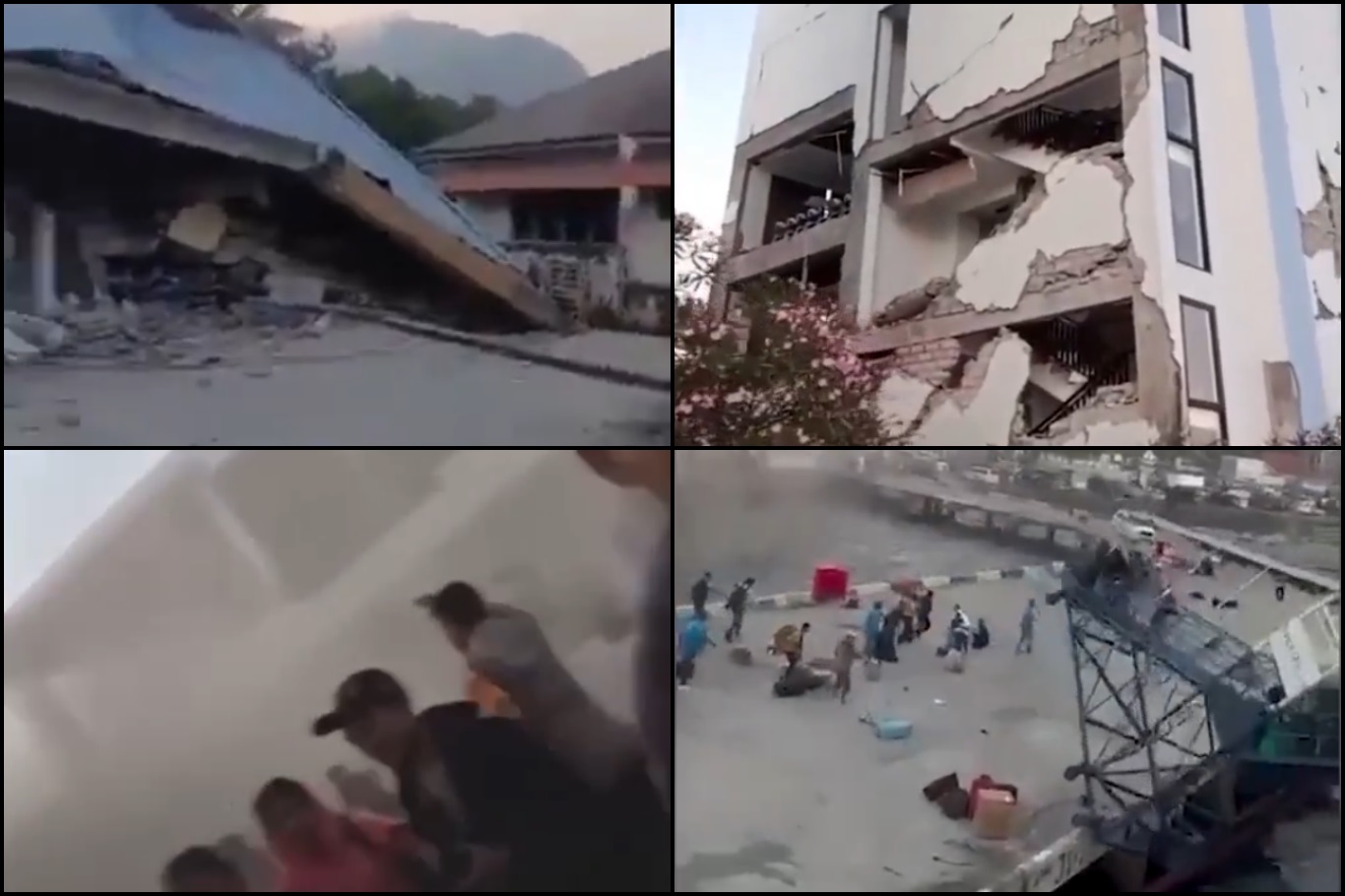
At least 38 people have been killed and dozens injured after a powerful 7.7-magnitude earthquake struck eastern Indonesia early Saturday, triggering landslides, damaging buildings and forcing thousands of residents to flee their homes.
Indonesia's National Disaster Management Agency (BNPB) said 38 people had died, while two people were seriously injured and another 11 suffered minor injuries. Approximately 2,000 residents were evacuated to safer locations as emergency teams worked to reach the hardest-hit areas.
The earthquake struck at around 4:58 a.m. local time at a depth of approximately 15 kilometres, according to Indonesia's Meteorology, Climatology and Geophysical Agency (BMKG). Numerous aftershocks followed the main tremor.
The port town of Maumere, on Flores Island, was among the areas reporting significant casualties and structural damage.
Fathur Rahman, head of the local rescue agency, said rescuers had recovered 20 bodies in Maumere and located six injured people. Two additional victims were reportedly still trapped beneath rubble.
Authorities said people remained trapped inside damaged buildings in several earthquake-affected areas, while landslides blocked roads and complicated rescue operations.
East Nusa Tenggara Governor Emanuel Melkiades Laka Lena said at least five people were killed by collapsing rubble while they were sleeping.
Video footage from Maumere showed part of a building collapsing into a cloud of dust and rubble at a port as terrified residents ran into the streets.
“The quake was massive, the shock was so strong,” said Nona, a 51-year-old resident of Talibura. She said 13 people had been inside her home when the earthquake struck and that everyone rushed outside to escape.
Emergency operations have been particularly difficult in Nagekeo, the area closest to the earthquake's epicenter.
Rescue teams had initially been unable to reach the area because communication systems were disrupted and landslides blocked roads. Another team attempted to reach the affected communities by ferry.
The BNPB said approximately 2,000 residents in Nagekeo were evacuated, while damage was reported to homes, warehouses and government buildings.
Traffic congestion and power outages were also reported in parts of the region.
The difficulties faced by rescue teams have raised concerns that the number of casualties could rise as isolated communities become accessible and authorities are able to conduct more comprehensive assessments.
The powerful undersea earthquake prompted authorities to issue a tsunami warning for parts of the region.
Tsunami waves measuring less than one metre were subsequently recorded in several locations. Authorities lifted the warning approximately three hours after the earthquake after determining that no larger waves were expected.
The Australian tsunami warning centre also said the earthquake posed no tsunami threat to mainland Australia, its islands or territories.
Residents nevertheless remained on alert as powerful aftershocks continued to shake parts of eastern Indonesia.
Strong shaking was reported across East Nusa Tenggara, West Nusa Tenggara and parts of South Sulawesi. According to the BNPB, residents in several areas reported that the shaking lasted for approximately one minute.
“Most of the people felt the shock and scattered out of their homes,” the agency said.
A hospital in Ende district moved patients outdoors as a precaution following the earthquake. Reports also indicated that landslides had occurred in some affected areas.
The combination of damaged infrastructure, blocked roads, power outages and continuing aftershocks has complicated the emergency response.
The disaster once again highlights Indonesia's vulnerability to powerful earthquakes. The country lies along the Pacific Ring of Fire, one of the world's most seismically active zones, where several tectonic plates meet.
The affected region experienced another devastating earthquake in 1992, when a magnitude-7.5 earthquake caused extensive destruction.
Authorities are continuing to assess the damage while search-and-rescue teams work to reach communities closest to the epicentre.
With residents still reported to be trapped beneath collapsed structures and some roads remaining inaccessible because of landslides, officials have warned that the scale of the disaster may not yet be fully known.
Emergency crews are expected to continue rescue and recovery operations as communications and access to isolated areas are gradually restored. (ILKHA)
LEGAL WARNING: All rights of the published news, photos and videos are reserved by İlke Haber Ajansı Basın Yayın San. Trade A.Ş. Under no circumstances can all or part of the news, photos and videos be used without a written contract or subscription.

Russia's Defense Ministry said its forces carried out long-range drone strikes against what it described as Ukrainian military targets at the ports of Odesa, Pivdennyi (Yuzhny) and Izmail.

Russian-speaking cybercrime group Cl0p has claimed to have stolen large volumes of data from nearly 50 companies worldwide, including Shell, Philips, Fiserv and General Electric (GE). The affected companies have acknowledged the claims or confirmed they are investigating potential security incidents, but the extent of any data theft has not been independently verified.

Swiss authorities have imposed water restrictions across much of the country as extreme heat and prolonged drought continue to reduce water supplies and river levels.