Israeli soldiers say military approved Jabalia strike despite risk of hundreds of civilian deaths
 13 oC
13 oC 
Güneşli

Testimonies from four Israeli soldiers have revealed that the Israeli military approved a devastating October 31, 2023, airstrike on Gaza’s Jabalia refugee camp despite assessments that it could kill between 250 and 300 Palestinians, the Israeli newspaper Haaretz reported.
According to the newspaper’s report on Monday, the attack targeted Ibrahim Biari, a commander in the Qassam Brigades, the armed wing of Hamas. However, the soldiers said Israeli forces did not know his precise location beneath the densely populated residential area.
One soldier told Haaretz that military forces believed Biari was underground beneath several large buildings but could not determine which structure he was in.
“So they selected several buildings that were still inhabited, and it was decided to bring down all the buildings above the tunnel where he was located,” the soldier said.
“We did not carry out an evacuation because it was important to kill him without giving him a chance to escape,” he added.
Another soldier said military assessments indicated that the planned attack could kill between 250 and 300 Palestinians. The decision was subsequently referred to the Israeli military chief of staff, who approved it, according to the testimony.
“I remember being shocked when several densely populated buildings were flattened, killing and wounding hundreds, just to eliminate a battalion commander,” the soldier said.
The accounts raise further questions about the Israeli military’s decision-making during its war on Gaza, particularly the precautions taken to protect civilians in densely populated areas.
Israeli anti-occupation group calls for accountability
Nadav Weiman, executive director of Breaking the Silence, an Israeli anti-occupation organization that publishes testimonies from former and serving Israeli soldiers about military conduct in the occupied Palestinian territories, called for those responsible for the practices described in the accounts to be held accountable.
“You cannot approve the possible killing of 300 civilians in order to assassinate a battalion commander and then claim that you are making efforts to avoid harming innocent people,” Weiman said.
The testimonies, as reported by Haaretz, provide an account from within the Israeli military of how commanders assessed the expected civilian death toll before authorizing the strike.
Jabalia attack devastated residential area
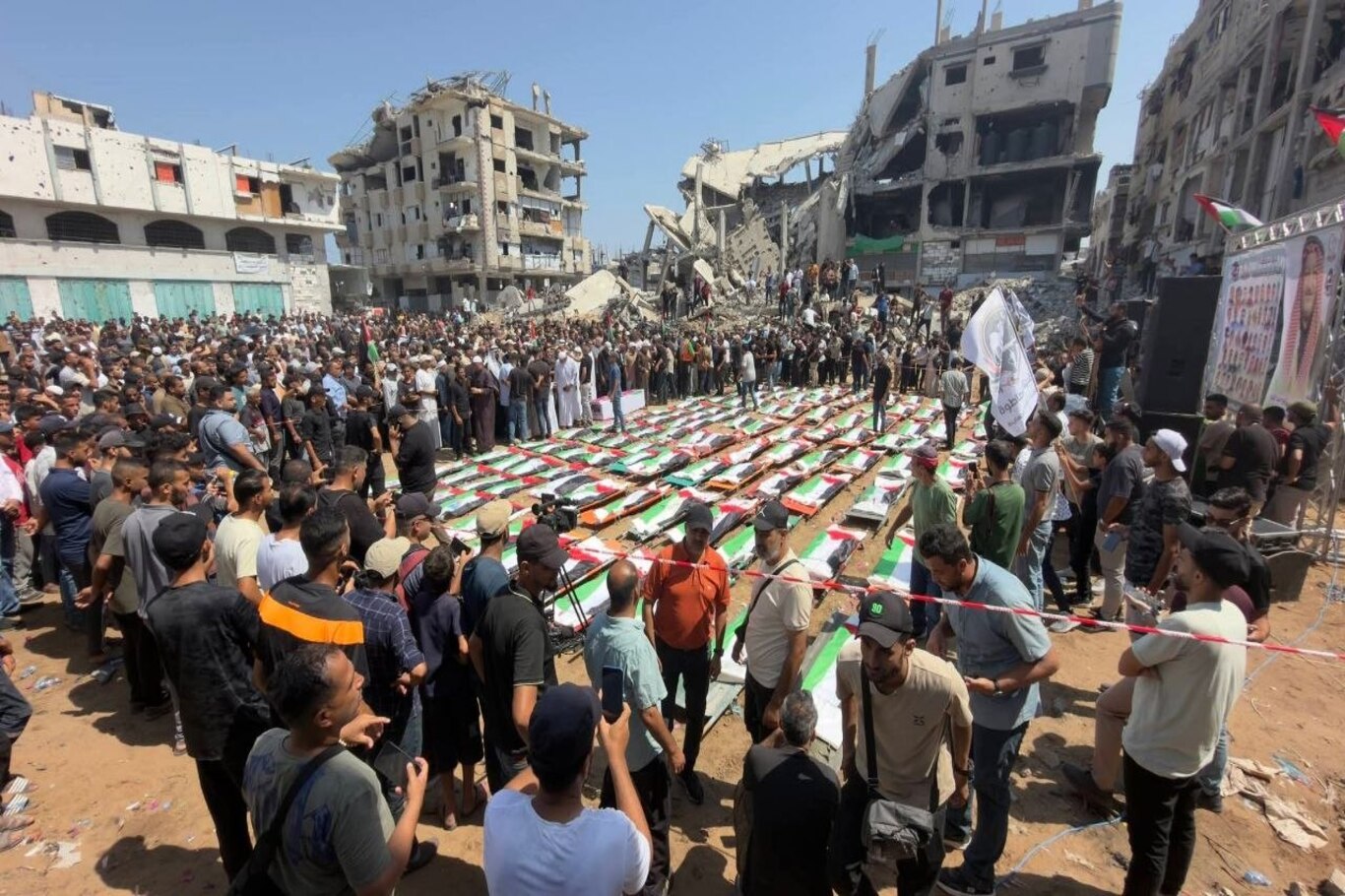
On October 31, 2023, Israeli warplanes bombed Block 6 in the Jabalia refugee camp in northern Gaza, destroying residential buildings in an area inhabited by thousands of Palestinians, including displaced families who had sought shelter from Israeli bombardment elsewhere in the enclave.
The attack involved heavy explosives that caused widespread destruction across the densely populated neighbourhood.
Figures released at the time by Gaza’s health and interior ministries indicated that more than 400 Palestinians were killed or injured in the bombardment, while dozens were reported missing beneath the rubble. Many families struggled to recover the bodies of relatives buried under the destroyed buildings.
Among those affected were members of the Abu Nasr, Abu al-Qumsan, Hijazi, Masoud, al-Bahnasawi and Okasha families. Relatives reported being unable to recover some of their loved ones’ remains or establish their fate.
The scale of the destruction made the attack one of the most devastating early incidents in Israel’s assault on northern Gaza.
Gaza’s humanitarian crisis continues
The Jabalia strike took place less than a month after the Hamas-led October 7, 2023, attack on southern Israel, which killed about 1,200 people and saw 251 taken hostage, according to Israeli figures. Israel subsequently launched a military campaign in Gaza that caused mass casualties, widespread destruction and the displacement of much of the Palestinian population.
Palestinian officials have repeatedly accused Israel of indiscriminate attacks and violations of international humanitarian law. Israel has said its military operations target Hamas and other armed groups, while maintaining that it takes measures to limit civilian harm.
The conflict has also prompted international legal proceedings. In January 2024, the International Court of Justice ordered provisional measures in the genocide case brought by South Africa against Israel. The court did not issue a final ruling on whether genocide had occurred.
The war has devastated Gaza’s health system, housing, infrastructure and food supply, leaving hundreds of thousands of Palestinians displaced and large sections of the territory in ruins.
The soldiers’ accounts reported by Haaretz add to mounting scrutiny of the military decisions behind some of the war’s deadliest attacks, including the extent to which anticipated civilian casualties were considered before strikes were approved. (ILKHA)
LEGAL WARNING: All rights of the published news, photos and videos are reserved by İlke Haber Ajansı Basın Yayın San. Trade A.Ş. Under no circumstances can all or part of the news, photos and videos be used without a written contract or subscription.
Yemen's Ansarullah movement announced that it had targeted King Khalid International Airport in the Saudi capital Riyadh with a ballistic missile and Khamis Mushait Air Base with an armed drone, saying the operations were carried out in response to continued Saudi attacks on Yemen.
At least 11 crew members remain missing after a commercial ship sank in a drone attack off Bulgaria’s Black Sea coast, while five people have been rescued from the vessel, according to the latest reports on Tuesday.
Afghanistan’s Deputy Prime Minister for Economic Affairs, Mullah Abdul Ghani Baradar Akhund, has called on the international community to provide financial and technical assistance to help the country address climate change and strengthen its disaster preparedness.