Pezeshkian says Iran will overcome external pressure through national unity
 13 oC
13 oC 
Güneşli

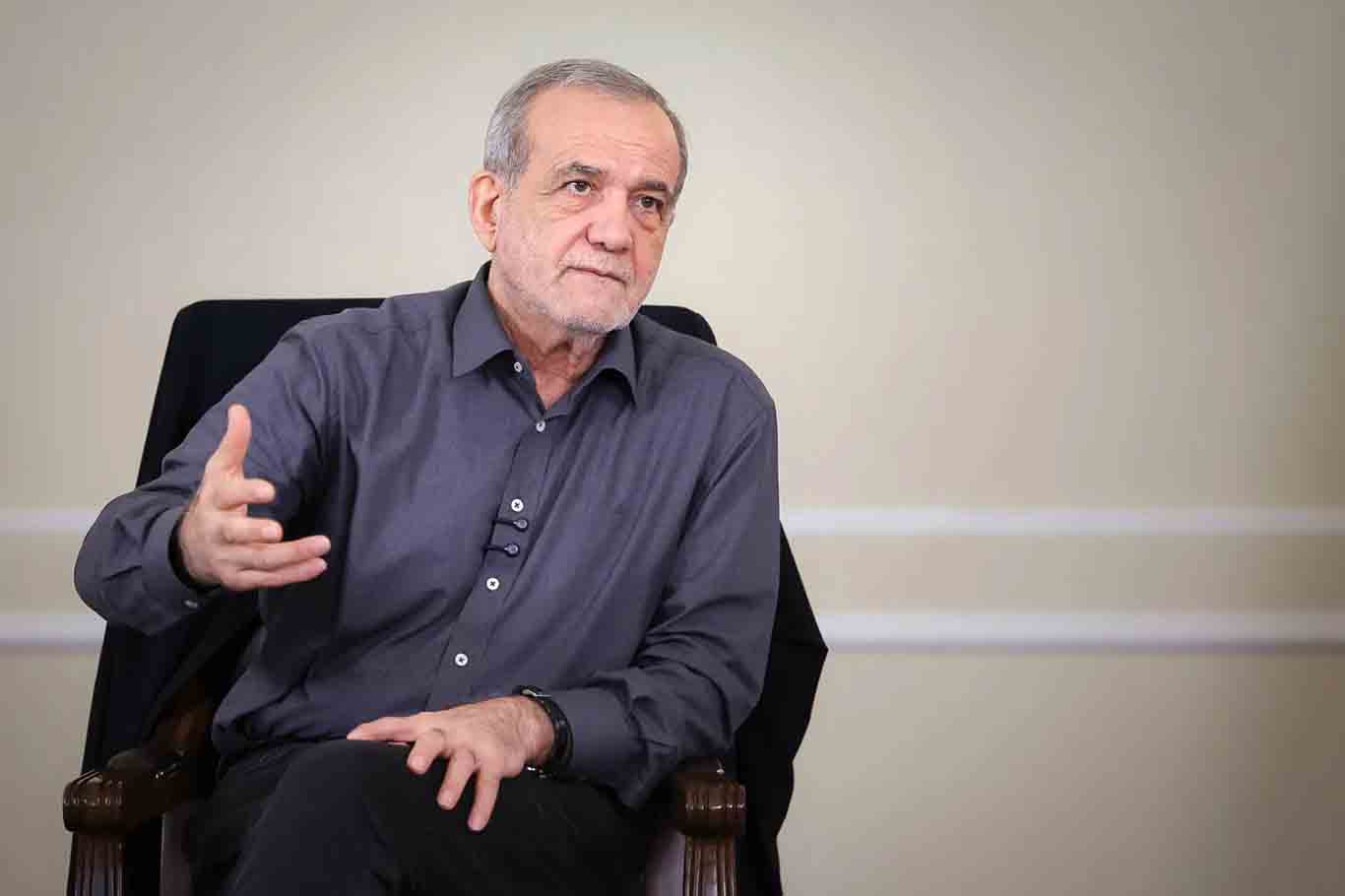
Iranian President Masoud Pezeshkian said Iran has endured one of the most challenging periods since the 1979 Islamic Revolution, stressing that national solidarity has enabled the country to withstand mounting external pressure, economic hardship, and security threats.
Speaking in an interview with Iran's state broadcaster IRIB at the beginning of the third year of his presidency, Pezeshkian said his administration has faced an unprecedented combination of sanctions, security challenges, economic pressures, severe drought, and military confrontation. Despite these difficulties, he said attempts to destabilize the country had failed because of the resilience and unity of the Iranian people.
The president said his government confronted multiple crises from the outset of its term, including the assassination of Hamas political leader Ismail Haniyeh in Tehran, persistent energy imbalances, concerns over winter electricity and natural gas supplies, worsening water shortages, and what he described as Iran's most severe drought in five decades.
Pezeshkian also pointed to renewed international pressure, including the activation of the snapback mechanism and a 12-day conflict that he said was intended to undermine Iran's stability. According to the president, foreign adversaries believed the country could be overwhelmed within days, but Iran remained steadfast due to public solidarity.
Referring to the death of Leader of the Islamic Revolution Ayatollah Seyed Ali Khamenei, whom he said was martyred in a U.S.-Israeli attack on February 28, Pezeshkian asserted that opponents had expected the country to collapse following the incident but had failed in that objective. He said Iran remained stable and described the country's new Leader as a significant source of national strength, while criticizing what he called attempts by opponents to misrepresent the consensus surrounding the leadership transition.
Pezeshkian also praised the character of Leader of the Islamic Revolution Ayatollah Seyed Mojtaba Hosseini Khamenei, describing him as a leader of exceptional morality and sound judgment. He said personal discussions had demonstrated the Leader's patience, humility, and kindness, according to a report published by the Iranian president's office.
The president said one of his administration's principal objectives throughout the recent crises had been to prevent social fragmentation while ensuring the uninterrupted delivery of essential public services.
He commended Iranians from different political, social, and cultural backgrounds for maintaining national unity despite economic difficulties and political grievances, saying their restraint had contributed significantly to preserving the country's stability.
Addressing international sanctions, Pezeshkian argued that restrictions had expanded well beyond trade, targeting Iran's banking and financial sectors while coinciding with increased military and security pressure. He also criticized what he described as selective international standards on human rights, questioning attacks against Iranian military commanders, scientists, and civilians.
According to the president, Iranian universities, aerospace facilities, artificial intelligence centers, and scientific figures have increasingly become targets because Iran's technological and scientific achievements are viewed by its adversaries as a strategic challenge.
On domestic policy, Pezeshkian said his government had deliberately avoided measures that could deepen social divisions, emphasizing that cautious decision-making had helped preserve public calm during a particularly sensitive period.
The Iranian president also called for removing unnecessary obstacles facing Iranians living abroad who wish to return home. He said every Iranian should be able to travel freely to and from the country and argued that authorities should clearly notify individuals in advance of any legal restrictions rather than detaining them upon arrival.
Commenting on unrest that followed previous protests, Pezeshkian said legitimate public concerns had been exploited by groups seeking to provoke violence. He rejected casualty figures reported by some foreign media outlets as exaggerated, stating that official records had been made available and inviting anyone with additional evidence to present it for review.
Despite the broad range of political, economic, and security challenges confronting the country, Pezeshkian expressed confidence that Iran would continue to overcome external pressure through national unity, improved governance, and sustained investment in scientific research and technological development. (ILKHA)
LEGAL WARNING: All rights of the published news, photos and videos are reserved by İlke Haber Ajansı Basın Yayın San. Trade A.Ş. Under no circumstances can all or part of the news, photos and videos be used without a written contract or subscription.
Palestinian prisoner Dr. Hussam Abu Safiya is enduring worsening health conditions and repeated physical abuse inside Israel's Rakevet Prison, the Asra Media Office (AMO) said, warning that his life is at increasing risk amid systematic medical neglect and mistreatment of Palestinian detainees.

Türkiye has called on the European Union to adopt a more inclusive approach to its emerging trade, competition, and industrial policies, arguing that closer integration with Ankara would enhance the bloc's competitiveness and strengthen Europe's economic security.
Japan has unveiled a new defense strategy emphasizing the rapid adoption of drone technology, artificial intelligence, and advanced weapons systems, as Tokyo seeks to modernize its military capabilities in response to an increasingly complex regional security environment.