Turkic republics face questions over relations with Israel amid Palestinian suffering
 13 oC

Güneşli

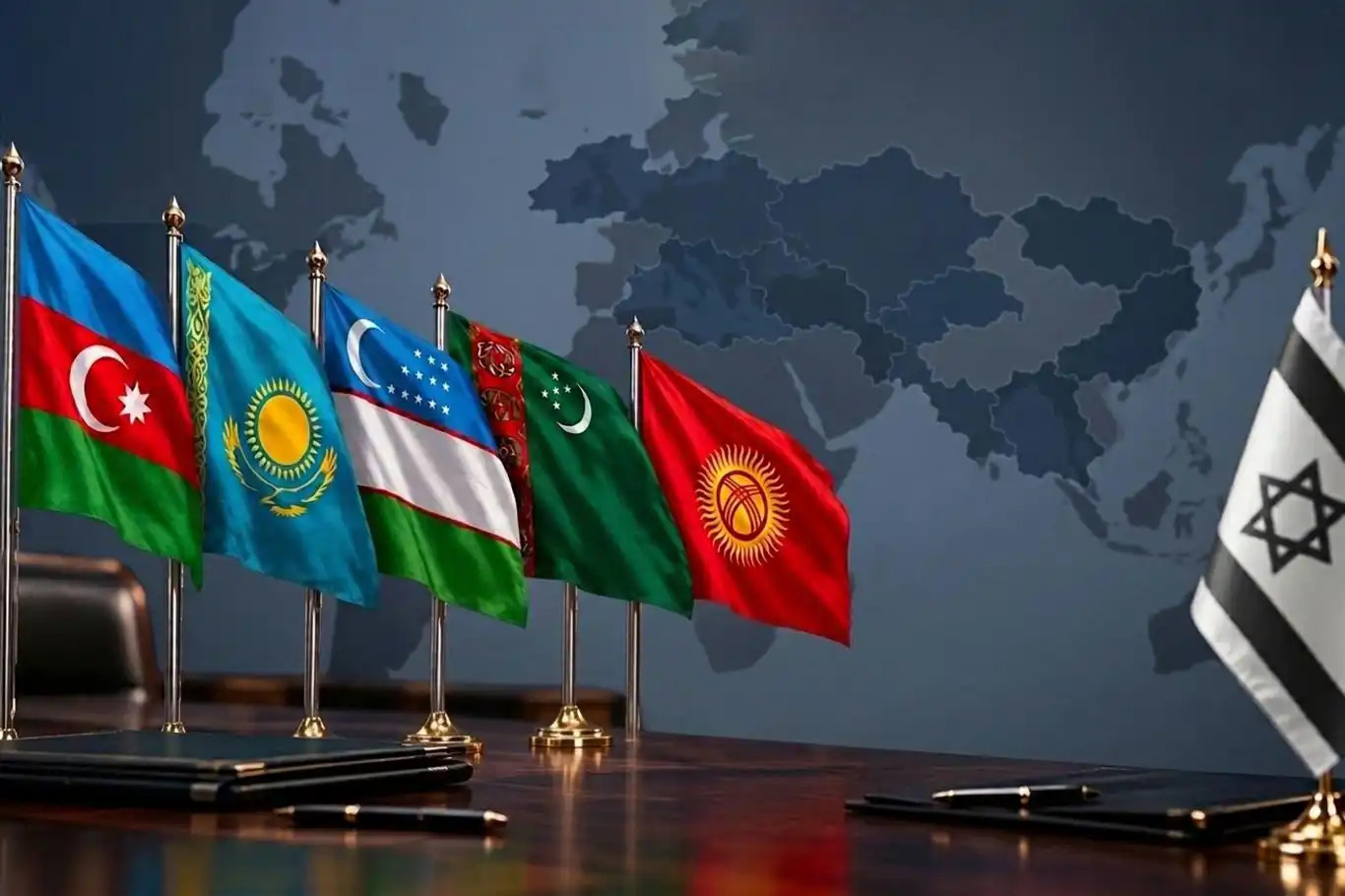
Relations between the five Turkic republics of Azerbaijan, Kazakhstan, Uzbekistan, Turkmenistan and Kyrgyzstan and Israel have come under renewed scrutiny amid escalating tensions in the Middle East and continued Israeli aggression against Palestinians.
The countries established diplomatic relations with Israel following the dissolution of the Soviet Union, but the depth and nature of their ties vary considerably. While Azerbaijan has developed extensive military, energy and security cooperation with Israel, the other four republics generally pursue more diversified foreign policies, balancing economic interests and technological cooperation with relations across the Muslim world, as well as with Russia and China.
The growing debate over these relationships raises questions about the influence of Israeli economic and security interests in Central Asia and the Caucasus, and whether the Turkic republics' diplomatic and commercial ties affect their positions on Palestine.
Azerbaijan: Strategic Partnership and Military Cooperation
Azerbaijan maintains the closest strategic relationship with Israel among the five Turkic republics. The two sides established diplomatic relations in 1992, and Azerbaijan opened its embassy in Tel Aviv in March 2023.
Energy and defense cooperation form central pillars of the relationship. Azerbaijan supplies a significant share of Israel's oil imports, while Israeli defense companies have supplied Azerbaijan with military equipment used in the modernization of its armed forces.
The relationship has also attracted attention because of Azerbaijan's geographical proximity to Iran. Allegations have circulated that Israeli intelligence has sought to use Azerbaijani territory for operations against Iran, although such claims require careful assessment and should not be treated as established facts without verifiable evidence.
For critics of Israel's regional policies, the close security relationship raises concerns about the implications of military cooperation with a state accused of serious violations against Palestinians. It also highlights the potential tension between strategic partnerships and calls from Muslim communities for stronger political and diplomatic pressure on Israel over its treatment of the Palestinian people.
Kazakhstan: Economic Cooperation and Diplomatic Balancing
Kazakhstan established diplomatic relations with Israel in 1992 and has maintained cooperation in areas including agriculture, technology, health and security.
The government in Astana pursues a multi-vector foreign policy intended to preserve relations with different international partners, including Western countries, Russia, China and states across the Muslim world. Its engagement with Israel is part of this broader approach, with economic and technological considerations playing an important role.
However, as Israeli policies in the occupied Palestinian territories remain a source of regional and international controversy, Kazakhstan's relations with Israel also raise questions about how its diplomatic engagement aligns with its positions on Palestinian rights and international law.
For Muslim-majority countries, maintaining commercial relations with Israel while expressing support for Palestine presents a challenge of diplomatic consistency, particularly when the Palestinian issue is central to public opinion across the Muslim world.
Uzbekistan: Technology and Agricultural Cooperation
Uzbekistan also established diplomatic relations with Israel in 1992. Israel maintains an embassy in Tashkent, and the two countries have developed cooperation in areas including agricultural technology, water management, health care and tourism.
Uzbekistan's foreign policy is shaped by its efforts to diversify international partnerships and strengthen economic development. Cooperation with Israel forms one element of that strategy, alongside relations with other regional and global powers.
Nevertheless, the expansion of technological and commercial ties with Israel comes amid continuing international concern over the occupation of Palestinian territory and the humanitarian consequences of Israeli military operations.
The issue presents Uzbekistan and other Muslim-majority governments with a broader question: how to pursue economic development and international cooperation while maintaining a consistent commitment to Palestinian rights and the principles of justice and self-determination.
Turkmenistan: Neutrality and Limited Engagement
Turkmenistan's approach differs from that of Azerbaijan because of its policy of permanent neutrality, which was recognized by the United Nations General Assembly in 1995.
Ashgabat maintains diplomatic relations with Israel, which has an embassy in the Turkmen capital. However, Turkmenistan's highly controlled political system and cautious foreign policy have generally kept its international engagement more limited than Azerbaijan's extensive strategic cooperation.
Its relations with Israel have primarily involved diplomatic contacts and selected areas of economic cooperation. The country's neutrality provides a framework for engaging with different international partners while seeking to avoid direct involvement in geopolitical rivalries.
As regional tensions persist, Turkmenistan's diplomatic posture may be examined in terms of how neutrality can coexist with international calls to defend Palestinian rights and oppose violations of international law.
Kyrgyzstan: Diplomatic Ties With Limited Strategic Depth
Kyrgyzstan established diplomatic relations with Israel in 1992, but the relationship has remained less extensive than Israel's partnership with Azerbaijan.
Economic capacity, geographical distance and Kyrgyzstan's broader foreign policy priorities have shaped the scope of bilateral cooperation. Relations have included diplomatic engagement and limited commercial exchanges, without the same level of military and energy cooperation seen between Israel and Azerbaijan.
Kyrgyzstan's position also reflects the challenge facing smaller Central Asian states as they seek economic opportunities while maintaining ties with Muslim-majority countries and navigating competing regional interests.
The Palestinian issue remains an important point of reference for assessing how these diplomatic relationships intersect with the expectations of Muslim populations and the wider international debate over Israel's actions in the occupied territories.
Technology, Defense and the Question of Israeli Influence
Across the five republics, Israel has sought economic and diplomatic partnerships in sectors such as agricultural technology, irrigation, water management, health care and cybersecurity. Defense cooperation is particularly significant in Azerbaijan, while the nature and scale of security ties vary across the region.
These relationships give Israel channels for economic cooperation and diplomatic engagement, but the extent of its influence over the foreign policies of individual Turkic republics should not be overstated without evidence. Each government makes decisions within a distinct set of domestic, economic and geopolitical constraints.
Claims about the strength of Israeli lobbying networks in the region also require country-specific evidence. Diplomatic ties, commercial agreements and technology partnerships do not, by themselves, establish the existence or effectiveness of a coordinated lobbying operation.
Nevertheless, the close relationship between political decision-making and strategic economic interests raises legitimate questions about transparency, accountability and the extent to which governments weigh commercial benefits against their stated commitments to Palestinian rights.
Palestine and the Responsibilities of Muslim-Majority States
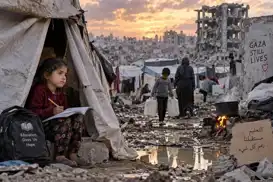
The five Turkic republics maintain different relationships with Israel, but their decisions take place against the backdrop of Israel's continued occupation of Palestinian territory, settlement expansion and the devastating humanitarian consequences of its military operations in Gaza.
For many Muslims, support for Palestine is not merely a matter of diplomatic positioning; it is a question of justice, human dignity and solidarity with a people whose rights and future remain contested. This perspective places particular scrutiny on the policies of Muslim-majority governments that maintain close economic or security cooperation with Israel.
The issue is especially pronounced in Azerbaijan, where military and energy ties with Israel are more extensive. Kazakhstan and Uzbekistan, meanwhile, seek to balance economic cooperation with broader diplomatic interests, while Turkmenistan and Kyrgyzstan maintain comparatively more limited relationships.
A consistent commitment to Palestinian rights would require more than statements of solidarity. It would also involve clear diplomatic positions, transparency in military and commercial agreements, and efforts to ensure that international cooperation does not contribute to violations of Palestinian rights.
The five countries are not uniform in their policies, and their relationships with Israel should be assessed individually rather than treated as a single coordinated bloc. At the same time, their choices have significance beyond bilateral trade and diplomacy because they help shape the wider response of Muslim-majority states to the Palestinian question.
Ultimately, the debate over Turkic-Israeli relations is about more than the history of diplomatic ties. It concerns how governments balance strategic interests with principles of justice, international law and solidarity with Palestine—and whether those principles remain central when economic and security partnerships are at stake. (ILKHA)
LEGAL WARNING: All rights of the published news, photos and videos are reserved by İlke Haber Ajansı Basın Yayın San. Trade A.Ş. Under no circumstances can all or part of the news, photos and videos be used without a written contract or subscription.
Iran's Islamic Revolutionary Guard Corps (IRGC) announced on Tuesday that it had shot down a US MQ-9 Reaper drone over the Strait of Hormuz, saying the aircraft was intercepted by the country's air defence systems.

Israeli occupation authorities have designated 182.81 dunums of Palestinian land in the occupied West Bank as “state land,” in a move Palestinian officials say will entrench the occupation, accelerate colonial settlement expansion and further dispossess Palestinians of their land.
A Palestinian couple was killed after Israeli occupation forces struck a residential apartment near Al-Shifa Medical Complex in western Gaza City early Tuesday, while Palestinian sources reported continued shelling, gunfire and demolition operations across several areas of the Gaza Strip despite the ceasefire agreement.