UK sanctions RSF commanders over war crimes in Sudan

 13 oC
13 oC 
Güneşli

The United Kingdom has announced sanctions against four senior commanders of Sudan’s paramilitary Rapid Support Forces (RSF), accusing them of involvement in “heinous” atrocities against civilians in the besieged city of El Fasher.
However, the UK stopped short of targeting the RSF’s chief commander, Mohamed Hamdan Dagalo (Hemedti), or its suspected main international backer, the United Arab Emirates, signalling London’s preference for private diplomatic pressure.
British officials acknowledged that despite sustained efforts, there is little sign of progress toward a ceasefire in Sudan’s nearly three-year civil war. The UK also warned that the conflict risks expanding beyond Sudan’s borders into South Sudan and Eritrea, while diplomats expressed concern that rivalries between Saudi Arabia and the UAE—already evident in southern Yemen—may deepen instability in Sudan.
UK assessments indicate that as many as 26 arms supply routes flow into Sudan, originating from at least 10 countries. While Egypt and Saudi Arabia have broadly supported Sudan’s army, the RSF has been linked repeatedly to backing from the UAE—a claim consistently denied by Abu Dhabi but supported by UN findings, independent investigations, and journalistic reports. In Yemen’s south, the UAE supports the Southern Transitional Council, a separatist movement opposed by Saudi Arabia, further fueling concerns of Gulf rivalries spilling into Sudan.
The individuals sanctioned by the UK include Abdul Rahim Hamdan Dagalo, deputy leader of the RSF and brother of Hemedti, along with commanders Gedo Hamdan Ahmed, Al-Fateh Abdullah Idris, and Tijani Ibrahim Moussa Mohamed. All four will be subject to travel bans and asset freezes. Officials noted that part of the evidence threshold was met because some commanders had posted videos on social media glorifying violence.
These measures mirror European Union sanctions imposed last week and serve as what UK officials describe as a firm “statement of diplomatic disapproval” rather than a comprehensive attempt to target every actor responsible for the conflict.
The war between the RSF and Sudan’s army, which erupted in April 2023, has triggered what the United Nations describes as the world’s worst humanitarian crisis. Famine and mass displacement are rampant in the Darfur region, where the RSF maintained an 18-month siege around El Fasher before seizing the city on 26 October. British lawmakers have been briefed that as many as 60,000 people may have been killed.
To address the escalating crisis, the UK announced an additional £20 million in humanitarian funding—bringing its total aid contribution to Sudan this year to £146 million. The funding will support food distribution, medical services, emergency shelter, hospital operations, and family reunification efforts.
Foreign Secretary Yvette Cooper issued a strongly worded statement, denouncing the “mass executions, starvation, and the systematic and calculated use of rape as a weapon of war” committed in Sudan. She pledged that the UK “will not look away” and would continue to stand with Sudanese civilians.
Last week, the UN Human Rights Council passed a UK-led resolution condemning atrocities in El Fasher and authorizing an urgent international inquiry. Meanwhile, the UK continues to resist joining the current quartet of mediating countries—the US, Saudi Arabia, UAE, and Egypt—arguing that doing so may pressure London to align with one side in the conflict.
As Sudan’s war grinds on with no ceasefire in sight, fears continue to mount that the conflict could spiral further, drawing in neighboring countries and deepening the region’s instability. (ILKHA)
LEGAL WARNING: All rights of the published news, photos and videos are reserved by İlke Haber Ajansı Basın Yayın San. Trade A.Ş. Under no circumstances can all or part of the news, photos and videos be used without a written contract or subscription.
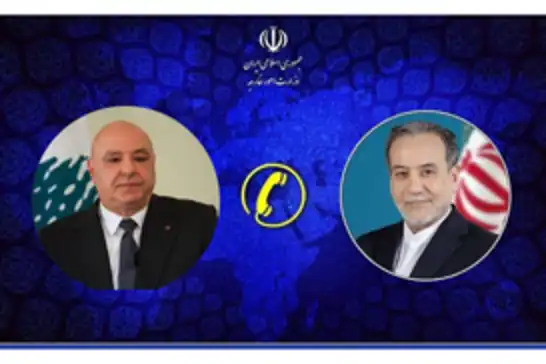
Iranian Foreign Minister Abbas Araghchi stressed the need to halt Israeli attacks on Lebanon and end Israel’s occupation of the country’s southern regions during a telephone call with Lebanese President Joseph Aoun on Wednesday.
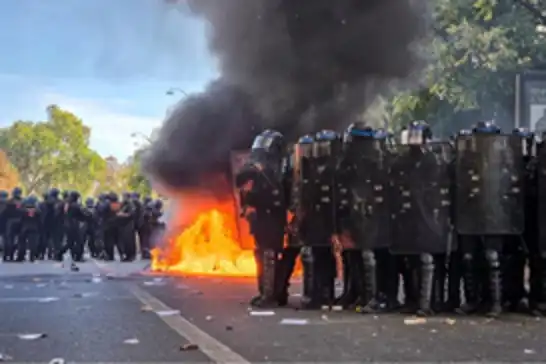
More than 1,300 people have been injured and around 8,000 individuals detained during weeks of student protests across France, as demonstrations over education conditions continued despite government measures aimed at easing tensions.
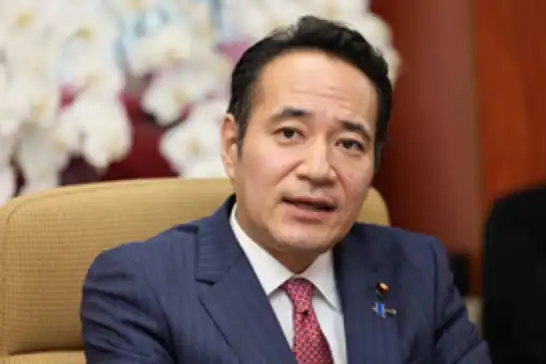
Japan’s Agriculture, Forestry and Fisheries Minister Kazuo Yana has resigned from the Cabinet following a series of controversies over his past remarks and actions, becoming the first minister to step down under Prime Minister Sanae Takaichi’s administration.
The Organization of Islamic Cooperation (OIC) has strongly condemned Colombia’s decision to open an embassy in occupied Jerusalem, describing the move as a violation of international law and relevant United Nations Security Council resolutions.