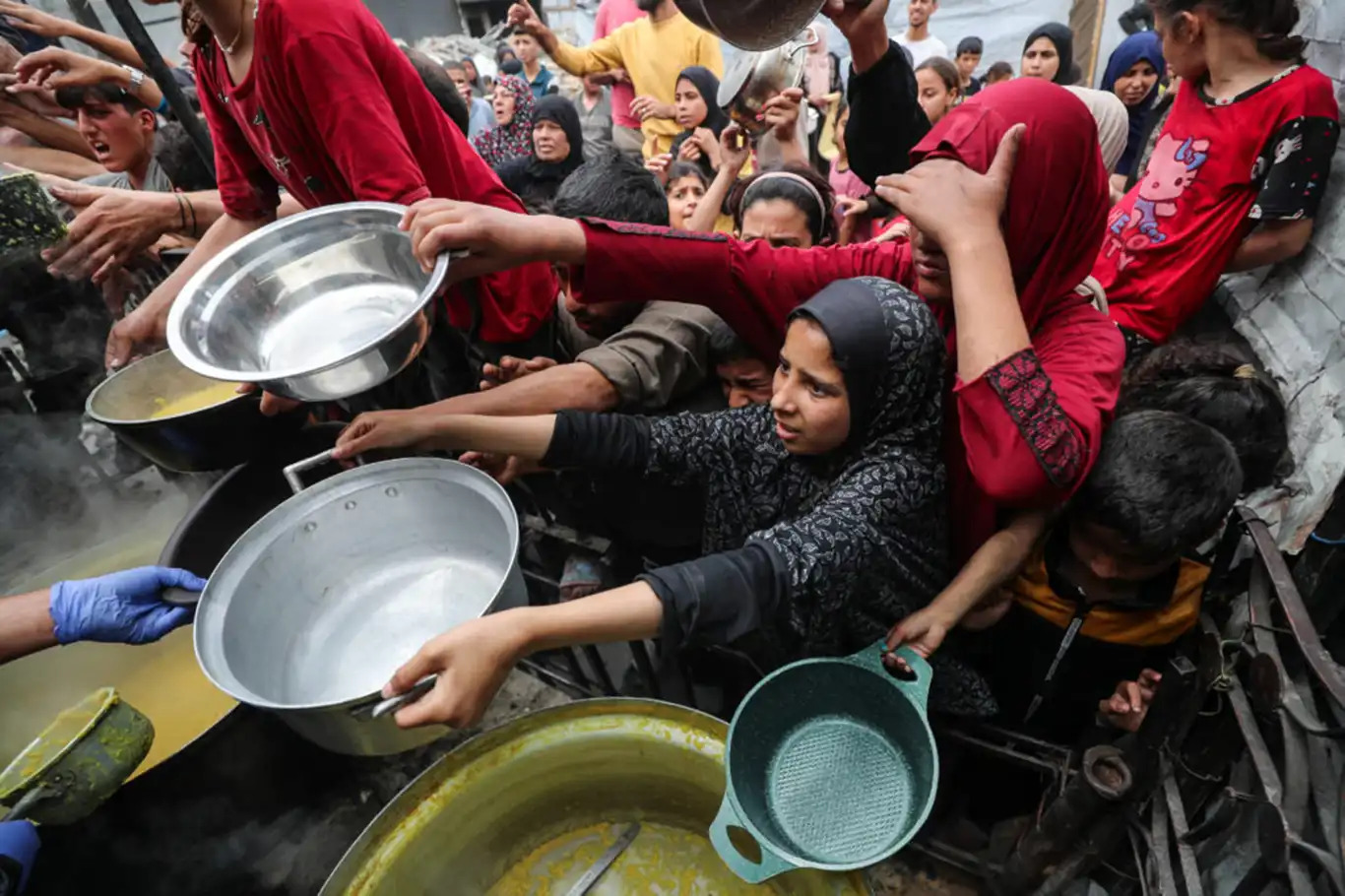
UN warns of deepening humanitarian catastrophe in Gaza as thousands of Palestinians continue to suffer
 13 oC
13 oC 
Güneşli

Tom Fletcher, the UN Under-Secretary-General for Humanitarian Affairs, has issued a urgent warning that the humanitarian crisis in the Palestinian enclave continues to worsen dramatically, even after the fragile ceasefire.
Addressing a session of the United Nations Security Council on Thursday, Fletcher called on the international community to intensify financial support for relief operations and exert greater pressure to ensure the uninterrupted entry of humanitarian aid into the besieged Palestinian territory.
The Security Council meeting was convened at the request of its ten non-permanent members to review the humanitarian situation in Gaza and assess the implementation of Security Council Resolution 2803, which concerns the ceasefire and proposals aimed at ending the devastating war.
Fletcher noted that hunger levels have declined since the ceasefire came into effect, with the percentage of households experiencing severe food insecurity dropping from 92 percent to 36 percent. However, he stressed that the improvement remains far from sufficient, warning that Palestinians in Gaza continue to be deprived of the most basic requirements for survival.
"The humanitarian situation remains extremely alarming," Fletcher indicated, emphasizing that civilians continue to face deadly threats despite the reduction in large-scale hostilities.
According to the UN official, Palestinians are still being killed and injured on a near-daily basis due to airstrikes, shelling, and gunfire. He revealed that nearly 1,000 Palestinians have lost their lives since the truce began, including more than 250 children.
The continued killing of children, Fletcher said, underscores the immense suffering endured by Gaza's civilian population and highlights the urgent need for stronger international action to protect innocent lives.
The UN humanitarian chief painted a grim picture of Gaza's healthcare sector, warning that essential services are approaching total collapse.
Citing figures from the World Health Organization, Fletcher said that no hospital in Gaza is currently operating at full capacity, leaving hundreds of thousands of Palestinians with limited access to life-saving medical care.
The crisis has been compounded by severe shortages of fuel, generators, engine oil, and spare parts needed to keep medical facilities functioning. As a result, healthcare workers continue to struggle to provide treatment under increasingly impossible conditions.
Medical evacuations, he added, remain extremely difficult, while patients suffering from serious injuries and chronic illnesses face growing risks due to the deteriorating state of the healthcare system.
Fletcher also warned of an escalating water crisis affecting Gaza's children.
Referring to estimates from UNICEF, he stated that more than 1.1 million Palestinian children face daily challenges in obtaining safe drinking water, exposing them to disease and long-term health complications.
At the same time, sanitation conditions continue to deteriorate across the territory. Overcrowded displacement areas and damaged infrastructure have created fertile conditions for the spread of illness, while reports of increasing rat infestations and rodent bites have raised further alarm among humanitarian organizations.
The UN official urged Security Council members to treat these developments as urgent warning signs of a broader public health emergency.
Fletcher highlighted the extraordinary dangers facing humanitarian personnel operating in Gaza, describing the territory as one of the most dangerous places in the world for aid workers.
Nearly 600 humanitarian workers have been killed in recent years, he said, accounting for more than half of all aid personnel killed worldwide during the same period.
Despite these risks, humanitarian organizations continue their efforts to deliver food, medicine, shelter materials, and other essential assistance to Palestinian civilians struggling to survive amid widespread destruction.
The UN humanitarian chief concluded his briefing with a renewed appeal for urgent international intervention to alleviate Palestinian suffering.
He stressed that large portions of Gaza's population remain confined to shrinking areas under extremely difficult conditions, while approximately 70 percent of residents continue to require adequate shelter.
Fletcher called on the international community to ensure the unhindered delivery of humanitarian aid, restore essential services, and provide the resources necessary to prevent further deterioration of living conditions in the enclave.
As Gaza's humanitarian crisis deepens, UN officials warn that without sustained assistance and meaningful action to protect civilians, millions of Palestinians will remain vulnerable to hunger, disease, displacement, and continued hardship in one of the world's most devastated conflict zones. (ILKHA)
LEGAL WARNING: All rights of the published news, photos and videos are reserved by İlke Haber Ajansı Basın Yayın San. Trade A.Ş. Under no circumstances can all or part of the news, photos and videos be used without a written contract or subscription.

Hezbollah Secretary-General Sheikh Naim Qassem has affirmed that the path of Imam Hussein remains the guiding principle of the Islamic Resistance, declaring that steadfastness, sacrifice, and refusal to submit to oppression continue to shape Hezbollah's strategy in confronting Israeli aggression and foreign pressure.

Ukrainian President Volodymyr Zelensky has accused Belarus of aiding Russia's drone campaign against Ukraine and issued a stark warning to Minsk, saying Belarus has one week to dismantle communications equipment allegedly being used to support Russian attacks or Ukraine will take action itself.

A major emergency response remains underway after two passenger trains collided near Bedford in eastern England on Friday, leaving dozens injured and causing widespread disruption across one of the country's busiest rail corridors.