U.S. House votes to repeal Caesar Act sanctions on Syria
 13 oC

Güneşli

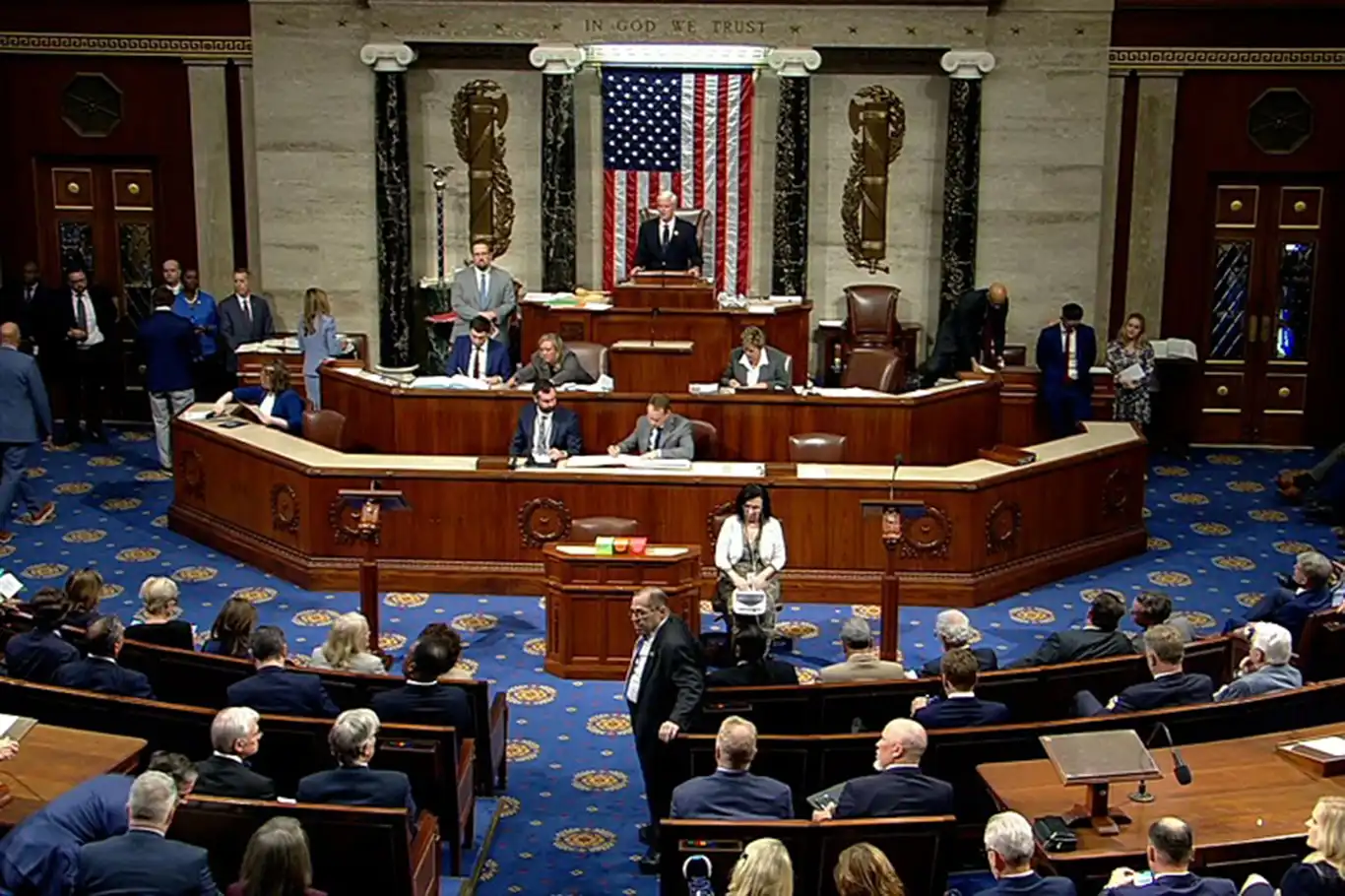
The U.S. House of Representatives voted Wednesday to repeal the sanctions imposed on Syria under the “Caesar Act,” marking a significant reversal of a key policy enacted in December 2019 to penalize the former Syrian regime for alleged war crimes committed during the years of uprising.
The repeal—described as comprehensive and unconditional—was incorporated into the 2026 U.S. Department of Defense budget bill. Its passage follows extensive diplomatic efforts led by the Syrian government, supported by members of the Syrian community, Syrian-American advocacy groups in Washington, and several allied and friendly nations seeking the lifting of sanctions.
Mohamed Alaa Ghanem, Head of Political Affairs at the Syrian American Council, told SANA that the House passed the defense budget bill, including the Caesar Act repeal, with 312 votes in favor and 112 against.
Abdul Hafeez Sharaf, a member of the Syrian American Council, said the legislation now returns to the U.S. Senate due to amendments in the broader budget text unrelated to Syria. He explained that the Senate will vote on the entire budget package, not specifically on the Syria-related provision.
Once the Senate completes its vote, the bill will move to the U.S. President’s desk for final approval, after which the repeal of the Caesar Act will take effect automatically.
The Caesar Act, named after a Syrian military defector who documented abuses committed by the former regime, imposed wide-ranging sanctions targeting individuals, companies, and institutions linked to Damascus. Its repeal, if finalized, would mark one of the most significant shifts in U.S. policy toward Syria in over a decade. (ILKHA)
LEGAL WARNING: All rights of the published news, photos and videos are reserved by İlke Haber Ajansı Basın Yayın San. Trade A.Ş. Under no circumstances can all or part of the news, photos and videos be used without a written contract or subscription.

Attacks by Israeli occupation forces and illegal settlers on Palestinian medical personnel and emergency services in the occupied West Bank have increased sharply, with incidents affecting the health sector rising by more than 350% between 2022 and 2024, according to a new report by Physicians for Human Rights Israel.

Attacks by Israeli occupation forces and illegal settlers on Palestinian medical personnel and emergency services in the occupied West Bank have increased sharply, with incidents affecting the health sector rising by more than 350% between 2022 and 2024, according to a new report by Physicians for Human Rights Israel.

Russia has discovered 250 strategic mineral resource deposits so far this year, including reserves of gold, copper, nickel, zinc and lead, according to the country’s Ministry of Natural Resources and Environment.

Iran has warned that any renewed US military aggression against the Islamic Republic could trigger retaliatory strikes against American military installations far beyond the Middle East, including bases located in Europe and other distant regions.