Gold hits fresh all-time high as safe-haven demand surges

 13 oC
13 oC 
Güneşli

Gold prices surged to a new all-time high on Friday, marking the second record-breaking session in a single week, as investors continued to flock to safe-haven assets amid persistent global uncertainty, inflation concerns, and currency weakness.
According to market data, February gold futures on the New York Comex exchange rose 0.86% by 05:49 GMT, gaining $38.6 to trade at $4,541 per troy ounce. Earlier in the session, prices briefly touched an intraday record of $4,561.4 per ounce, extending an extraordinary rally that has defined precious metals markets throughout 2025.
Silver also posted strong gains, with March futures climbing 4.83% to $75.145 per ounce. During the session, silver prices reached a new record high, reflecting increased investor appetite for industrial and precious metals alike as market volatility remains elevated.
Gold has been on a sharp upward trajectory since the beginning of the year, driven by heightened geopolitical risks, persistent inflationary pressures, and growing doubts about the durability of global economic growth. Prices first broke above the $4,200 mark in early January, a move that analysts described as a turning point in investor sentiment.
The rally gathered further momentum on March 22, when gold surged past the psychologically significant $4,500 per ounce level. That advance was underpinned by a weakening US dollar, declining real yields, and continued uncertainty across global financial markets.
By mid-February, escalating geopolitical tensions — particularly the ongoing war in Ukraine and rising instability in West Asia — added fresh impetus to gold’s ascent. Investors increasingly sought refuge in precious metals as concerns mounted over supply chain disruptions, energy security, and broader geopolitical spillovers.
Inflation concerns have also played a central role in gold’s rise. US consumer price index data released on February 13 showed inflation running at 3.4% year-on-year, higher than expected, reigniting fears that price pressures may remain sticky. The data raised doubts about the pace and timing of interest rate cuts by the US Federal Reserve, contributing to heightened market volatility.
While higher interest rates typically weigh on non-yielding assets like gold, analysts note that the current environment — marked by elevated inflation, geopolitical risk, and fiscal uncertainty — has reinforced gold’s appeal as a store of value.
“Gold is benefiting from a rare alignment of supportive factors,” said a senior commodities strategist at a major investment bank. “Geopolitical risk, currency weakness, and concerns over long-term debt sustainability are all driving capital toward hard assets.”
Adding to the bullish momentum, central bank gold purchases have remained robust, particularly among emerging market economies seeking to diversify reserves away from the US dollar. Recent data indicates continued accumulation by central banks in Asia and the Middle East, reinforcing long-term demand for bullion.
Meanwhile, exchange-traded funds (ETFs) backed by physical gold have seen renewed inflows in recent weeks, signaling growing participation from institutional investors who had previously remained on the sidelines.
Market analysts broadly expect gold prices to remain elevated in the near term, with some forecasting further gains if geopolitical tensions intensify or inflation proves more persistent than anticipated. Silver is also expected to benefit from both safe-haven flows and rising industrial demand, particularly linked to renewable energy and advanced manufacturing.
However, analysts caution that sharp price swings could continue, especially as investors reassess monetary policy expectations and global economic data.
For now, gold’s record-breaking run underscores its enduring role as a hedge against uncertainty — a role that appears firmly entrenched as 2025 unfolds amid an increasingly fragile global economic and geopolitical landscape. (ILKHA)
LEGAL WARNING: All rights of the published news, photos and videos are reserved by İlke Haber Ajansı Basın Yayın San. Trade A.Ş. Under no circumstances can all or part of the news, photos and videos be used without a written contract or subscription.
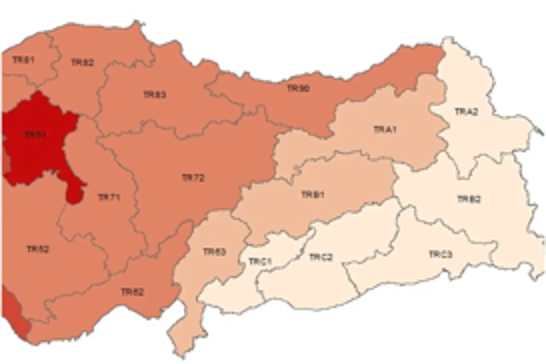
The share of the highest-income group in Türkiye’s total income declined marginally in 2025, while overall income levels rose sharply, according to the latest Income and Living Conditions Survey released by the Turkish Statistical Institute (TurkStat) on Friday.

Istanbul’s Sabiha Gökçen International Airport has set new passenger and flight records following the commissioning of its second runway, highlighting the airport’s rising importance as a regional and global aviation hub on the city’s Asian side.

Türkiye’s monthly average labour cost stood at TRY 45,777 in 2024, according to the latest Labour Cost Statistics released for the reference year.