Africa CDC raises alarm as Ebola deaths surpass 200 in one month

 13 oC
13 oC 
Güneşli

The Ebola outbreak affecting Uganda and the Democratic Republic of Congo (DRC) has killed more than 200 people within its first month, making it the most severe early-stage Ebola outbreak recorded in the region, according to Africa’s Centres for Disease Control and Prevention (Africa CDC).
Health officials warn that the crisis is rapidly escalating, with an estimated up to 35,000 potential contacts requiring monitoring, while confirmed cases continue to rise across multiple provinces in eastern Congo and parts of Uganda.
Africa CDC data shows 894 confirmed cases, with infections now spread across 32 health zones in eastern DRC. The outbreak has expanded by 38% in just one week, underscoring the speed of transmission in remote and conflict-affected areas.
Uganda has also reported 19 confirmed cases and two deaths, following cross-border spread from eastern Congo’s Ituri province, which remains the epicentre of the outbreak and accounts for more than 90% of all cases.
Dr. Wessam Mankoula, a medical epidemiologist at Africa CDC, said the current outbreak is already three times more severe than Uganda’s 2000 outbreak at a comparable stage, which recorded 281 cases.
The outbreak is caused by the rare Bundibugyo strain of Ebola, for which there is currently no approved vaccine or widely available treatment. This has complicated early containment efforts, particularly since initial testing did not immediately identify the virus.
This contrasts with previous outbreaks in the region, many of which were driven by the Zaire strain, for which effective vaccines already exist.
So far, 74 patients have recovered, while experimental therapies, including monoclonal antibodies, are being developed and deployed on a limited basis.
Health officials say response efforts are being severely hindered by insecurity and displacement in eastern Congo, particularly in Ituri province, where armed conflict and mass population movements continue.
Nearly one million people have been displaced, according to UN humanitarian agencies, making it difficult for health teams to track and isolate contacts. Dense forests, poor infrastructure, and remote settlements have further slowed response operations.
Mankoula warned that while around 800 confirmed cases have been identified, authorities should be tracking between 17,000 and 35,000 contacts, but only about 4,000 people are currently being monitored.
“We are still far from controlling the situation of this outbreak,” he said.
Africa CDC has estimated it needs at least 540 health personnel to effectively manage the outbreak, but only 84 staff members are currently deployed.
Despite international pledges exceeding $900 million, only about $90 million has been disbursed, limiting emergency response capacity, vaccine development, and field operations.
Health authorities have expressed concern that delays in funding are slowing critical interventions, including surveillance, laboratory testing, and community outreach.
As of the latest updates from regional health authorities, new transmission clusters continue to emerge in hard-to-reach mining areas and border communities between Congo and Uganda. Humanitarian agencies have increased emergency deployments in recent days, while neighboring countries have tightened screening at border crossings.
Experts warn that without rapid scaling of contact tracing, medical staffing, and funding delivery, the outbreak could expand further across Central and East Africa in the coming weeks. (ILKHA)
LEGAL WARNING: All rights of the published news, photos and videos are reserved by İlke Haber Ajansı Basın Yayın San. Trade A.Ş. Under no circumstances can all or part of the news, photos and videos be used without a written contract or subscription.
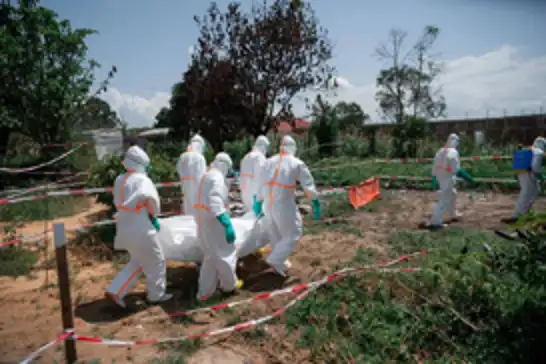
Health authorities in the Democratic Republic of the Congo have reported a dramatic rise in Ebola infections, warning that the outbreak is spreading rapidly in a remote and conflict-affected region where population movement is complicating containment efforts.

Two children have died from measles in England this year amid continuing outbreaks across the country, health officials have confirmed.

Endangered yellow-spotted salamanders, an endemic species native to Türkiye and considered vulnerable to various environmental threats, have been spotted on Mount Mereto in the Sason district of Batman province.