Cholera outbreak infects 441, kills 14 in Nigeria’s Plateau State
 13 oC
13 oC 
Güneşli

A cholera outbreak in Nigeria's Plateau State has infected approximately 441 people and claimed 14 lives across four local government areas, state health authorities said.
Plateau State Commissioner for Health Dr. Nicholas Ba'amlong disclosed the latest figures during a briefing in Jos, noting that health officials have also confirmed 20 positive Rapid Diagnostic Test (RDT) cases and six laboratory-confirmed infections through culture testing.
According to the commissioner, the outbreak has affected 25 wards and 107 settlements, prompting an extensive public health response involving state and federal authorities.
Ba'amlong said the number of active cases has declined significantly, with only three patients currently receiving treatment in Jos North, describing the trend as evidence that government intervention measures are beginning to contain the outbreak.
"The interventions being implemented are yielding positive results," he said.
Health authorities said the outbreak was first identified in Mangu Local Government Area in June, triggering the activation of a coordinated emergency response by the Plateau State Ministry of Health in partnership with the Nigeria Centre for Disease Control and Prevention (NCDC), local government authorities, and development partners.
Mangu, identified as the epicenter of the outbreak, recorded 53 suspected cases, including 10 positive RDT results and four laboratory-confirmed infections, with 10 deaths reported across nine wards and 64 settlements.
Ba'amlong said there are currently no active cholera cases in Mangu, adding that the last confirmed infection in the area was recorded on July 22.
The commissioner said Jos North Local Government Area has recorded the largest share of infections, with 277 suspected cases, seven positive RDT cases, one laboratory-confirmed infection, and four deaths.
The outbreak in Jos North has affected 61 settlements spread across 14 wards, making it the most severely impacted area in the state.
Health officials continue surveillance in the remaining affected local government areas while strengthening disease monitoring, case management, and public awareness campaigns aimed at preventing further transmission.
Authorities have intensified public health measures, including the provision of safe drinking water, sanitation campaigns, hygiene education, contact tracing, and the distribution of medical supplies to health facilities treating cholera patients.
The NCDC and state health officials have urged residents to maintain proper hygiene, wash their hands regularly, consume clean drinking water, and seek immediate medical attention if symptoms such as acute diarrhea and vomiting develop.
Cholera is an acute diarrheal disease caused by consuming food or water contaminated with the bacterium Vibrio cholerae. Without prompt treatment, severe cases can lead to rapid dehydration and death, although the disease is preventable and treatable through timely medical care, improved sanitation, and access to safe water.
Health authorities said they will continue monitoring the situation closely while working to prevent additional outbreaks during the ongoing rainy season, when cholera transmission typically increases in many parts of Nigeria. (ILKHA)
LEGAL WARNING: All rights of the published news, photos and videos are reserved by İlke Haber Ajansı Basın Yayın San. Trade A.Ş. Under no circumstances can all or part of the news, photos and videos be used without a written contract or subscription.
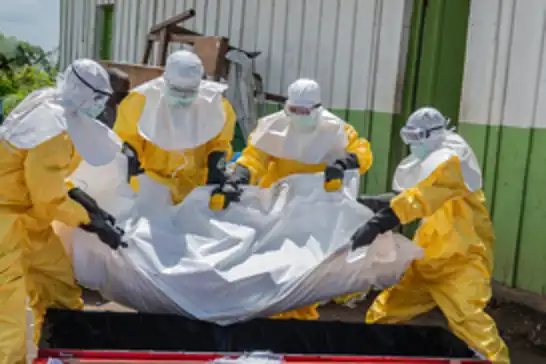
A candidate vaccine against the deadly Bundibugyo strain of Ebola has entered a new phase of clinical testing in Uganda, as health authorities accelerate efforts to develop effective vaccines against a virus that has caused one of the largest and fastest-growing Ebola outbreaks ever recorded in the Democratic Republic of the Congo (DRC).
More than 1,900 children have lost or been separated from one or both parents or primary caregivers since an Ebola outbreak was declared in the eastern Democratic Republic of the Congo (DRC) in May, UNICEF said.

Kenya has confirmed its first Ebola case after a citizen who had been living in the Democratic Republic of Congo (DRC) died in Nairobi, prompting authorities to trace dozens of people who may have been exposed to the virus.

New York Governor Kathy Hochul declared a statewide disaster emergency on Monday over a measles outbreak, as the United States experiences its worst year for the disease in more than three decades.