From Marxism-Leninism to democratic confederalism: Examining the PKK's ideological transformation
 13 oC

Güneşli

The PKK's shift from Marxist-Leninist national liberation to feminism and LGBTQ+ activism raises questions about its departure from founding objectives and the growing disconnect between its ideological agenda and the religious, cultural and social values of conservative Kurdish society.
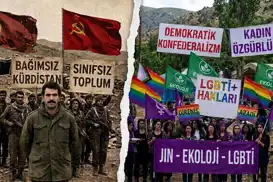
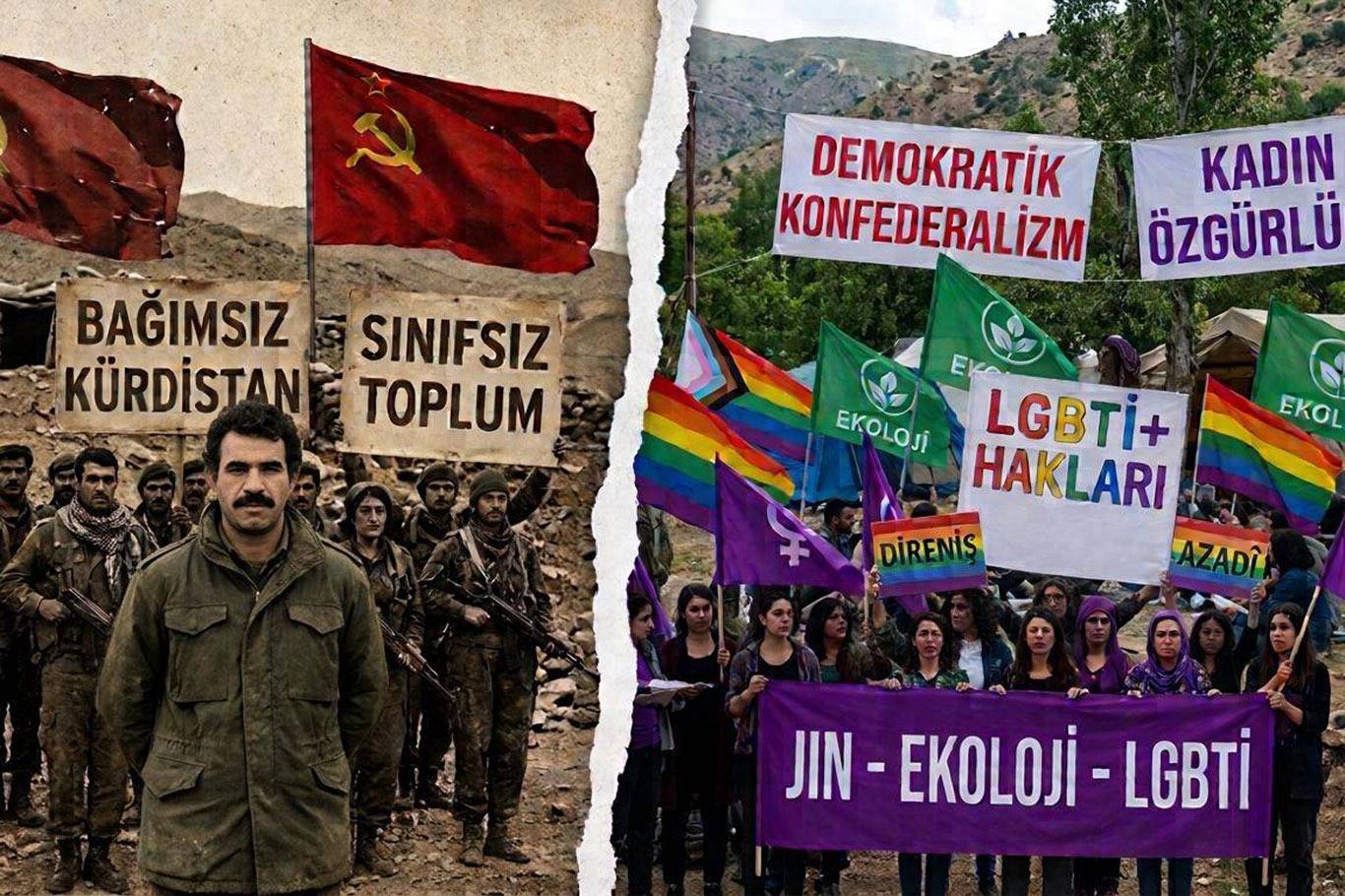
Founded in 1978 on Marxist-Leninist principles, the Kurdistan Workers' Party (PKK) initially advocated an independent Kurdistan and the establishment of a classless socialist society. Nearly five decades later, however, its political discourse has undergone a significant transformation, moving away from its original emphasis on national liberation and class struggle toward democratic confederalism, women's liberation, ecology and debates over gender and sexual identity.
The ideological shift has raised questions about the relationship between the organization's founding objectives and its current political framework, as well as the extent to which its evolving agenda reflects the social, cultural and political expectations of the communities it claims to represent.
While political movements can naturally change their ideological positions, strategies and objectives over time, the reasons behind such transformations, the interests they serve and their social consequences remain subjects of political and academic debate.
The PKK's evolution offers a notable example of this process, particularly given the scale of the changes in its political philosophy since its establishment.
From Marxist-Leninist ideology to democratic confederalism
Emerging from the left-wing political movements of the 1970s, the PKK adopted Marxist-Leninist ideology and presented the establishment of an independent Kurdish state and a socialist social order as its principal objectives.
The armed insurgency launched in 1984 was also framed within this ideological framework, with national liberation and the creation of an independent Kurdistan forming the central elements of its political program.
However, the collapse of the Soviet Union, changing international political conditions and developments within the organization contributed to a gradual reassessment of its ideological foundations.
Abdullah Öcalan's capture in 1999 marked a particularly significant turning point. In his prison defenses and subsequent writings, Öcalan increasingly questioned classical Marxist-Leninist approaches, the nation-state model and the traditional understanding of socialist state power.
His evolving political thought was also influenced by American political theorist Murray Bookchin, particularly his ideas on social ecology, decentralization and libertarian municipalism.
These intellectual developments contributed to the emergence of democratic confederalism, a political framework that emphasizes local assemblies, communes, grassroots participation and decentralized self-administration rather than the establishment of an independent nation-state.
Under this model, political organization is envisioned through networks of self-governing communities operating beyond conventional state-centered structures.
The transformation was not simply a change in terminology. It also represented a fundamental reconsideration of the organization's political objectives, economic vision and organizational structure.
In her academic study, The Ideological Transformation of the PKK Regarding the Political Economy of the Kurdish Region in Turkey, Güllistan Yarkın examines how the organization moved from a state-centered Marxist-Leninist national liberation framework toward democratic confederalism, with greater emphasis on ecology, women's emancipation and alternative economic structures.
Similarly, academic research by Ahmet Hamdi Akkaya, published in 2020 under the title The PKK's Ideological Odyssey, examines the organization's transition from national liberation through armed struggle toward radical democracy and democratic autonomy.
These studies identify the ideological shift as a significant departure from the organization's founding political framework.
The growing prominence of women's liberation
One of the most visible aspects of the PKK's ideological transformation has been the increasing centrality of women's liberation and gender equality.
During its founding period, the organization's political discourse primarily revolved around national independence, class struggle and socialist revolution. From the late 1980s onward, however, women's participation, gender relations and criticism of patriarchal structures increasingly became prominent within its ideological framework.
Women's organizational structures began to develop during the 1990s, with separate formations emerging within the broader movement. Women's participation in political and armed structures expanded, while mechanisms such as autonomous women's organizations, gender quotas and the co-chair system subsequently became important elements of its political organization.
Öcalan's later writings placed women's liberation at the center of his proposed transformation of society. Rather than treating women's emancipation solely as a matter of political representation, this approach presented the dismantling of patriarchal relations as a prerequisite for broader social change.
The concept of Jineology, often described by its proponents as the science of women, also emerged as an important component of this framework.
Academic research by Nadje Al-Ali and Isabel Käser has examined Jineology's development, its relationship with international feminist debates and its role in the Kurdish women's movement.
The growing prominence of women's liberation therefore represents more than an organizational adjustment. It reflects a broader ideological shift in which gender relations have become central to the movement's understanding of social and political transformation.
Nevertheless, questions remain about the relationship between the movement's claims of gender equality, its internal power structures and the practical implementation of its stated principles.
Gender politics and the expansion of the ideological framework
Another area of debate concerns the movement's increasingly visible engagement with contemporary discussions surrounding gender identity and sexual orientation.
These issues were not central components of the PKK's original Marxist-Leninist program in 1978. However, the organization's subsequent ideological evolution brought it into closer contact with feminist, gender-equality and broader identity-based political movements.
Its criticism of traditional social hierarchies and its emphasis on individual and collective freedoms have contributed to the development of political alliances and common platforms with various feminist and LGBTQ+ organizations.
This development has generated different interpretations.
Critics, meanwhile, question whether these priorities reflect the cultural, religious and social values of the wider communities in which the movement operates. They also question whether the growing emphasis on identity-based politics has diverted attention from the original socioeconomic and political demands associated with Kurdish national liberation.
The debate is therefore not limited to the organization's position on gender and sexuality. It also concerns the broader question of how political movements reconcile ideological transformation with the cultural expectations and priorities of the populations they claim to represent.
Political alliances and the question of social representation
The PKK's evolving ideological framework has also influenced the political environment surrounding parties, local administrations and civil society organizations associated with the broader Kurdish political movement.
Through political platforms, municipalities and civil society networks, issues such as women's representation, gender equality, ecological policies and LGBTQ+ rights have become more visible in parts of this political landscape.
However, the extent to which these positions represent the wider Kurdish population remains contested.
Kurdish society encompasses diverse religious, cultural, political and social perspectives. Consequently, the political priorities promoted by particular organizations cannot automatically be regarded as representative of the entire population.
This distinction is particularly important when assessing claims that a political movement speaks on behalf of an entire community.
The relationship between the movement's ideological priorities and the everyday concerns of Kurdish society, including economic development, employment, education, political representation and cultural rights, remains an important subject for further examination.
Ideological transformation or a departure from founding objectives?
The PKK's evolution from Marxist-Leninist national liberation politics toward democratic confederalism, women's liberation and broader gender-related debates raises a fundamental question: does this represent a natural ideological transformation, or has the organization moved so far from its founding objectives that its original political identity has fundamentally changed?
The influence of changing international political conditions, the collapse of the Soviet Union, Öcalan's intellectual development and the emergence of new political alliances all offer possible explanations for the transformation.
However, the political consequences of this shift deserve equal attention.
To what extent has the new ideological framework addressed the fundamental political, economic and cultural demands of the Kurdish population? How does it accommodate the region's diverse religious and social values? And what degree of public support exists for the priorities that have become central to the movement's current discourse?
These questions are particularly relevant because ideological legitimacy cannot be established solely through the declarations of political leaders or the adoption of new theoretical frameworks. It also depends on the extent to which a movement's political program resonates with the people it claims to represent.
Ultimately, the PKK's nearly five-decade ideological journey illustrates a substantial departure from its original Marxist-Leninist foundations. Its transition toward democratic confederalism, ecology, women's liberation and gender-related politics has reshaped both its political identity and organizational vision.
The central question is no longer simply how the transformation occurred, but whether the movement's new ideological priorities can find lasting social acceptance among the diverse communities whose political future it claims to address. (ILKHA)
LEGAL WARNING: All rights of the published news, photos and videos are reserved by İlke Haber Ajansı Basın Yayın San. Trade A.Ş. Under no circumstances can all or part of the news, photos and videos be used without a written contract or subscription.
As the occupation regime continues to violate the ceasefire and intensify its attacks on the Gaza Strip, Palestinians remain trapped in an ever-deepening humanitarian catastrophe marked by bombardment, hunger, displacement and collapsing living conditions.
Renewed calls for a comprehensive political ethics law have brought transparency, accountability and merit-based governance back to the centre of Türkiye’s political debate, following recent remarks by MHP leader Devlet Bahçeli.
Israel’s parliamentary election has entered a new phase of uncertainty after no political bloc secured the majority needed to form a government, opening a debate over possible coalition scenarios and their potential impact on the future of Palestine.